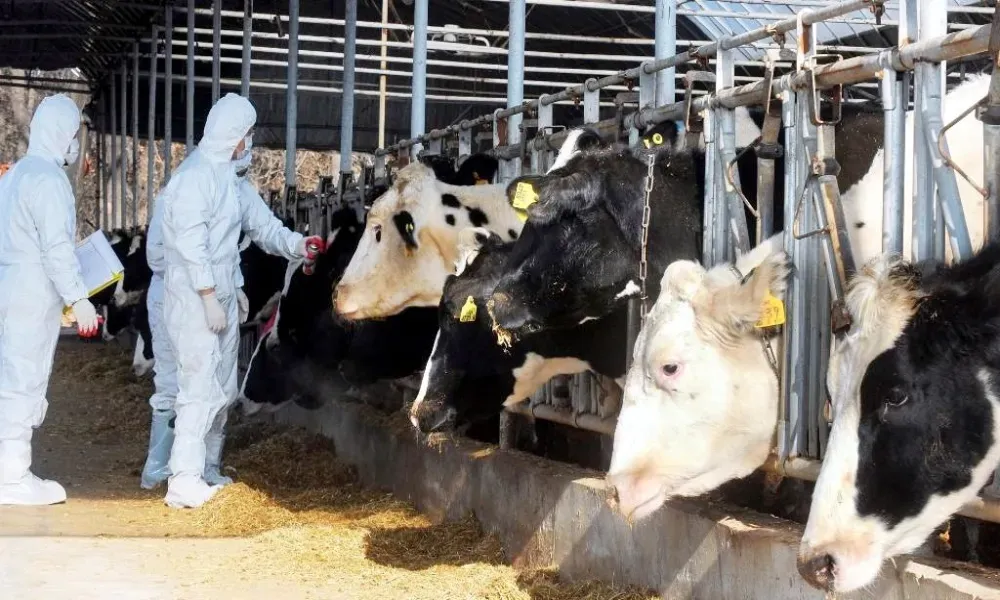
Four days after the first call from a livestock farmer on Thursday 19 February reporting a case of foot‑and‑mouth disease in the free areas, the official tally of affected animals has risen to 5,000 across six livestock units. According to the authorities, these units fall within a three‑kilometre zone and are considered a single epidemiological entity. All livestock farms in the area have now been placed under quarantine to prevent further spread of the virus, which was detected in certain farms in Livadia and Oroklini. The authorities have already begun culling procedures. Efforts are focused on preventing a wider outbreak, which would deliver a severe blow to the economy.
Questions and investigations
These developments have triggered public concern, with many questioning whether the necessary measures were taken by both the authorities and livestock farmers from the moment cases of foot‑and‑mouth disease appeared in the occupied areas. These issues will be addressed on Tuesday in an emergency session of the House Agriculture Committee, attended by the Ministry of Agriculture, Veterinary Services and all relevant bodies. The discussion follows strong reactions from opposition parties and farmers’ organisations regarding the state’s handling of the situation.
Meanwhile, the Veterinary Services have issued a detailed briefing on the actions taken from the detection of the first case last Thursday until yesterday, Sunday. According to the report, laboratory results from the two infected farms in the Oroklini livestock zone, considered the outbreak’s ground zero, showed that the virus entered the units around two weeks ago without being reported. As the virus was present earlier and was not declared, the Police have been notified and are investigating the possibility of concealment and failure to provide timely information by farmers and their private veterinarians.