
By Michalis Kalopaidis
As Cyprus looks to define itself as a confident, mature and independent state that honours and promotes its cultural identity, the creation of a State University of Arts and Culture is presented as a strategic necessity rather than a luxury. Proponents argue that such an institution would form the backbone of a serious cultural policy, a stronger creative industry and a more visible international presence.
Why a state university for the arts matters
A State University of Arts and Culture would be able to generate systematic research, innovation and reliable data to support public policy in culture, education and the economy. Beyond its academic role, it would provide specialised, high-quality public education in disciplines such as music, theatre, film, fine arts, design and digital arts.
At present, many young people are compelled to study abroad in order to pursue these fields. A public institution dedicated to the arts would significantly reduce the overall cost of studies for families, limit the outflow of talent and create conditions for a new generation of professionals to remain and work in Cyprus. This, in turn, would strengthen all branches of the creative industries.
Larnaca as a strategic choice
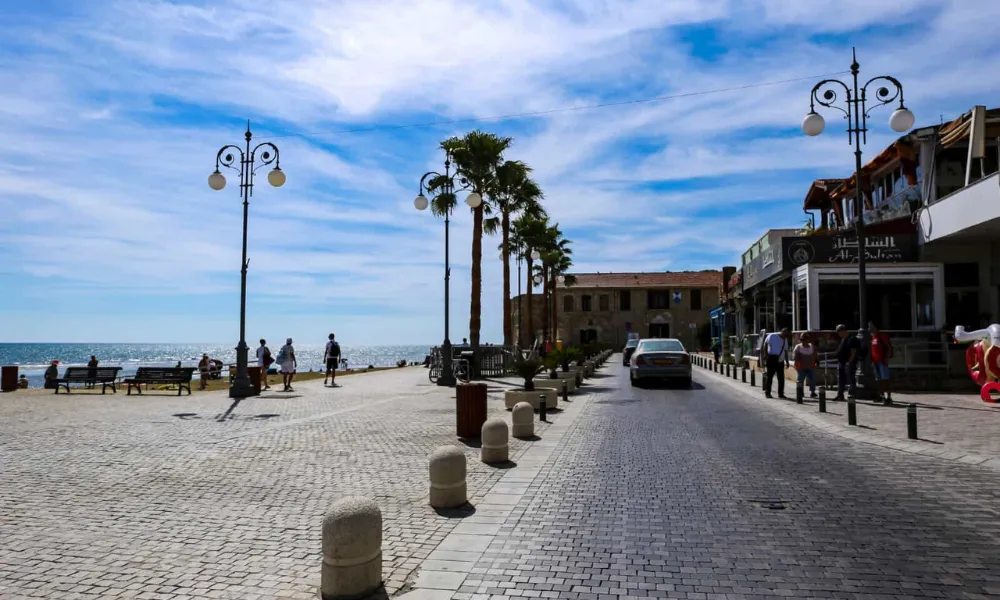
Larnaca is described as the natural and strategic location for such a university. It remains the only major city without state tertiary education infrastructure, while in 2030 it will assume the title of European Capital of Culture. Significant investments in cultural infrastructure and creative spaces are already planned in this context.
These investments, it is argued, require a permanent academic structure to ensure long-term sustainability. A university would educate researchers, artists and cultural producers who could reinforce cultural organisations and maximise the use of new infrastructure beyond 2030. In this way, the institution would function as a driver of sustainable urban and cultural development.
Building a coherent cultural ecosystem
The proposal envisions Larnaca as a hub where artists, researchers, businesses and cultural organisations converge, creating synergies that foster creativity, innovation and the application of modern technologies across the economy. Through the connection between research and industry, the university could strengthen the presence of cultural and creative sectors, contribute to the further internationalisation of Cyprus’ cultural product and attract European and international research funding.
Systematic research and digital documentation of Cyprus’ tangible and intangible cultural heritage, as well as its contemporary cultural production, would reinforce national identity and enhance its global visibility.
Recent developments are also cited as evidence of the need for a public pillar in arts education. Two undergraduate music programmes at private universities have closed in recent years, exposing the fragility of relying solely on private initiative. At the same time, the Cyprus Theatre Organisation is planning the creation of a drama school in Larnaca, a development that could be organically integrated into the structure of a State University of Arts and Culture, offering continuity and quality.
A national strategic investment
Rather than pursuing isolated and fragmented initiatives, the proposal calls for the creation of a coherent ecosystem of education, creation and cultural production.
The establishment of a State University of Arts and Culture in Larnaca is framed not merely as a development project for one city, but as a strategic choice for the entire country. Supporters argue that it would contribute to a more diversified and resilient economy, create new jobs in modern professions and promote a society that invests in imagination, knowledge and cultural self-confidence.
The proposal is put forward by Michalis Kalopaidis, Coordinator of the Culture Committee of Volt and parliamentary candidate for Larnaca.