Cyprus aims to establish itself as a hub and host location for financial technology companies, widely known as fintech firms, operating in the European market. The decision of fintech companies to choose Cyprus as a base suggests that the country offers advantages both in its regulatory framework and its operational environment. At the same time, Cypriot authorities are called upon to meet the requirements of monitoring and supervising the sector.
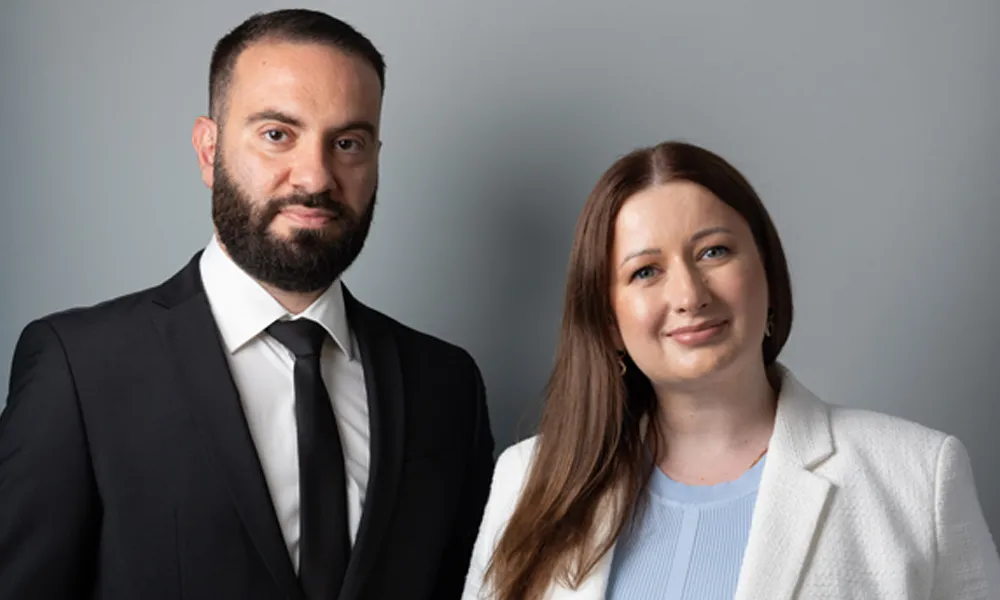
Capital.com Europe CEO, Christoforos Soutzis, and Executive Director, Valentina Rzheutskaya, explain to “P” what supports the maturity of Cyprus’s fintech ecosystem, how a balance between regulation and innovation can be achieved, and why the next phase of growth in the sector will be determined less by “hype” and more by trust, infrastructure, and the quality of decision-making.
Cyprus is now widely recognised as a European fintech hub. From your perspective, what structurally drives this development?
Christoforos Soutzis: Cyprus’s progress is not the result of a single policy or trend. It is the outcome of the convergence of several structural factors. First, Cyprus operates fully within the European regulatory framework, offering companies clarity and consistency in accessing European markets. In the financial sector, credibility depends directly on supervision, governance and predictability, and this is critically important.
Second, there is a strong talent pool of professionals with experience in compliance, risk management, technology, operations and customer service. These are not peripheral functions, they form the core of sustainable fintech operations. Cyprus has methodically and quietly built substantial strength precisely in these areas.
Finally, the ecosystem has understood that fintech is not only about the speed of innovation, but about operational discipline. Companies that succeed are those that build responsibly, with systems and controls capable of withstanding time and institutional scrutiny.
How does Capital.com view its role in financial markets?
Christoforos Soutzis: Our role in financial markets is to operate a regulated, technologically advanced platform that provides access while embedding responsibility in the way that access is used. For this reason, we combine technology with education and relevant contextual information so that participation is informed and conscious, rather than reactive or driven solely by frictionless access.
If you had five minutes with policymakers, which two moves would make Cyprus the most reliable fintech hub?
Christoforos Soutzis: Two areas stand out, building upon the strong foundations already in place. The first concerns digital trust infrastructure. Cyprus has made substantial progress through strong supervision and close coordination among regulatory authorities. The next step is to further strengthen this foundation through faster and more interoperable digital identity systems, continued investment in cybersecurity, and clearly defined public-private cooperation protocols for handling cyber incidents. As fintech becomes increasingly data-driven, regulator-led trust infrastructure is not only a safeguard but also a competitive advantage.
The second area concerns human capital strategy, with emphasis not only on attracting talent but also on long-term retention. Cyprus already benefits from close cooperation between regulators, industry and professional bodies. Further strengthening partnerships with universities and educational institutions can ensure clear professional pathways, supporting specialisations such as financial crime analysis, cyber resilience, product engineering and risk management technology.
Cyprus already has a regulatory sandbox, which is a significant advantage. When used with proper design, close supervision and a clear framework, consumer protection and educational objectives, it can continue to support responsible innovation, not as an end in itself but as a tool for shared learning between regulators and businesses.
Regulation in Europe is becoming increasingly demanding. How can Cyprus remain competitive while maintaining high standards?
Valentina Rzheutskaya: Competitiveness and high standards are not conflicting concepts in the financial sector. On the contrary, they reinforce one another. Across Europe there is a clear shift towards more harmonised, outcomes-focused regulation. Frameworks such as MiFID II, MiCA, the Digital Operational Resilience Act (DORA), and evolving AML requirements reflect the common European objective of strengthening consumer protection, market integrity and business resilience.
What companies seek is not “light-touch” regulation, but clarity and consistency. Jurisdictions that apply European rules in a predictable, proportionate and transparent way allow businesses to plan, invest and innovate responsibly.
The term “responsible growth” is often used in fintech. What does it mean in practice for Capital.com?
Valentina Rzheutskaya: For us, responsible growth is primarily about institutional discipline rather than size. Capital.com grows alongside regulation, not ahead of it. This means entering markets with clear regulatory frameworks while simultaneously developing legal, regulatory and risk management mechanisms, ensuring that governance structures are in place before scaling.
Artificial Intelligence is at the centre of discussions in fintech. Where does its real value lie and where is caution needed?
Valentina Rzheutskaya: Artificial Intelligence has real practical value when applied to strengthening institutional controls, such as fraud detection, transaction monitoring, market abuse surveillance and operational risk management.
However, caution is required in how it is presented and governed. Financial markets are characterised by inherent uncertainty, and Artificial Intelligence should never be presented as a tool of predictive certainty or as a substitute for human accountability.
How does Capital.com contribute to strengthening Cyprus’s human capital beyond employment?
Christoforos Soutzis: Employment is only one part of the equation. We believe Cyprus has a strong and increasingly competitive graduate talent pool, which is why we chose to launch the group’s first official internship programme here. The programme offers structured exposure to how a regulated fintech organisation operates, covering technology, risk, compliance and operations.
At the same time, we actively encourage knowledge transfer within the group, with executives from international offices working from Cyprus and sharing expertise and institutional experience.
Looking ahead, how is success defined for Capital.com and for Cyprus?
Christoforos Soutzis: For Capital.com, success derives from institutional resilience: strong regulatory frameworks, stable governance and risk control, and continuous alignment with supervisory requirements.
For Cyprus, success is increasingly reflected in its role within the European regulatory system as a jurisdiction that applies European standards consistently and reliably, attracting serious, long-term financial services organisations.
What would you say to young professionals in Cyprus entering the fintech sector?
Christoforos Soutzis: Invest in timeless skills rather than short-term trends. Fintech is increasingly shaped by regulation, data and risk management, and understanding how institutions function from end to end is crucial.
Valentina Rzheutskaya: Innovation in fintech does not operate in a vacuum. It exists within legal and regulatory frameworks that protect market integrity and consumers. Long-term careers are built by people who understand that accountability, documentation, controls and ethical judgement are just as important as technological innovation.