It was a day wrapped in ceremony, steeped in symbolism, and choreographed with the precision of statecraft. Yet beneath the polished surface of Tufan Erhürman’s first official visit to Ankara lay a quieter truth: the Cyprus file is shifting again, not because Türkiye and the Turkish Cypriot leadership have forged a new common strategy, but because the diplomatic clock is about to return to the United Nations.
The visit showcased continuity rather than change, courtesy rather than coordination, and a deliberate avoidance of confrontation. But its true significance can only be understood in the wider context of the diplomatic season that is about to open, with a potential new UN-led process, the imminent return of Secretary-General’s Special Envoy María Ángela Holguín Cuéllar, and the likelihood of yet another 5+1 meeting before year’s end.
In other words: Ankara set the stage, but the play will be written in New York, not in the Turkish capital.
Identity, modernity, and a political compass
Erhürman began his Ankara program at Anıtkabir, underlining the Turkish Cypriot people’s connection to the secular, democratic principles of Türkiye’s founding era. His inscription in the Special Book spoke not just to history but to the political identity of Turkish Cypriots today:
“Even in their most difficult times, our people preserved their resilience with inspiration drawn from you… The Turkish Cypriot people will continue to advance by upholding modern values, productivity, education, culture, and ethics.”
This was a signal, calm but unmistakable.
The Turkish Cypriot electorate, which brought Erhürman into office on 19 October, expects:
- a modern, internationally grounded Cyprus policy,
- clarity over ambiguity,
- and real negotiations instead of processes designed to fail.
It is this compass that guided Erhürman throughout his Ankara visit.
The visit to the Turkish Grand National Assembly came with the expected expressions of solidarity and gratitude. Speaker Numan Kurtulmuş reiterated Ankara’s cross-party stance: Cyprus is a national cause, above domestic politics.
Erhürman, for his part, was respectful, but he arrived in Ankara with a political reality behind him. Only ninety minutes after taking his oath in Nicosia, he had declared:
“We will not sit at the table just to talk. We do not want another process doomed to fail.”
That message traveled with him. It served as a reminder that even as Türkiye remains the closest ally of the Turkish Cypriot community, the mandate in Nicosia now speaks with a clearer, more structured tone.
Quiet diplomacy, no hard edges, no common roadmap
The working luncheon with Foreign Minister Hakan Fidan at the official residence of the minister was expected to be the political core of the visit. It did not disappoint in terms of effort: the tête-à-tête ran longer than expected, a sign of mutual trust and willingness to talk through the contours of the “new period.”
Yet here, too, the significance lay in what did not emerge.
There was:
- no alignment on the formula for the next round of Cyprus talks,
- no bridging of the gap between Türkiye’s emphasis on sovereign equality and Erhürman’s structured federalist parameters,
- no hint of a coordinated strategy to present to the United Nations.
Both sides shared principles. Neither side offered a plan. The most important outcome was that they kept every diplomatic option open.
Ceremony at the Palace: All the honors, none of the breakthroughs
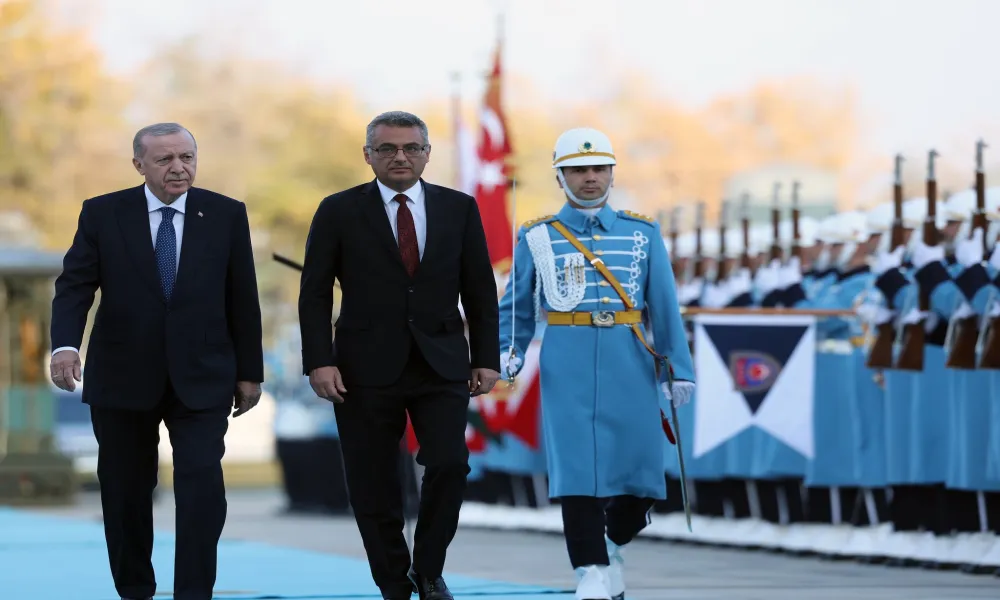
There was another dimension to the full state ceremony at the Presidential Complex.
It is no secret, even if never stated publicly, that Erhürman was not Ankara’s preferred outcome in the Turkish Cypriot elections. Yet precisely for that reason, perhaps, President Erdoğan’s decision to extend the entire presidential protocol, from the 21-gun salute to the full honor guard, was deliberate and meaningful.
It signaled the following message from Türkiye:
“Whoever the Turkish Cypriot people elect as their leader, the Presidency of the TRNC is, in our eyes, a seat of state dignity.”
Even though the Turkish Cypriot state remains recognized only by Türkiye, Ankara’s meticulous protocol was intended to underscore the symbolic state stature of the Turkish Cypriot leadership and to affirm the institutional respect for the office — regardless of who holds it.
In this sense, the ceremony was not merely a welcome; it was a statement of principle: a reaffirmation of Türkiye’s respect for the democratic will of Turkish Cypriots and the constitutional office they entrust.
But speeches matter more than cannons. The joint press conference reflected two parallel narratives.
Erdoğan’s narrative: two states without saying “two-state solution”
Erdoğan avoided explicit phrases but left no ambiguity:
- “The most realistic solution is for two states to coexist on the island.”
- “Sovereign equality and equal international status must be recognized.”
He did not push the rhetoric, nor did he escalate tensions with the Greek Cypriots. He simply restated the long-held Turkish position.
Erhürman’s narrative: Federal principles without saying “federation”
Erhürman emphasized:
- two founding partners,
- political equality,
- shared competences,
- readiness for a results-oriented process under UN parameters.
Nothing in his words contradicted Ankara. But nothing in them aligned perfectly, either. It was diplomacy done with silk gloves.
The UN enters the stage: A new season opening
The Ankara visit unfolded mere days before the return of the UN Secretary-General’s Special Envoy, María Ángela Holguín Cuéllar, who is expected back on the island shortly for a new round of proximity talks.
Her mandate is not to negotiate a settlement, yet.
It is to determine whether such negotiations are even possible.
Diplomatic sources indicate that Holguín Cuéllar will open a new round of proximity talks beginning on 5 December, starting with a meeting with Erhürman and followed on 6 December by discussions with Greek Cypriot leader Nikos Christodoulides. This shuttle diplomacy may even culminate, for the first time in years, in a quiet lunch or dinner bringing the two leaders together in the same room.
Also in preparation is another unofficial 5+1 gathering before New Year’s Eve, bringing together the two sides on Cyprus along with Türkiye, Greece, the United Kingdom, and the United Nations.
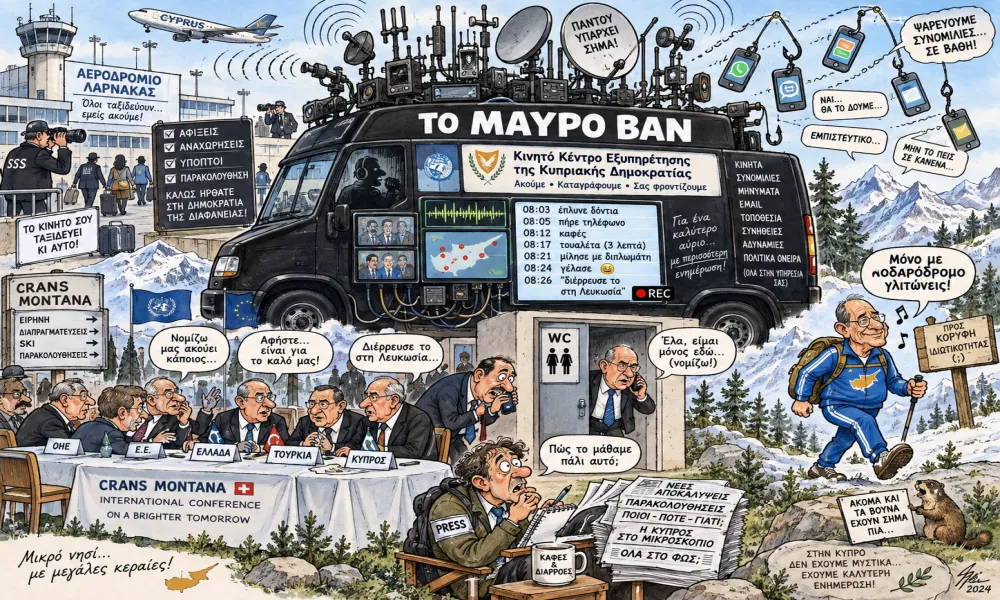
Can all this lead to a new process? This time it would not be a repeat of Crans-Montana; the UN has little appetite for another open-ended, theatre-length exercise. Any meeting would be unofficial, time-bound, tightly structured, and expected to carry consequences for those who engage without genuine intent. But whether the process can evolve into something more meaningful than another polite but unproductive encounter rests on a single decisive factor:
Are the Greek Cypriots prepared to accept the four conditions Erhürman has already placed on the table?
His conditions are:
- Political equality of the two peoples
- A firm timetable for negotiations
- Acceptance of all past convergences
- No return to the old status quo if talks fail again
Without these, Erhürman will not enter another open-ended, circular negotiation. Suddenly, the ball is not just in Ankara’s court — it is in Greek Cypriot’s as well.
Reading Ankara in light of the UN: What the silence revealed
One remarkable feature of the Ankara visit was the deliberate absence of any explicit reference to the UN process, the upcoming proximity talks, or a possible unofficial 5+1.
This silence was not accidental. It was strategic.
- Türkiye wants maximum flexibility.
- Erhürman wants to avoid appearing pre-committed before the UN’s test begins.
- The UN wants to avoid premature promises that could collapse under political pressure.
Thus the Ankara visit served a different purpose: to stabilize relations before the UN re-enters the field.
A respectful visit, a pending strategy, and a UN reset
Erhürman’s first official visit to Ankara achieved three things:
1. It reaffirmed mutual respect and state-level recognition.
The ceremony, the optics, the hospitality, all were calculated to underline the unique Türkiye–TC relationship.
2. It clarified that the two sides remain politely apart in their preferred settlement models.
No crisis. No clash. But no joint strategy, yet, either.
3. It positioned both sides for the next phase, the UN phase.
The real decision now lies with:
- Holguín Cuéllar’s shuttle diplomacy,
- the Greek Cypriot leadership’s readiness for a result-oriented process,
- and the Secretary-General’s willingness to call an unofficial 5+1 gathering.
A new process may indeed be possible, if the Greek Cypriot side accepts that the era of open-ended negotiations has ended, and that any future process must be structured, time-bound, and protected from collapse, as well as a penalty clause.
Until then, Ankara offered courtesy, clarity, and caution, but left the heavy lifting to the United Nations.
The next act will begin not in Ankara, nor in Nicosia, but at the blue-carpeted tables of the UN.