
Voice Accross
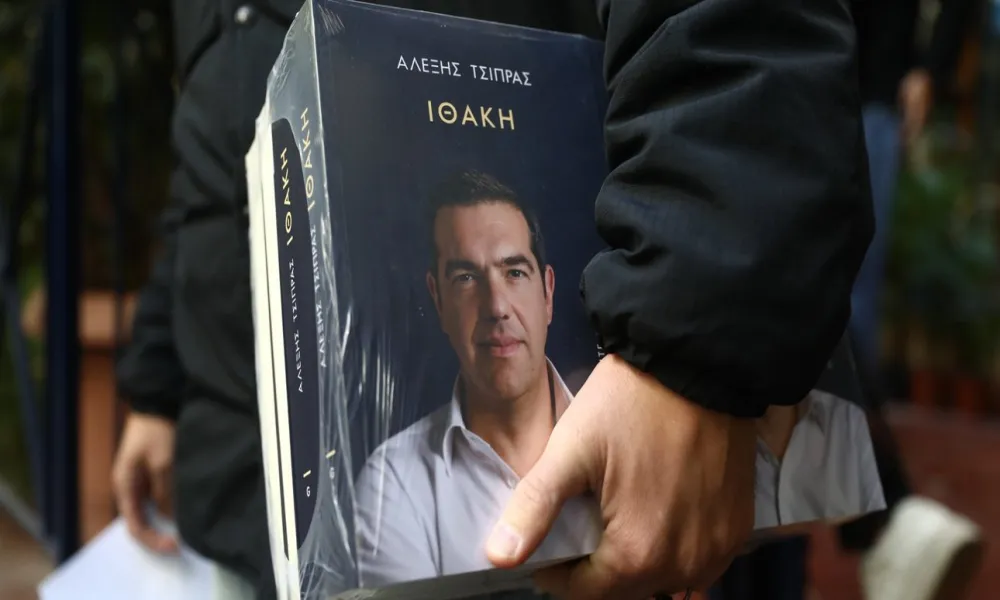
The release of former Greek Prime Minister Alexis Tsipras’s political memoir, Ithaca, has unexpectedly pushed the Cyprus issue back into the regional spotlight, reopening long-dormant debates on what really happened at the Crans-Montana 2017 conference and whether a federal settlement was genuinely “one breath away,” as Tsipras now claims.
Beyond its historical recollections, Ithaca is widely read in Athens as part political self-defence, part trial balloon for Tsipras’s own future. The book arrives amid speculation about a possible return to the political foreground, a re-framing of his Syriza years, and an attempt to reclaim the narrative on key dossiers, from the Greek crisis to foreign policy, including Cyprus. That prospect inevitably colours how his Cyprus chapter is received: not just as a memoir, but as the opening argument of someone who may want back in.
The timing is notable. Just as the island enters the most active diplomatic period since 2017, with UN Secretary-General’s Special Representative María Angela Holguín Cuéllar preparing to return to Cyprus in early December, Tsipras’ Cyprus chapter has resurfaced old fault lines, not only between Athens, Ankara and Nicosia, but also between the two Cypriot communities themselves.
At stake is not simply the past. His account directly shapes expectations and misperceptions about whether a new process can begin now, and what conditions such a process would require.
Closest to settlement
In his book, Tsipras paints Crans-Montana as the closest the island ever came to resolving the decades-long conflict. He claims:
-
Ankara briefly signaled flexibility on abolishing guarantees,
-
A new security mechanism could have been explored,
-
And a breakthrough was possible if Greek-Cypriot leader Nicos Anastasiades had been willing to “test” the Turkish opening earlier.
Tsipras’s narrative aligns partly with AKEL and certain UN officials’ accounts that a strategic agreement was “within reach.”
But it collides head-on with the long-standing positions of Ankara and the Turkish Cypriot leadership, who argue that:
-
Political equality,
-
Effective participation,
-
And the continuation, in some form, of Turkish guarantees
were indispensable pillars.
Crucially, Tsipras offers no documentary evidence of a formal Turkish shift on guarantees. His claims rest on:
-
A relayed message from Mevlüt Çavuşoğlu through Guterres,
-
Diplomatic impressions from a Binali Yıldırım visit,
-
And Turkey’s lack of immediate objection to the “unsustainable guarantees” wording in the Guterres Framework.
Even in his own telling, the supposed opening was never tested.
This ambiguity fuels competing narratives:
-
Greek-Cypriot leadership: Tsipras’s account vindicates Anastasiades.
-
AKEL-linked critics: It confirms Anastasiades mishandled a rare opportunity.
-
Turkish and Turkish-Cypriot officials: It proves the Greek Cypriot side froze when a test was possible.
-
UN circles: It reflects the familiar pattern of mixed messages and last-minute hardening.
The memoir thus re-ignites, rather than clarifies, the 2017 question.
New process, new rules
The Cyprus issue is no longer where Tsipras left it. For the first time in eight years, the leaders of the island, Tufan Erhürman and Nikos Christodoulides, met formally in the UN buffer zone in November, with Holguín joining by video link and preparing her follow-up visit.
The UN’s posture has shifted decisively:
-
Guterres, preparing to close his term at the end of 2026, will not reopen negotiations unless both sides show serious readiness.
-
There will be no open-ended talks.
-
No return to the “Cyprus-owned, Cyprus-led” endless loops.
-
Only result-oriented engagement will justify a new 5+UN setting.
Holguín arrives on 4 December, meets both leaders on 5–6 December, and aims for a trilateral immediately after, with a view toward an informal five-party meeting before year’s end.
Yet the path is fragile. The first meeting between the two leaders was quickly overshadowed by a media-breach crisis, after Christodoulides publicly restated his familiar position on guarantees only hours after agreeing with Erhürman to avoid public statements. Erhürman dismissed the comment as “null and void,” signaling that discipline and trust will be indispensable if Holguín is to have any chance of success.
Erhürman’s new TC baseline
Unlike his predecessor Ersin Tatar, Erhürman has entered this phase with a structured and fully articulated four-pillar methodology, which already shapes UN and EU expectations:
-
Political equality as a non-negotiable foundation: Not abstract equality, but effective participation, including rotating presidency and positive participation mechanisms.
-
Convergences from past talks must be preserved: No rewinding to the start, no chapters reopened, no reinventing the wheel.
-
No open-ended process: A timeline and a clearly defined negotiation architecture, exactly in line with the Guterres logic of “no endless talks.”
-
Failure must have consequences: If talks collapse due to Greek-Cypriot positions, the Turkish-Cypriot side cannot be forced back into the current isolation. Ankara also ties its own commitments, especially on security, to this assurance.
These conditions mark a serious pivot from the Turkish-Cypriot side: a readiness for structured federal talks if the other side commits equally.
CBMs
To build a “solution atmosphere,” Erhürman also placed on the table a ten-point CBM package addressing longstanding daily-life issues, including:
-
Mixed-marriage children’s citizenship rights,
-
New crossing points,
-
Easing Green Line trade,
-
Halloumi/Hellim PDO complications,
-
Security coordination mechanisms,
-
Disaster response cooperation,
-
Health coordination,
-
Energy grid harmonisation,
-
Cultural heritage work,
-
And joint symbolic acts in the buffer zone.
These echo Holguín’s own “homework” list, including four new crossings and a photovoltaic park in the buffer zone. The Greek-Cypriot government’s slow movement on these issues in the past drew criticism from both the UN and the EU, which viewed bureaucratic blockages as obstructing trust-building.
Memoir & new process
Tsipras’s narrative matters because it reopens the central divide:
-
For Greek Cypriots, the biggest obstacle was Turkey’s refusal to drop guarantees.
-
For Turkish Cypriots, the biggest obstacle was Greek Cypriot refusal to accept political equality and effective participation.
Tsipras reinforces one side of this divide and barely engages with the other.
As Holguín prepares to land on the island, the memoir’s timing risks reinforcing entrenched positions, especially among Greek-Cypriot voters who still view security as the central issue and political equality as a secondary theme.
But the new reality is this: The next round will not be about 2017. It will be about whether the two sides can meet Holguín’s conditions for a disciplined, time-bound, structured negotiation and whether they can do so without collapsing the atmosphere before talks even begin.
Opening & old reflexes
Holguín’s visit may open the door to the first formal Cyprus process since Crans-Montana. But the early media crisis after the leaders’ November meeting showed how quickly atmospherics can unravel.
Tsipras’s Ithaca has added fuel to old debates, but not clarity. The key questions remain:
-
Can Greek Cypriots accept explicit political equality?
-
Can Turkish Cypriots accept a security model not centered on unilateral guarantees?
-
And can either side maintain enough discipline to allow Holguín to test whether a new process is viable?
A window has opened, narrow, uncertain, and buffeted by domestic politics. Whether it becomes a path depends on what happens in December and whether old narratives drown out new possibilities. For now, the answer is simple: The Cyprus file is moving again, but nothing about the road ahead will be easy.
Yusuf Kanlı, Executive Board member and Vice Chair of the Association of Journalists, Editorial Advisor of Anka News Agency, Journalist/Columnist.