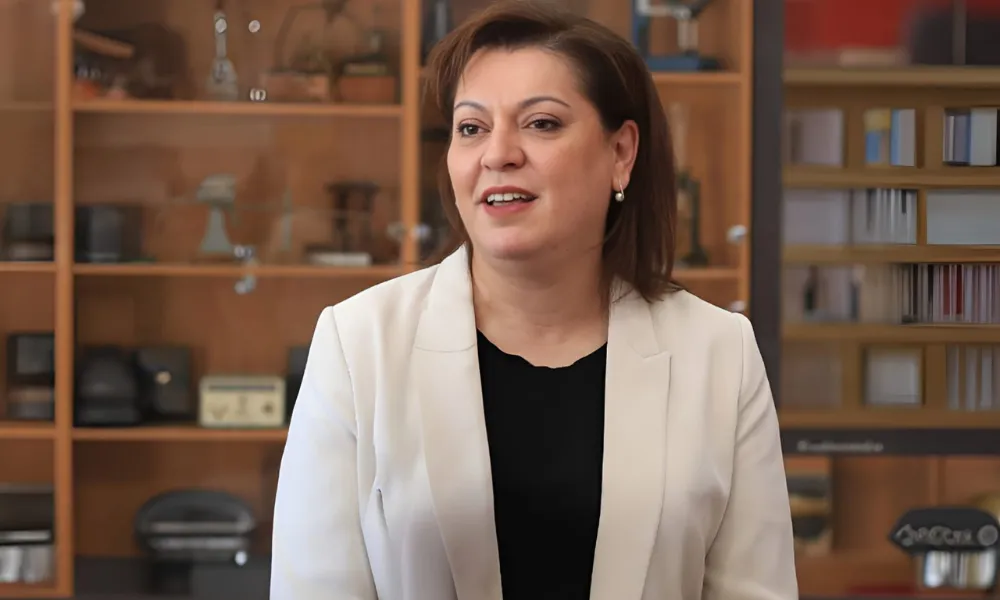
By Dr Athena Michaelidou, Minister of Education, Sport and Youth
At a time of profound social, technological and geopolitical change, education is being called upon to act as a catalyst for cohesion, progress and democratic resilience. At the heart of this effort stand teachers: the people who translate educational policy into daily practice and shape the conditions for the school of tomorrow. Teachers and school leaders are the cornerstone of any high-quality, inclusive and sustainable education system. Their commitment, professional competence and motivation largely determine learning outcomes, social inclusion and the ability of students to live and work in a rapidly changing world.
Any serious discussion about the future of education, in Cyprus and across Europe, must therefore begin and end with the role, empowerment and support of the teaching profession.
A European priority
At European level, there is now clear recognition that strengthening the teaching profession is a strategic priority. The Strategic Framework for European Cooperation in Education and Training 2021-2030, aimed at achieving the European Education Area, underlines that well-prepared and well-supported teachers are essential for learners’ success and for the long-term sustainability of education systems.
At the same time, there is a growing consensus on the need for a shared European understanding of the challenges facing the profession. This includes acknowledging the increasing complexity of teachers’ roles and the need for coherent, attractive and supportive career pathways that reflect today’s realities.
Shared challenges across Europe
These challenges are well known. Across Europe, and in Cyprus, education systems are under pressure to respond to rising demands linked to inclusion, multiculturalism, learner diversity, the green transition, digital transformation and the integration of new technologies, including artificial intelligence. At the same time, there is a growing need to safeguard teachers’ professional wellbeing and to develop modern, credible frameworks for evaluation and professional development.
Many countries also face persistent difficulties in attracting new entrants to the profession, retaining experienced staff and motivating teachers throughout increasingly demanding career paths.
What international evidence shows
International data reinforce this picture. Findings from the OECD’s Teaching and Learning International Survey (TALIS) show that while the vast majority of teachers choose the profession out of a desire to contribute to children’s development and to society, far fewer believe that teaching offers clear and stable career prospects.
The most recent TALIS 2024 results confirm that salary measures, while important, are not sufficient on their own to retain teachers. They must be accompanied by supportive working environments, professional autonomy, meaningful recognition and access to high-quality professional development.
Professional development as a policy lever
In this context, teachers’ professional development emerges as a central pillar of effective education policy. European and international experience shows that professional learning should be understood as a continuous process spanning all stages of a teacher’s career: from initial education and induction, through ongoing training and professional advancement.
When professional development is embedded in working time, linked to clear career pathways and supported by a collaborative school culture and effective leadership, it contributes to higher job satisfaction and long-term commitment to the profession.
Teaching in the age of artificial intelligence
Particular importance today is attached to digital transformation in education, especially given the rapid development of artificial intelligence. Teachers are not merely users of technology; they are key mediators who ensure that digital tools are used pedagogically, in ways that enhance learning, inclusion and critical thinking.
The European Commission has already issued guidelines on the ethical use of artificial intelligence in education, recognising that teachers need targeted professional development, clear frameworks and practical resources to meet this evolving role effectively.
Priorities in Cyprus
Within the Cypriot education system, strengthening the role and professional development of teachers is a core priority. The Ministry of Education, Sport and Youth is advancing policies aimed at upgrading both initial teacher education and continuous professional development, enhancing pedagogical and digital competences and supporting teachers in responding to the growing demands of contemporary school life.
This includes initiatives such as the Policy Document and Guidelines for the Responsible and Ethical Use of Artificial Intelligence in Primary and Secondary Education. Teacher and school evaluation is also embedded within this philosophy, not as a punitive mechanism, but as a tool for support, empowerment, reflection and continuous improvement at school level.
Cyprus and the EU presidency
In the same spirit, Cyprus’s Presidency of the Council of the European Union in the first half of 2026 places teachers at the centre of European policymaking. Fully aligned with the European Education Area and the forthcoming European Agenda for Teachers and Trainers under the Union of Skills, Cyprus is promoting a holistic approach to the teaching profession that covers the entire career cycle.
The objectives are clear: to enhance the attractiveness of the profession, attract well-qualified new entrants, address shortages in critical areas such as STEM disciplines and ensure modern, dignified working conditions.
Teachers as democratic actors
Empowering teachers for the future is inseparable from their role as carriers of democratic values and active citizenship. In a context of intense social and technological change, teachers are called upon to foster active citizenship, social cohesion and inclusion, helping to shape responsible and critically minded citizens.
Promoting a European dialogue on teaching in the age of artificial intelligence, and working towards Council Conclusions on this issue, is a clear expression of our political commitment.
A long-term investment
Strengthening the teaching profession is a policy choice with long-term impact. It is an investment in knowledge, democracy and social cohesion. At both national and European level, Cyprus has chosen to place teachers at the centre of its policies, with responsibility, consistency and evidence-based planning.
Because the school of tomorrow cannot be built without strong, supported and professionally empowered teachers. And that is a collective challenge we must rise to together.