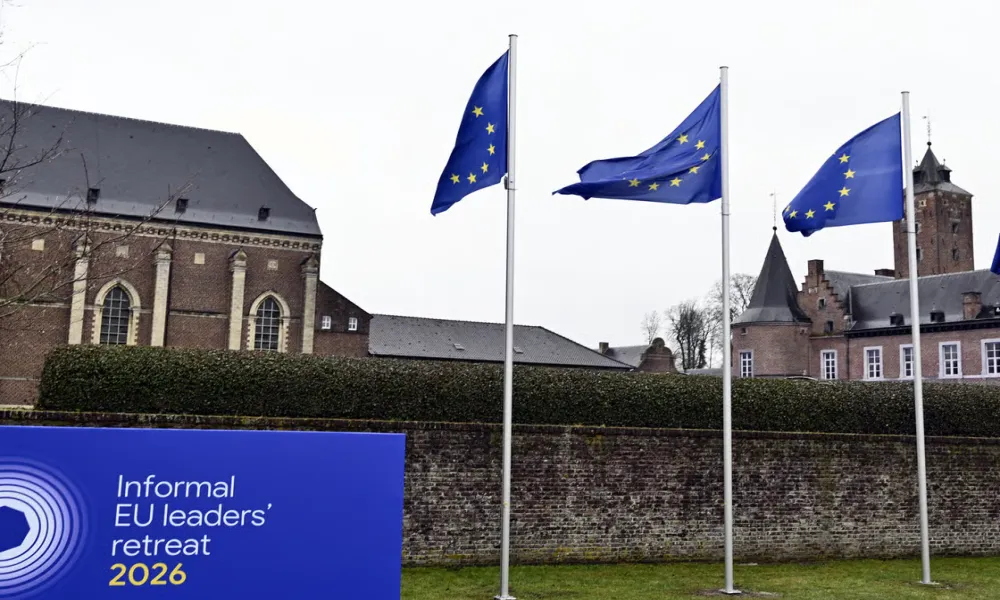
The informal Summit of the European Union’s member states, taking place today at Alden Biesen Castle in Belgium, focuses on boosting the competitiveness of the European economy and safeguarding the single market in the face of an ever more challenging and geo‑economically fragmented landscape.
Mario Draghi and Enrico Letta will take part in the discussions, sharing their views on European competitiveness.
Leaders are being called upon to unpick and restitch the architecture of the single market at a time when the United States and China are rewriting the rules of the game through state aid, industrial policies and assertive trade power. The question is whether Europe will respond with an ambitious agenda of scale, skills, security and simplification – the well‑known “4S” – or whether it will settle for yet another well‑phrased but empty declaration of intent.
Unfortunately, despite good intentions, such informal meetings often result in general observations and vague statements. Yet the real reforms the European economy needs – such as regulatory simplification, strengthening capital markets, a strategy for artificial intelligence and support for innovative businesses – must not remain wishful thinking.
For Cyprus, a small and open economy fully integrated into the European framework, the ambition for a more competitive EU is a positive one. Cypriot businesses face the same challenges confronting the entire Union, including labour‑market rigidities, bureaucracy, difficulties accessing capital and higher energy costs compared with other economies.
At a time when the United States and China are intensifying pressure for technological dominance and industrial self‑sufficiency, Cyprus has every reason to support a coherent European strategy that leaves no member state behind.
Cyprus also has the opportunity to contribute actively to building a competitive and sustainable European economic area as it holds the Presidency of the Council of the EU. More than 70 per cent of the files the Cypriot Presidency will handle relate to competitiveness.
The business community, from European chamber associations to the Eurochambres presidency meeting in Nicosia, sends a clear message: without genuine simplification, reduced regulatory uncertainty and effective digitalisation of procedures, the European – and therefore the Cypriot – economy will struggle to keep pace with global developments and risks falling behind.