
By Şadiye Işısal & Berk Tansel
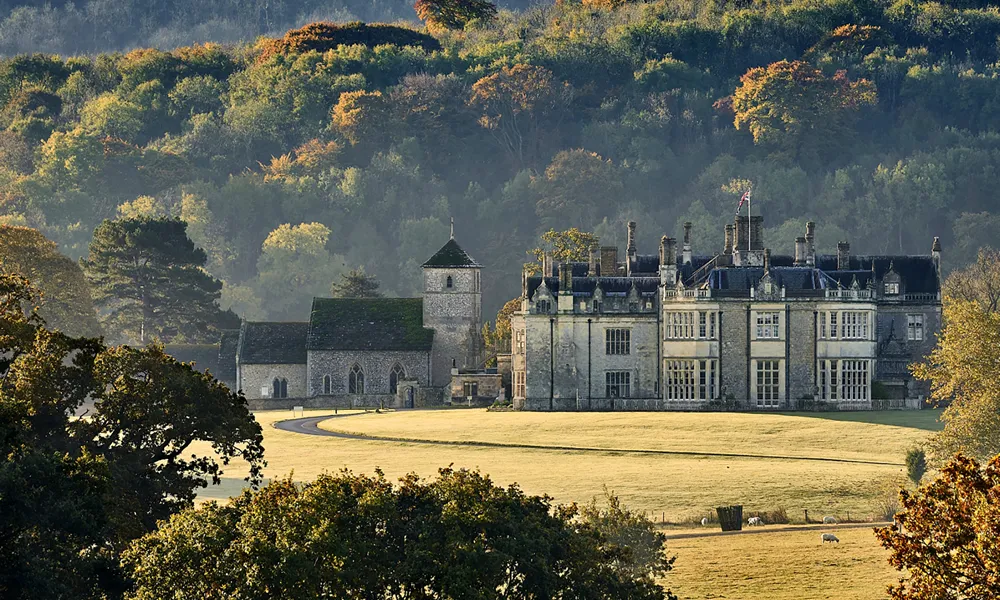
In the aftermath of the Second World War, as Europe grappled with deep political fractures, a quiet experiment in dialogue began to take shape. Wilton Park was founded on a bold premise: even when governments could not agree, people could still talk.
At a time when ideological lines were hardening and borders felt immovable, early meetings at Wilton Park brought together voices from a divided Berlin. These encounters were not about immediate solutions, but about something more fundamental – the willingness to listen across separation. What emerged was a powerful signal: dialogue does not require unity to begin.
Decades later, that same principle continues to shape conversations in some of the world’s most complex contexts. From 18-20 February 2026, Wilton Park convened a high-level dialogue focused on Cyprus. The event, titled “Cyprus Dialogue: Building Trust through the Technical Committees,” brought together Greek Cypriot and Turkish Cypriot co-chairs, representatives of the two leaders, international specialists, and independent Cypriot experts.
Held with the support of the United Nations Department of Political and Peacebuilding Affairs, the meeting created a rare space for open and practical exchange. Participants moved beyond formal positions to focus on shared challenges, exploring how cooperation could be strengthened in areas that directly affect daily life on the island.
We observed that the structure of the meeting deliberately prioritised dialogue over formal presentations, reinforcing the core approach long associated with Wilton Park. Rather than fixed statements, discussions were designed to be inclusive and horizontal – creating space for co-chairs, representatives of the leaders, international actors, and independent experts to engage on equal footing.
This format allowed conversations to move beyond protocol and into genuine exchange, where different perspectives could be heard and challenged constructively. The presence of María Ángela Holguín Cuéllar further strengthened this dynamic through her active participation in interactive discussions.
Early conversations reflected the professional yet limited familiarity that often defines bicommunal institutional engagement in Cyprus. While participants were accustomed to working within formal structures, the setting allowed us to move beyond routine exchanges and engage more openly on shared concerns surrounding the functioning and future role of the Technical Committees.
As discussions deepened, a central theme began to emerge: the need for a more grounded understanding of lived experiences across the island. We noticed that, despite ongoing interaction, there is often an assumption of mutual awareness that remains largely untested.
Conversations brought forward both practical and emotional dimensions of daily life – ranging from perceptions of security and questions of mobility, to participation in international spaces and the broader social impact of political developments. In doing so, the dialogue highlighted a critical gap: that meaningful cooperation depends not only on structures, but on the willingness to fully understand each other’s realities.
We found that creating space for such concerns to be expressed in a non-adversarial setting helped foster a more reflective and less defensive atmosphere. This shift allowed conversations to move beyond positions and toward a deeper consideration of shared challenges.
A key contribution to this dynamic came from independent experts from across Cyprus who brought broader societal perspectives into what are often highly institutional discussions. Their input helped bridge the gap between technical processes and everyday realities, ensuring that the work of the Technical Committees remained grounded in lived experience.
The meeting also created space to reflect on the public visibility and perceived effectiveness of the Technical Committees. While their work often remains outside public awareness, participants emphasised that the committees continue to play a vital role: maintaining channels of cooperation, addressing practical issues affecting citizens, and sustaining functional communication even during periods when political negotiations are not active.
As Berk observed, “The committees may work quietly, but their impact is tangible. They keep cooperation alive even when the political climate is uncertain. They’re the scaffolding of the negotiations.”
In this context, we reflected that the Technical Committees are not a substitute for a political settlement, but rather a form of institutional infrastructure that supports the broader peace process. They are mechanisms that allow cooperation and problem-solving to continue, even in moments of political stagnation.
Şadiye also emphasised the long-term value of this approach: “Technical cooperation builds habits of working together. Those habits matter because trust is built through dialogue and the exchange of expertise, not just through agreements.”
At the same time, discussions underscored the importance of strengthening public communication. Participants highlighted the need for greater transparency around committee membership, mandates, and outputs, alongside creating accessible channels for citizens to submit concerns or proposals. Increased visibility, they noted, could play a critical role in building public trust and countering misinformation.
Liana Liu Ioannides highlighted the importance of outreach in sustaining confidence: “When people understand what the committees actually do, they see that cooperation is possible. Our progress as technical committees doesn’t always have to be dramatic to be meaningful, but it needs to be visible.”