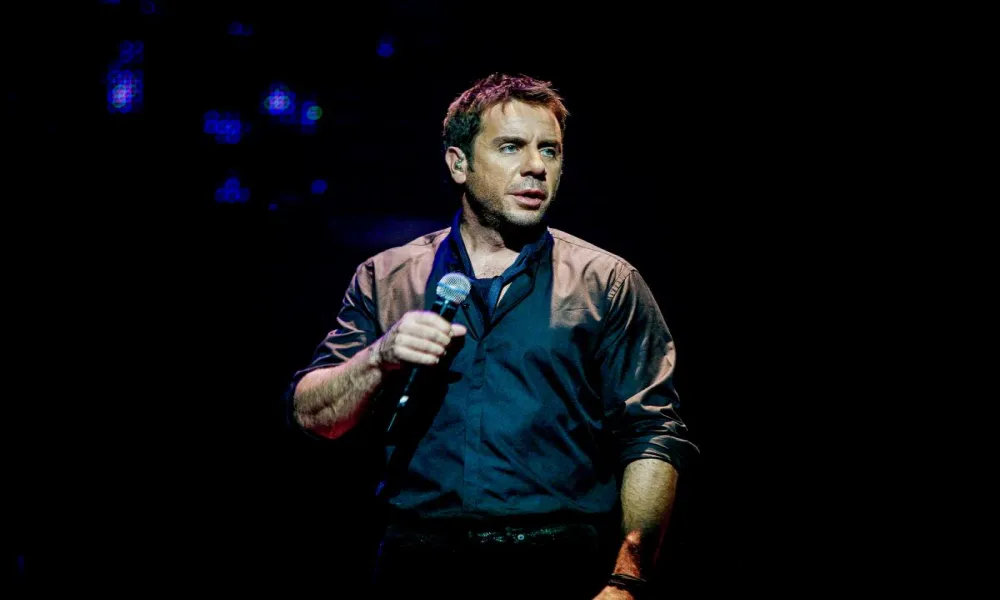

Giorgos Mazonakis, one of Greece's most recognisable popular singers, died in Athens on Wednesday, 9 September 2026, after suffering cardiac arrest, at the age of 54. According to reports, the medical emergency began at a private clinic in the Kolonaki district of Athens, and he was subsequently taken to Elpis Hospital, where doctors were unable to revive him. His sudden death sent shockwaves through Greece's entertainment industry and among the many listeners who had followed his career for more than three decades.
In the wake of his passing, renewed attention has turned to one of his final creative projects away from music: a leading role in the short film "Στον Θρόνο του Ξέρξη" ("On the Throne of Xerxes"), directed by Evi Kalogeropoulou.
A different side of Mazonakis
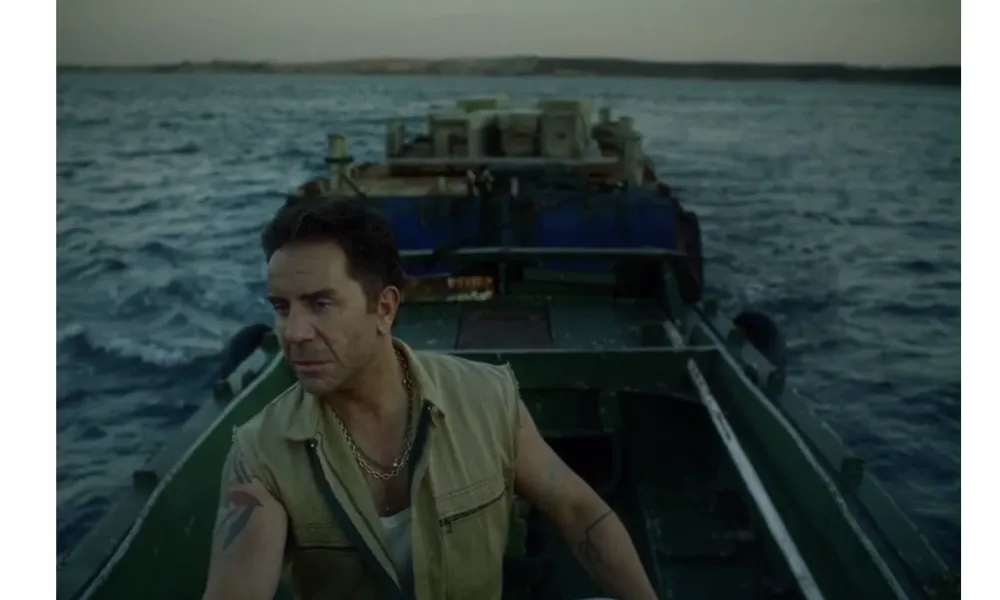
In a role far removed from his familiar stage presence, Mazonakis took on acting in the short film, revealing a different side of his artistic identity. Rather than a brief cameo built around his celebrity, he stood at the centre of the narrative as both lead character and narrator, in a performance markedly different from the flamboyant stage persona with which he had long been associated.
A lifelong interest in acting
Mazonakis's connection to acting was not incidental. He had previously said he had been drawn to it from a young age, once introducing himself, in this order, as an "actor, performer, singer." Speaking about his collaboration with Kalogeropoulou, he had explained that her direction was decisive, with her core guidance being to seek simplicity, avoid excess and keep his performance and narration understated and substantive.
A dystopian shipyard, a hidden self
In the film, Mazonakis played Yiorgos, the oldest worker and foreman at a shipyard in Perama. The setting is dystopian: physical contact has been banned for years, and relationships between workers have become strange simulations of a desire that cannot be expressed. Over the characters looms the sense of an invisible mechanism of surveillance and control.
Within this environment, Mazonakis's character remains deliberately enigmatic. Is he human, or something else? Where does he come from? And, crucially, why is he able to break a rule everyone else treats as inviolable? The film does not rush to answer. Instead, it uses his presence to explore the body, desire, identity, control and the limits imposed on human beings.
Personal history at the shipyard
Mazonakis's casting carries added weight because the role touches on personal, lived experience. His return to Perama was not merely cinematic: the area is tied to his family history, and specifically to his father, who ran a shipyard workshop next to where filming took place. Kalogeropoulou has said that, when invited to create the work with Mazonakis, she wanted to explore his relationship with Perama and his life there as a younger man.
Rather than concealing "Mazonakis" behind the character, the director does almost the opposite, drawing on elements of his personal history, public image and distinctive charisma and transplanting them into a world where the body and desire are under constant restriction, one of the film's more striking tensions.
Origins and international recognition
"Στον Θρόνο του Ξέρξη" grew out of the project "Ανήκω σε μένα" ("I Belong to Myself"), created in 2021 as part of the Onassis Stegi's You and AI: Through the Algorithmic Lens. In its later form, the film travelled to Critics' Week at the 75th Cannes Film Festival, where it won the Canal+ Award for best short film, giving Mazonakis's performance a notable international profile.