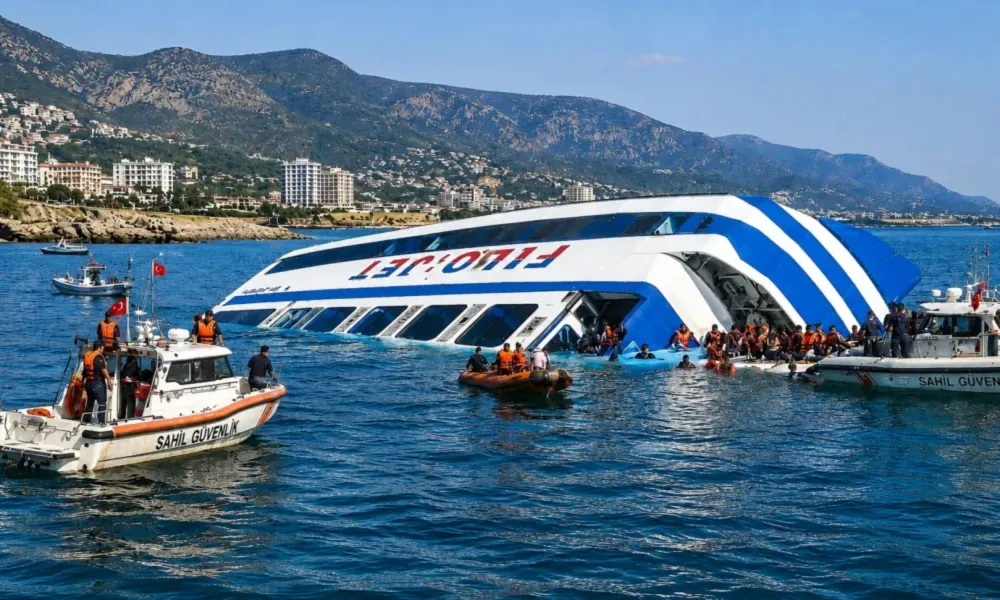

The confirmed death toll from the Filo Jet disaster has risen to 14, while search teams are still trying to locate another 14 people off Kyrenia. Relatives remain at the port awaiting news as demands for accountability grow.
Mustafa Kemal Yaralı, whose body was the most recent to be recovered from the sunken vessel, was buried in Mersin on Wednesday.
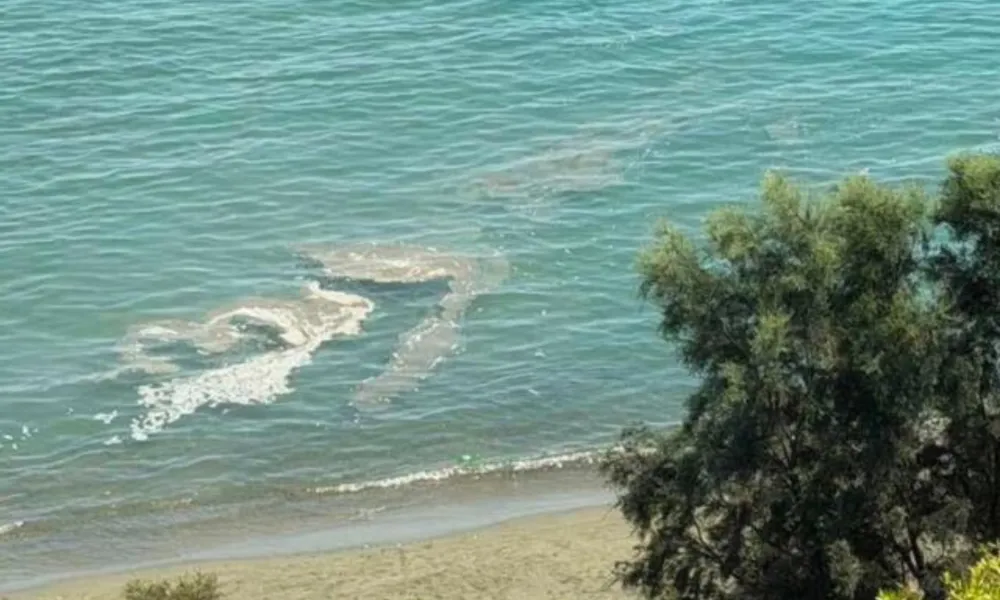
The Filo Jet sank off Kyrenia on 30 August. The latest body was recovered from the wreck site on 7 September.
Deep-sea search continues
The search for the 14 missing people is continuing with the Turkish Navy vessel TCG Işın. TCG Alemdar has returned to port for scheduled technical maintenance and resupply.
Another specialised vessel, equipped with technology capable of operating at greater depths, was expected to leave Istanbul on Thursday and travel to the wreck site. It is due to begin operations either over the weekend or early next week.
“Our objective is clear: to find those who are missing,” Turkish Cypriot ‘prime minister’ Ünal Üstel said.
Üstel returned to the occupied areas on Wednesday following two days of meetings in Ankara. On Thursday, he visited the coordination centre at Kyrenia port and briefed relatives of the missing, who remain there awaiting news.
“Search operations inevitably take time because of the depth of the sea, the conditions in the area and the state of the wreck,” he said. “Nevertheless, we are continuing our work with determination, expanding our capabilities and deploying new technical resources.”
Inquiry discussed by Turkish Cypriot ‘parliament’
An extraordinary sitting of the Turkish Cypriot ‘parliament’ was under way on Thursday to discuss establishing a ‘parliamentary committee’ to investigate the causes of the sinking.
Two separate proposals have been submitted, one by the Republican Turkish Party and another by the National Unity Party.
Mother calls for accountability
Meryem Kurt, the mother of İsmail Kurt, whose body was the first to be recovered from the sunken catamaran, told Yeni Düzen that she did not believe the sinking was an accident and called for everyone responsible to be held accountable.
İsmail Kurt had been travelling to Turkey to visit his elder brother, who was suffering from stage-four cancer.
“They must not allow this to be forgotten. I will pursue the case to the end. Justice must prevail and everyone responsible must be brought before the courts,” she said.
Meryem Kurt lives in Hatay, while her other children live in Mersin. İsmail lived in the occupied areas and worked as a security guard.
She described her son as “an angel” who was discreet, patient and kind.
“His father died when he was three years old. He suffered a great deal,” she said.
She last spoke to him an hour before the ferry departed. İsmail told her he was travelling to Turkey.
“I told him, ‘All right, my son. May God bless your journey and protect you.’ He said, ‘Thank you, Mum’,” she recalled, adding that she now wished their final conversation had lasted longer.
“This case must not be allowed to fade away. People are waiting and crying at the port. May God give them patience and reunite them with their families soon. May they also have somewhere to lay their loved ones to rest.”
She said justice would not fully ease the families’ pain but could provide some comfort.
Erhürman warns against xenophobia
In a post on Thursday morning, Tufan Erhürman addressed frequent calls to “avoid politics” following major tragedies. The real debate, he said, was not whether politics should be practised but “what kind of politics” should be pursued.
He said certain words could deepen pain and suffering on both sides, warning that society risked losing not only people but also its humanity and civilisation.
“Today, a spectre is haunting Europe and, indeed, the world more broadly: the spectre of the ‘populist radical right’, with its ‘xenophobia’ and even its ‘racism’,” he wrote.
Erhürman referred to questions and comments about the victims that focused on who they were, where they came from and what work they did.
He said such “bad seeds” were sown through words, slogans and other means before being carefully cultivated. They must, he added, be resisted through continuous effort.
“Otherwise, we can see what happens,” he said.
Erhürman also raised the lack of proper population records in the occupied areas and referred to migration taking place without planning or calculation. However, he stressed that none of these issues justified dividing people according to nationality, birthplace or any other characteristic, nor could they legitimise xenophobia or racism.
He concluded that Turkish Cypriot culture had so far protected the community from those “bad seeds”.
Source: CNA