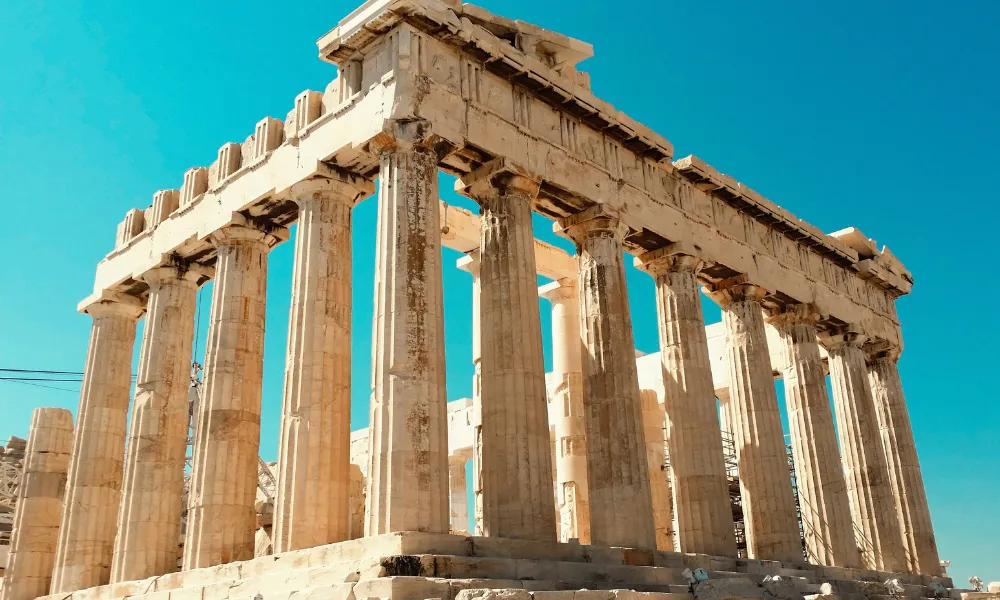



The British Museum’s position and willingness to reach an agreement on the Parthenon Sculptures remain unchanged, according to a museum representative who spoke to CNA.
The statement followed a report by the Daily Telegraph claiming that talks between the Greek side and the British Museum on the issue had essentially reached an impasse. The Museum did not directly comment on the claim that the talks had collapsed, nor did it provide details on the stage reached by the contacts.
Responding to CNA, a British Museum representative said that “the Museum’s position and willingness to reach an agreement remain unchanged”.
The Museum also referred to recent comments by its director, Nicholas Cullinan, to the Financial Times. Referring to the agreement for the Bayeux Tapestry to be loaned to Britain, Mr Cullinan said it could offer “a glimmer of hope” for progress on the Sculptures as well. “I would hope that there could be some tangible progress. It would be something wonderful,” he said.
The issue of ownership
Ownership of the Sculptures and the form a possible agreement could take remain at the heart of the disagreement. The longstanding position of the British Government is that decisions on the Sculptures fall under the responsibility of the trustees of the British Museum, rather than the government of the day.
However, the current legal framework does not allow the Museum to permanently remove objects from its collection. The relevant law would have to be amended for that to happen.
For this reason, the British Museum says it is prepared to consider a request to loan the Sculptures to Athens, as happens with other objects in its collection, on the condition that the “borrower” recognises the Museum’s ownership. The Greek side rejects this condition, stressing that it cannot “borrow” parts of a monument that belong to Greece.
Mitsotakis’ intervention in the Guardian
The difference is also highlighted in an article published today by Greek Prime Minister Kyriakos Mitsotakis in the Guardian. “Greece cannot accept any agreement that would require it to recognise the British Museum’s ownership of the Sculptures, nor a framework under which we would ‘borrow’ parts of our own monument,” he writes.
Mr Mitsotakis also rejects the view that the loan of the Bayeux Tapestry from France to Britain could serve as a model for an agreement on the Sculptures. As he points out, the Tapestry was loaned to Britain as a single work and will return to France as a single work.
By contrast, in the case of the Parthenon, parts of a single monument are currently divided between Athens and London. The Greek side’s goal is the permanent reunification of the Sculptures. “The surviving Sculptures should be displayed together, at the same time and with a view of the monument for which they were created. The Acropolis Museum was specifically designed to make this possible,” the Prime Minister says.
The Greek Prime Minister also notes that, in recent years, the Greek Government has held detailed discussions with the leadership of the British Museum on how reunification could be achieved. He adds that an agreement could provide the basis for broader and long-term cultural cooperation between Greece and Britain, including exchanges of exhibits, cooperation in research and conservation, and closer ties between Greek and British museums.
He also refers to current British Prime Minister Andy Burnham, who in 2023 called for the Sculptures to be returned “without conditions”. At the time, the then mayor of Greater Manchester had said, among other things, “let us use culture to change the way the world sees Britain”.
In conclusion, Mr Mitsotakis says that “political will and courage” are needed to take the decisive step towards reunification. “What is needed is the political will and courage to take the decisive step: to reunite the Sculptures and turn a historic dispute into a unique act of cultural friendship,” he writes in his article.
Source: CNA