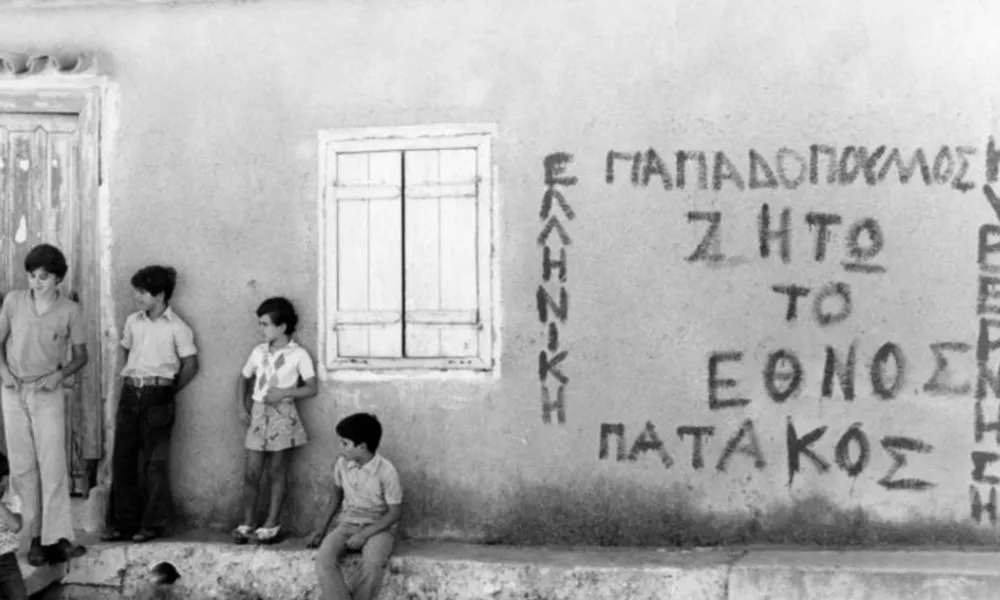
Half a century after its original release, Michalis Cacoyannis’ landmark documentary Attilas ’74: The Rape of Cyprus is returning to the international spotlight, with its world premiere at New York’s Museum of Modern Art (MoMA), one of the most influential institutions in modern art and cinema.
The fully restored version of the film will be screened as part of the 22nd To Save and Project: The MoMA International Festival of Film Preservation, with showings scheduled for Friday, January 30, and Sunday, February 1, 2026.
The first screening will be introduced by renowned historian and author Mark Mazower, who has also written the programme foreword for the film. The restoration and conversion to DCP format were supported by Faliro House Productions, under the leadership of Christos B. Konstantakopoulos.
Cacoyannis, a central figure in post-war European cinema, is internationally recognised for shaping the global image of Greek culture through films such as the Oscar-nominated Electra and the enduring classic Zorba the Greek. With Attilas ’74, he turned his lens to Cyprus at a moment of profound historical rupture.
Filmed during the two Turkish invasions of 1974 and the period that followed, the documentary includes rare footage of bombings, interviews with key political figures such as Archbishop Makarios and Nikos Sampson, and testimonies from ordinary Cypriots experiencing the violence, displacement and uncertainty of the time. It remains one of the few cinematic works to document the invasion as it unfolded, capturing its immediate human impact.
Since its launch in 2003, MoMA’s preservation festival has showcased restored works by cinematic icons including Charlie Chaplin, Buster Keaton, Valerio Zurlini and Yasujiro Ozu. The inclusion of Attilas ’74 places Cyprus’ modern history within this global cinematic canon, underlining the film’s lasting relevance and its broader reflections on war, memory and collective trauma.
For contemporary audiences, the restored documentary offers more than a historical record. It functions as a visual archive of lived experience, ensuring that the events of 1974 remain present, tangible and deeply human rather than distant or abstract.