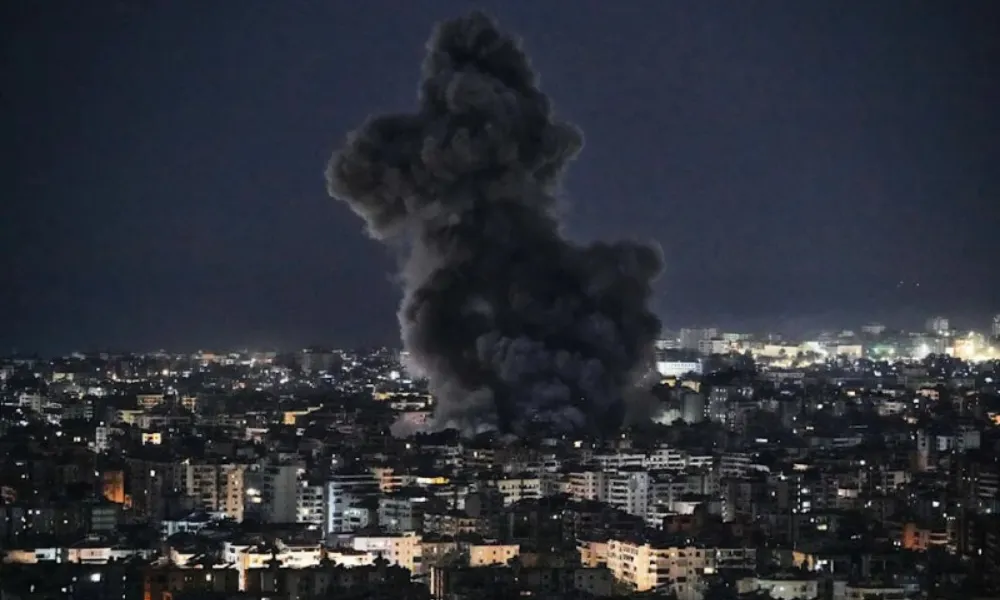

Gulf countries are increasingly questioning the reliability of long-standing United States security guarantees, as sustained Iranian attacks expose gaps in their defence capabilities, according to a report by The New York Times. The report notes that within days of the escalation that began on 28 February, Gulf states came under heavy missile and drone fire despite hosting major US military bases.
Diversifying defence partnerships
Facing both continued attacks and shortages of advanced interceptor systems, several Gulf countries have sought support from alternative partners. Saudi Arabia reportedly turned to Ukraine for expertise in countering drones similar to those used by Iran. The United Arab Emirates sought assistance from France and Australia, while multiple Gulf governments approached Italy for anti-drone and air defence systems.
Italy’s Defence Minister Guido Crosetto said Gulf countries had expressed “very strong concerns” and an urgent need to strengthen their defence capabilities.
Regional reassessment
Officials in the region are also openly reconsidering defence strategies. Oman’s Foreign Minister Badr al-Busaidi indicated that a broader debate is underway about the future of Gulf security arrangements. Although Gulf states maintain close defence ties with Washington, including designations such as “major non-NATO ally”, the conflict has intensified scrutiny of those relationships.
A White House spokesperson defended the military campaign, stating that Iranian attack capabilities had significantly decreased since the war began and arguing that the operation was necessary to protect US allies.
Civilian and economic impact
According to the report, more than 1,300 civilians have been killed in Iran since the start of the US-Israeli campaign, based on figures cited by Iran’s UN representative. In response, Iran has launched more than 3,000 missiles and drones toward Gulf states, targeting US-linked assets but also causing damage to civilian infrastructure, including airports, hotels and a desalination plant.
At least 14 civilians have been killed across the Gulf, many of them migrant workers. The economic fallout has also been severe. Major aviation hubs such as Qatar and the UAE have scaled back or suspended flights, while energy infrastructure has been hit. Qatar, a leading liquefied natural gas producer, halted production after damage to its facilities.
Strait of Hormuz pressure
The conflict has disrupted the Strait of Hormuz, a critical global energy corridor, limiting Gulf exports while Iranian shipments have continued. This imbalance has raised concerns among regional officials, particularly in the UAE, about the strategic implications of the conflict.
Growing criticism
Criticism of US policy is no longer confined to dissidents. Prominent figures within Gulf countries have also begun voicing concerns. Emirati businessman Khalaf Al Habtoor publicly questioned US President Donald Trump over the decision to escalate the conflict, warning of regional consequences.
At the same time, some officials continue to defend ties with Washington. UAE Minister of State Reem Al Hashimy described the US relationship as a “longstanding strategic partnership” that remains stable even in times of crisis.
Defence limitations exposed
The war has also highlighted logistical constraints. Interceptor systems used to counter missile and drone attacks are in limited global supply, with demand already strained by the war in Ukraine. Qatar has reportedly requested additional systems from the United States, though no official response has been confirmed.
Analysts note that while production may increase, such systems remain a finite resource, raising questions about long-term sustainability. As the conflict continues, Gulf states appear increasingly focused on diversifying their security options while reassessing the extent to which US protection can be relied upon.