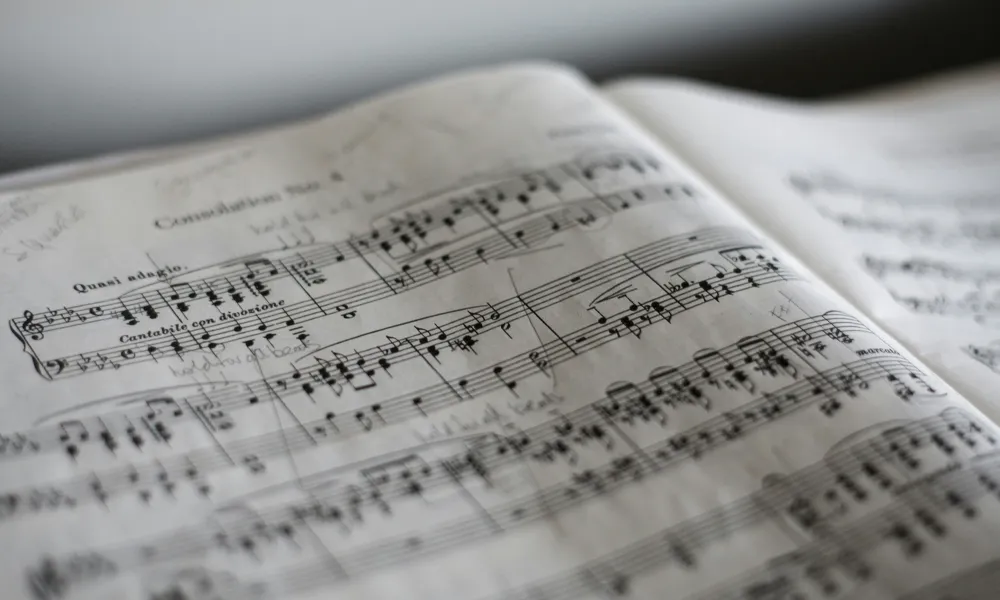
27 January holds a special place in the cultural calendar, uniting two of the greatest figures in Western music. On this day in 1756, Wolfgang Amadeus Mozart was born, and on the same date in 1901, Giuseppe Verdi died. Though separated by more than a century and shaped by very different artistic worlds, both composers transformed the music of their time and left legacies that continue to resonate today. This shared date links youthful genius and mature mastery, reminding us of the enduring power of music across generations.
Wolfgang Amadeus Mozart was born on 27 January 1756 in Salzburg, then part of the Holy Roman Empire. A child prodigy, he began composing at the age of five and performing across Europe soon after, astonishing courts and audiences with his natural brilliance. Despite his extraordinary talent, Mozart’s adult life was often marked by financial insecurity and professional frustration, as he struggled for stable patronage. He died young, at just 35, in 1791, yet in his short life he reshaped Western music with an ease and imagination that still feels miraculous.
During his lifetime, Mozart composed around 600 works, covering nearly every musical form of his era. These include symphonies, concertos, chamber music, sacred works, and operas of enduring power. Masterpieces such as The Marriage of Figaro, Don Giovanni, Così fan tutte, and The Magic Flute show his unmatched ability to combine dramatic insight with musical beauty. His symphonies and piano concertos set lasting standards for balance, clarity, and emotional depth, making Mozart a cornerstone of classical music.
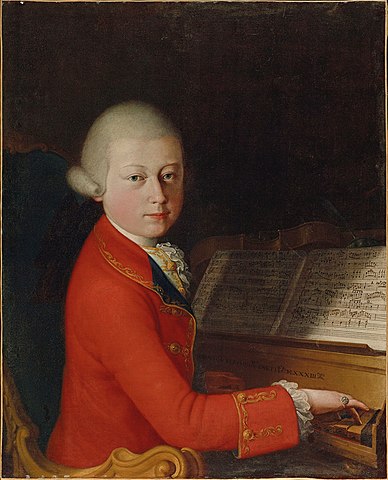
10 facts about Mozart
-
Full name: Johannes Chrysostomus Wolfgangus Theophilus Mozart.
-
By four years old, he could learn a song on the clavier (a stringed keyboard instrument) in just 30 minutes.
-
Apollo et Hyacinthus was Mozart’s first true opera he wrote at the age of 11.
-
Mozart loved playing pranks on people. He even created a piece titled “A Musical Joke,” where passages were played out of tune. He just wanted to make fun of who he believed to be bad composers.
-
Mozart claimed that he taught his pet bird, a starling, to sing the opening of his Piano Concerto Number 17, K 453.
-
There is a frog named after Mozart, the Eleutherodactylus Amadeus, or Mozart Frog for short. The frog's croak resembles musical notes.
-
You would need 202 hours or about 8 and a half days of straight listening to get through Mozart’s entire body of work.
-
Maria Anna, Mozart’s sister was equally or perhaps even better than her brother. She toured with her brother and even composed and orchestrated his first symphony. Once she was married, she was forced to stop publicly playing and touring. None of her work survived.
-
Mozart’s nickname was Wolfie.
-
No one is sure where Mozart’s body rests today.
Giuseppe Verdi died on 27 January 1901 in Milan, Italy. Born in 1813, Verdi rose from modest rural beginnings to become the most influential Italian opera composer of the nineteenth century. His music became deeply intertwined with Italian national identity during the period of unification, and he was admired not only as an artist but also as a public figure. By the time of his death, Verdi was revered across Europe as a musical giant whose works spoke powerfully to human passion and moral struggle.
Verdi’s operas remain central to the world’s stages today. Among his most famous works are Rigoletto, Il trovatore, La traviata, Aida, Otello, and Falstaff. These operas are celebrated for their unforgettable melodies, dramatic intensity, and deep understanding of character and emotion. Verdi transformed Italian opera by giving greater psychological realism and dramatic truth to his music, ensuring his legacy as a composer whose works continue to move audiences more than a century after his death.
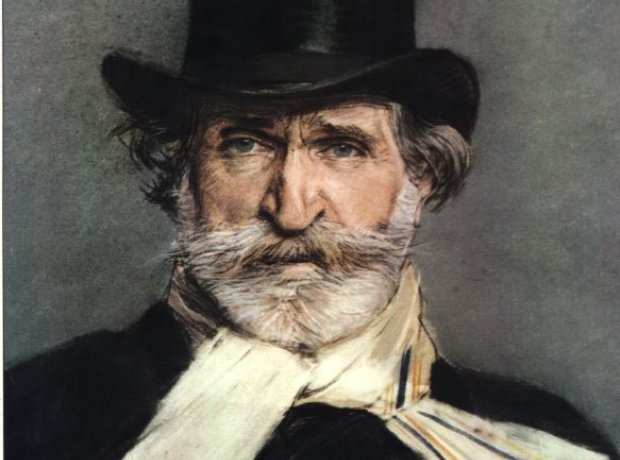
10 facts about Verdi’s Aida
-
Composer and Librettist – Music by Giuseppe Verdi (1813–1901), libretto by Antonio Ghislanzoni, based on a story by Egyptologist Auguste Mariette.
-
Commissioned for Egypt – Written for Cairo’s new opera house, premiered 24 December 1871, delayed by the Franco-Prussian War.
-
Set in Ancient Egypt – Aida, an Ethiopian princess, is held hostage in Egypt and falls in love with the general Radamès.
-
Tragic Love Triangle – Radamès loves Aida, Amneris desires Radamès, and the lovers ultimately die together.
-
Famous Music – Highlights include Radamès’ Celeste Aida, Aida’s O patria mia, and the iconic Triumphal March.
-
The ‘Aida Trumpets’ – Special trumpets were made for the premiere to recreate ancient Egyptian sounds.
-
Ethiopia or Nubia? – The opera’s “Ethiopia” is actually Nubia, south of Egypt, reflecting historical Greek terminology.
-
Orchestral Colour – Verdi evokes Egypt through “Alla turca” ballet, harp and flute tones, and violin passages mimicking birdsong.
-
Modern Adaptation – Elton John’s 2000 Broadway musical Aida reimagines the story in a museum setting, keeping Nubia as Aida’s homeland.
-
A Feast for the Senses – Productions, like 2024’s St. Margarethen staging, combine sets, costumes, lighting, video and live music for an immersive experience.