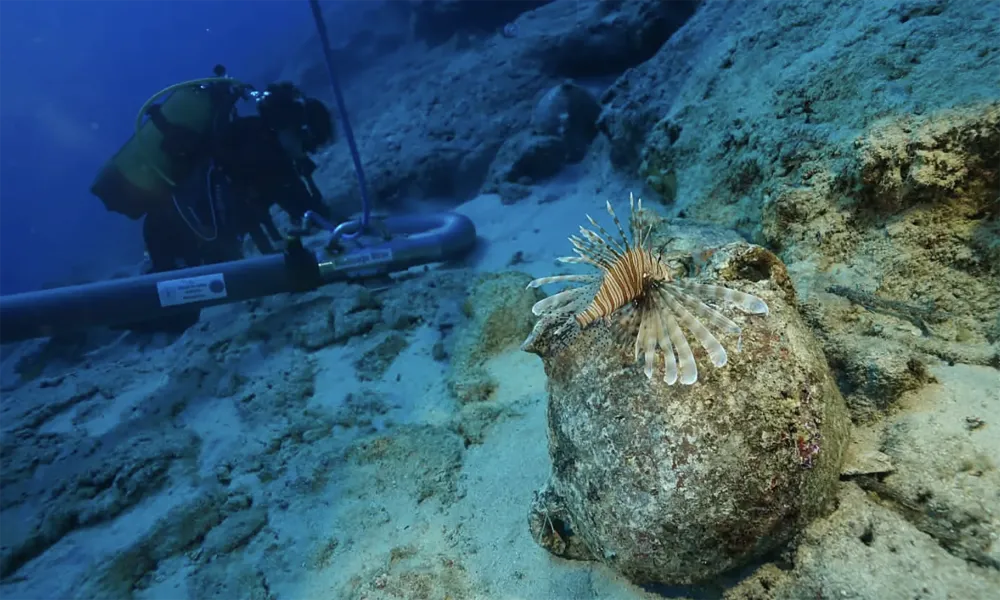

Archaeologists investigating a shipwreck off Kekova Island near Antalya have uncovered amphorae dating back approximately 4,400 to 4,700 years, offering fresh insights into maritime trade and seafaring in the eastern Mediterranean during the Early Bronze Age.
According to a report by Euronews, analysis of the clay used to make the vessels suggests they were likely produced in workshops in the Jordan Valley. Researchers believe the amphorae were used to transport goods such as olive oil or wine.
The discovery of similar vessels in Egypt, Troy and Crete has strengthened the theory that the ship's cargo formed part of an extensive maritime trading network linking different parts of the eastern Mediterranean as early as the third millennium BC.
Early Bronze Age shipwreck
Evidence of the wreck first emerged during underwater surveys conducted in previous years by Akdeniz University.
Analysis of samples taken from amphorae found at the site indicated that the vessel may date to the Early Bronze Age.
Systematic excavations began in 2026 under a permit from Turkey's Ministry of Culture and Tourism and under the supervision of the Antalya Museum Directorate. The research team is led by associate professor Hakan Öniz.
Researchers believe the vessel likely departed from a port on the eastern Mediterranean coast in the Levant and was heading towards either Troy or Crete.
This theory is based on similarities between the amphorae and artefacts discovered at archaeological sites near the Giza pyramids, Saqqara and Abusir in Egypt.
Amphora offers clues to life on board
Among the most notable discoveries is an amphora featuring two holes in its body and nine distinct markings on its surface.
Archaeologists believe it may have been used in the production of cheese or butter through the churning of milk.
The find has prompted questions about daily life aboard Bronze Age vessels. Researchers are examining whether sailors may have transported goats on long voyages, milked them at sea and produced dairy products as part of their onboard food supply.
While the theory remains under investigation, the amphora could provide valuable insights into not only ancient trade but also the living conditions of seafarers during the period.
One of the world's oldest shipwrecks
Turkey's Culture and Tourism Minister Mehmet Nuri Ersoy described the discovery as evidence of what may be one of the oldest known shipwrecks in the world.
In a social media post, Ersoy said excavations were revealing traces of an exceptionally early maritime disaster and pledged that research would continue to deepen understanding of Anatolia's maritime history and protect its underwater cultural heritage.
The finds add new evidence to the study of maritime movement and commercial exchange during the Early Bronze Age, highlighting the eastern Mediterranean's role as a crossroads for interaction between ancient civilisations.
Source: Euronews