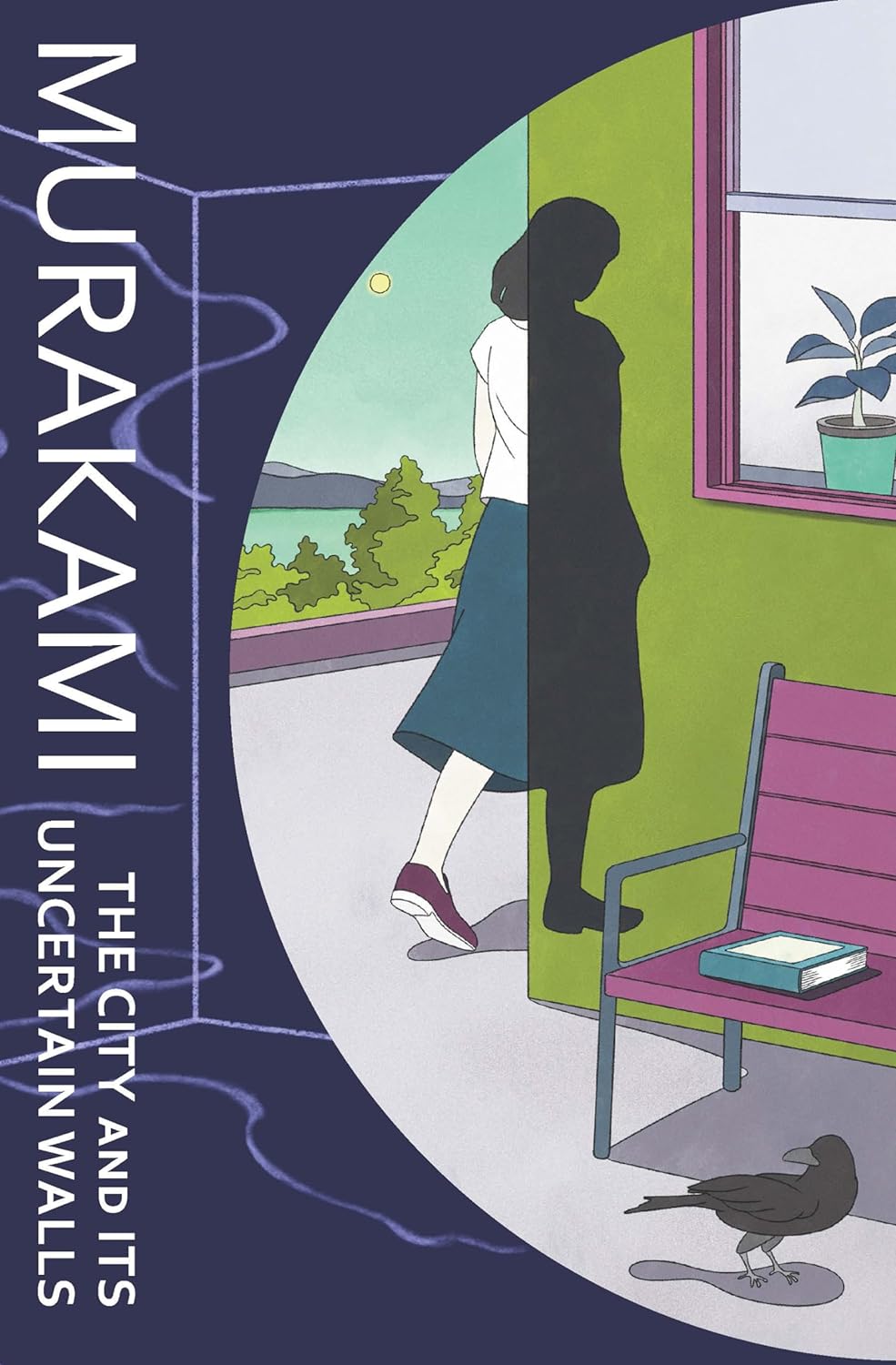
Despite longstanding criticism that his work revisits familiar motifs, Murakami remains firmly rooted in the distinctive universe that has defined his writing – one shaped by magical realism, ambiguity and quiet melancholy. In this novel, he returns to themes of identity, memory and disappearance, building a narrative that moves between reality and imagination.
A world between two realities
At the centre of the story lies a lost youthful love, abruptly interrupted by the mysterious disappearance of a young woman. From this absence emerges a parallel world: a walled city where the “true self” resides, governed by its own obscure rules and logic.
As in much of Murakami’s fiction, everyday reality coexists with elements that defy explanation. A library holds dreams instead of books; shadows detach from their owners; characters move between worlds that mirror and distort each other. The novel’s figures – including a boy marked by cultural references and an eccentric elderly librarian – inhabit a space where the ordinary and the surreal are inseparable.
The fragility of identity
Through these shifting landscapes, Murakami explores the instability of identity. The boundary between inner and outer worlds, like the walls of the city itself, remains uncertain. Characters experience fragmentation, absence and transformation, reflecting a broader meditation on what constitutes the self.
The narrative unfolds less as a linear plot than as a gradual immersion into a fluid, dreamlike environment. Readers are drawn into a continuous movement where meaning is suggested rather than fixed, and where emotional resonance takes precedence over explanation.
A familiar yet evolving voice
While recognisably Murakami in tone and structure, The City and Its Uncertain Walls revisits earlier ideas with renewed focus. The interplay of love, loss, memory and imagination forms a recurring pattern, yet here it is rendered with a reflective, almost meditative quality.
The result is a novel that invites the reader into a quiet but disorienting spiral, where the line between the real and the imagined steadily dissolves.