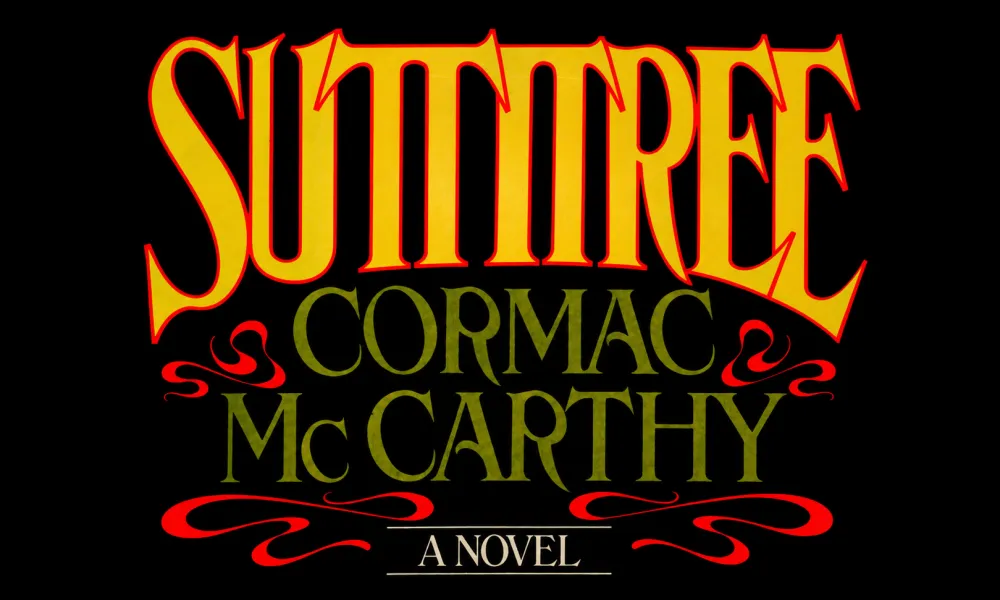

Readers of The Passenger, McCarthy's final novel, will recognise in Suttree many elements of the deeply personal mythology that runs through his writing: the solitary drifter, the man who prefers silence to public attention, the tireless reader, the lover of freedom and open spaces. These qualities emerge even more clearly in Suttree, first published in 1979 and now available in Greek for the first time.
At its centre is Cornelius Suttree, a man who abandons the security and expectations of his social class to pursue a life on the fringes, living on a houseboat along the Tennessee River. Rejecting comfort and convention, he immerses himself in a world far removed from the certainties of respectable society.
The forgotten America
Surrounding Suttree is a cast of petty criminals, labourers, alcoholics and wanderers, the defeated and forgotten figures who rarely find a place in the official narrative of American history. In McCarthy's hands, however, they become bearers of a deeper and almost elemental truth.
The novel's power lies in its ability to transform the lives of society's outcasts into a sweeping meditation on existence, belonging and survival. Through richly textured prose and moments of unexpected humour, McCarthy portrays a community living beyond the boundaries of convention, yet profoundly connected to the realities of human experience.
A key to McCarthy's literary universe
The novel is infused with many of the themes that would later become hallmarks of McCarthy's fiction: an intense relationship with landscape, an attraction to solitude, a distrust of the certainties of civilisation and an unrelenting search for authentic existence.
For that reason, Suttree also serves as an invaluable key to understanding McCarthy's wider literary universe. Many of the ideas and preoccupations that would later reach full expression in Blood Meridian, Child of God, The Road and, decades later, The Passenger are already present here in remarkable form.
More than four decades after its original publication, Suttree remains one of McCarthy's defining achievements: a sprawling, deeply humane novel that explores the lives of those pushed to the margins while asking enduring questions about freedom, identity and what it means to live outside the structures of ordinary society.