
The Israeli Embassy in Cyprus is examining the prospects of creating a model agricultural demonstration unit on the island, where advanced Israeli farming technologies could be presented and tested. The proposed facility aims to serve as a platform for testing, training and knowledge transfer, positioning Cyprus as a gateway for promoting innovative agricultural solutions to European markets.
These prospects were at the centre of an event held in Nicosia on Thursday, during which the report “Prospects for Cyprus-Israel Cooperation in the Agricultural Sector” was presented. The study, prepared by the consultancy firm Philagrotiki on behalf of the Israeli Embassy, explores opportunities to strengthen cooperation between Cyprus and Israel in the agricultural sector through innovation and technology.
A gateway for precision agriculture
A central element of the study is the assessment of the feasibility of creating a model agricultural demonstration unit in Cyprus.
“Israel wants to make Cyprus a regional hub for smart agricultural technologies, so that interested farmers from Europe and the Mediterranean can come here and receive information. At the same time, Cypriot farmers could also benefit if they are interested in making use of these technologies,” Savvas Maliotis, director of Philagrotiki, told Politis.
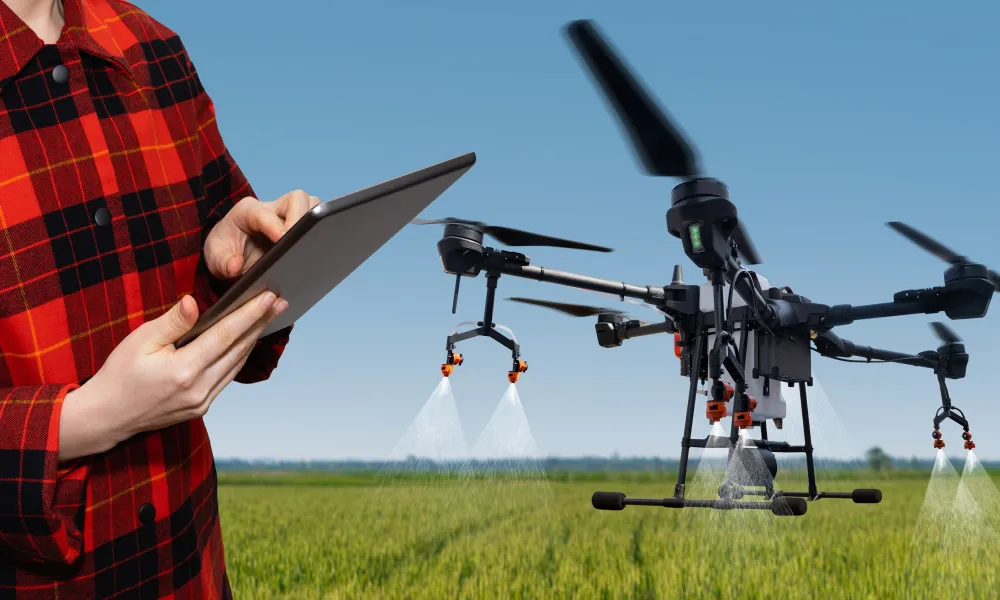
“The idea is to establish cooperation between Cyprus and Israel through which Cyprus can make use of the knowledge and technology currently applied in Israel in the field of precision agriculture, including software, soil sensors, unmanned aerial vehicles, or drones, and satellite images,” he added.
Challenges facing farmers in Cyprus
Representatives of the agricultural sector, academia, public organisations, industry and other stakeholders and experts took part in the presentation. Taking into account Israel’s progress in agriculture, they expressed support for the introduction of Israeli agricultural technologies to the island.
Participants exchanged views and submitted recommendations concerning the opportunities, challenges and practical aspects of the initiative.
One issue raised during this part of the event concerned the provision of water for Cypriot agriculture. Among other points, participants stressed the need to connect desalination technologies with agricultural units in Cyprus.
At the same time, representatives of research centres and private companies said it was very important for Cypriot farmers to adopt agricultural technologies. However, specific difficulties must first be overcome, including the limited extent of agricultural land and high energy costs, which make investment in these technologies appear financially unviable to the average Cypriot farmer.
It was stressed that the technologies are available, but Cypriot farmers are not adopting them, and solutions must therefore be found.
Precision agriculture is applied, among other areas, in irrigation, fertilisation, crop protection, harvest forecasting and hydroponics.
Planning the next steps
According to the Israeli Embassy, the recommendations and conclusions arising from the discussion will be carefully assessed as part of the planning of the next steps.
The embassy added that, in cooperation with the competent authorities, practical ways of advancing the initiative and supporting the development of a regional innovation hub for smart agriculture would be explored.
It also said that the initiative reflects the growing potential for deeper cooperation between Cyprus and Israel in agricultural innovation, promoting sustainable farming practices, technology transfer and regional cooperation aimed at addressing the challenges of modern agriculture.
Optimising agricultural production
Precision agriculture, which falls under the broader umbrella of smart farming, is a modern agricultural practice that uses technologically advanced tools and techniques to optimise production, use resources efficiently and reduce the environmental footprint.
It began developing during the 1990s through the use of satellite technology, including the first GPS systems and yield maps. Since then, its capabilities have evolved through the integration of sensors, drones, data analysis software, artificial intelligence and Earth observation data.
It offers multiple advantages at local, regional and global level, including optimising the use of inputs such as water, fertilisers and pesticides, reducing production and fuel costs, increasing yields and product quality, improving traceability and food safety, protecting the environment, reducing emissions and supporting evidence-based decision-making.
Precision agriculture is used in precision irrigation, fertilisation and crop protection through variable application rates, integrated pest and disease management using drones, sensors and artificial intelligence tools, crop monitoring and harvest forecasting through remote sensing, and precision hydroponics using automated nutrition and environmental control systems.
At the same time, the adoption of precision agriculture faces challenges that were also raised during the discussion, including a lack of training and technological familiarity among producers, as well as the high initial cost of equipment.