
To speak about Lia Haraki is to admit that the word “interdisciplinary” has long stopped being good enough. It’s inaccurate, simply insufficient. It fails to tell the story: that she is super in anything she touches, whether she stands in the spotlight or quietly engineers the conditions for others to shine.
Her body speaks first, moving with the certainty of someone who knows the earth will rise to meet her. She sings with instinctive ease, voice gliding through a room the way a dancer glides across a stage, never forcing, always arriving. And when she shifts into stand-up comedy, rhythm becomes punchline, timing becomes choreography, truth becomes a beautifully human stumble she flips into a victory lap.
She captures Cyprus with an effortless honesty, sharp-witted, full of contradictions, holding humor and heartbreak in the same breath.
She speaks the way a ballerina lands: soft and precise. Sentences balance on the tips of thought and feeling. Her artistry stretches across mediums the way a dancer’s leg extends into air, each form another limb she commands with instinctive grace.
Onstage, Lia Haraki is a constellation in motion. Offstage, a warmth that reminds you that brilliance can sit beside you without ever dimming.
Her acting breathes with the honesty of someone who can lift a veil without tearing it. As a mentor, she teaches like choreography rewritten in real time: patient, intuitive, breaking the impossible into steps that feel like home. Her aesthetic is deliberate yet organic, as if elegance simply chooses her.
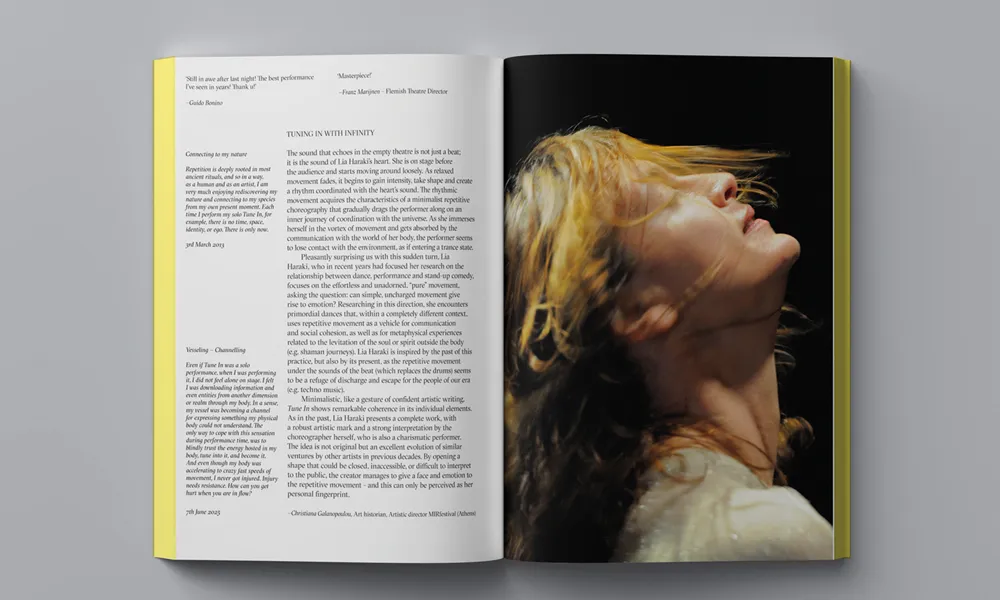
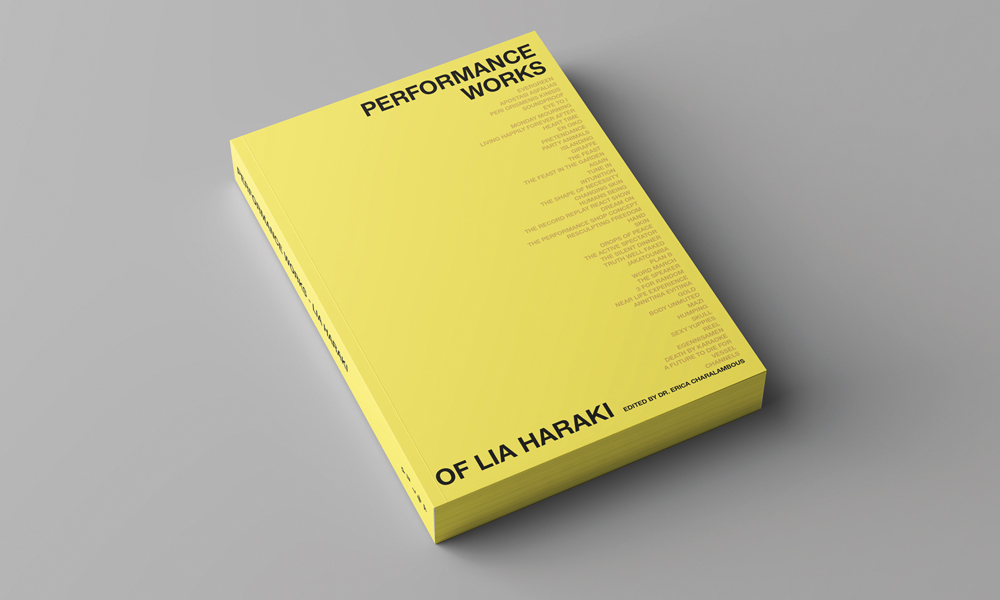
And now she offers a book, which is again like a dance: a harmony of archives, as she calls them, memories, rhythms, her truths, different things held together by her unmistakable approach. Her words move as her body does: fluid, fearless, arriving exactly where they’re meant to.
Lia Haraki is perfect in the most human way, perfect in her ability to take mastery, break it open, and reveal something grounded, and real at the center. She is a star made of fire, but not distance.
She has often spoken about the body as her first archive, the place where memory and artistic instinct first take shape.
What memory or sensation in your body first told you that you were an artist?
I remember putting these impossible tasks to myself as a kid like staying still in one position for hours. I was singing daily to my beloved plant, thinking this was the reason it grew, and I would often enjoy making burial rituals for dead insects I found in the garden. My rehearsals still look a lot like that.
Her artistry moves freely between disciplines, never confined to one form.
Do you feel that your mediums choose you, or that you choose them?
I just listen to my creative desires and jump into exploring them with whatever medium I want. I am driven by curiosity to explore a topic or a tool in an almost naive way. The last thing on my mind is whether I have the skill for it. I believe art and creation belong to all, so I do my sound, my poetry, my dance in my own authentic way, even if at times it may seem amateurish. For me authenticity is more important than skill in art. I know many would disagree with this view.
Comedy, singing, movement and spoken word flow through her as if they share a single source.
Where do these forms meet inside you?
They connect through the vessel which is the body. Honestly experiencing life through a human body must be the ultimate privilege, and now with AI taking over, the living body is becoming even more precious. In my work all these elements did not just appear, they are the result of over twenty years of exploration, practice and research. So now all I do is juggle with the elements like an experienced painter juggles with colors or a master chef mixes ingredients in their own unique way.
Lia has long been a catalyst for community building, always informed, present and actively supportive when it comes to social issues. In Cyprus, she has long been a catalyst for community building.
What does community mean to you now, after two decades of artistic work?
It means connecting with your own self primarily since all others are a mirror of you. Belonging in a tribe of humans with mutual interests, or values or drives is like having a home you belong to. Sometimes you are tired of your home, or you want to tidy it up, or find your space within it. Nevertheless, it is through the safety of the frame it offers that you can grow, develop and be on the same page with your constant becoming.
Her new book is framed as an unfolding archive.
What surprised you most while revisiting your past works?
I loved how through looking back at a long creative journey you can see patterns recurring and this gave me a sense of identity. I was surprised by the volume of work we have done with my collaborators. It was like there was so much energy that needed to come out the last twenty years which now seems like an explosion of creativity. I guess it was my calling to be a part of new beginnings with others of my generation.
The performance accompanying the book blurs lines between documentation and embodiment.
How did performing the archive shift your understanding of it?
In such an ephemeral artform like performance, the body is the archive that holds the memory of the live experience. That is why the book is a collection of statements and views from the bodies which experienced the works. It is like the works now exist only in the memory of those who witnessed them. Making a piece about performing the archive of the book was like visiting your best friend, for whom you know everything about, so nothing surprises you. Nevertheless, by embodying elements from the past you suddenly realize how new you have become and how much you have already shifted.
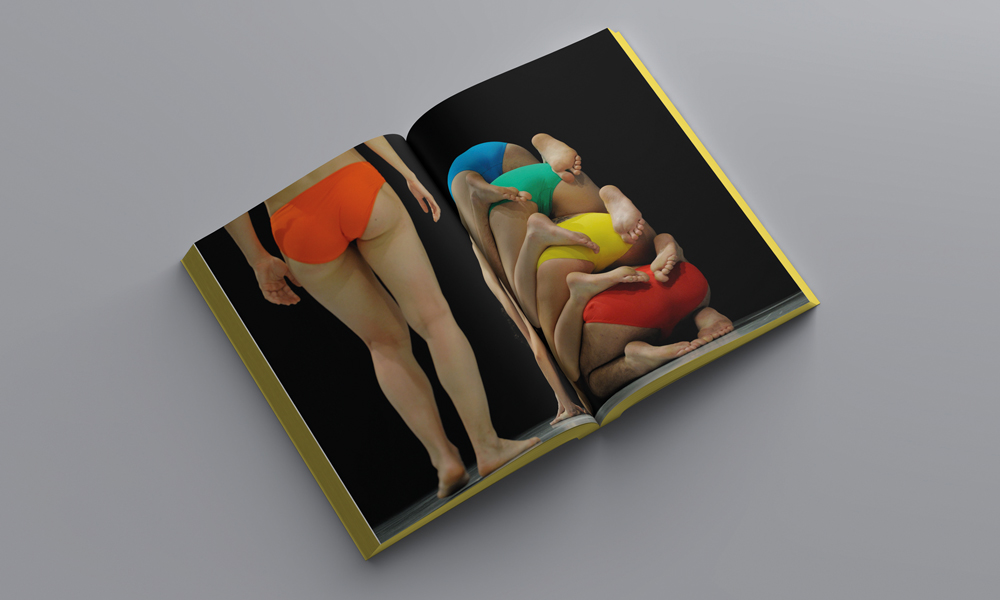
In her editor’s words:
“This book is not just a reflection on performance and the process of creating works; it is an unfolding archive of embodied knowledge, collective memory, and the quiet force of an artist who has shaped contemporary performance in Cyprus and beyond.”
With whom did you share the journey of this book?
I was very lucky to have an amazing team that made everything happen with care and precision. The encouraging, patient editor Erica Charalambous, the always considerate and authentic graphic designer Despina Kannaourou, the charismatic and appreciative photographer Pavlos Vrionides, the ever-so-precise Diamanto Stylianou who did the proofreading and the supportive Natalie Hadjiadamou for her detailed work.
As a mentor, she is known for her patience, intuition and generosity.
What do you wish young creators would allow themselves to trust more?
Young creators often face the challenge to be on the same page with their authenticity since they live in a noisy era of too many voices coming constantly out of their screen. It is essential they always find time to connect to the essence of who they are and stay away from comparison or imitation. Nature and breathing are key for that.
She has helped shape the contemporary performance landscape in Cyprus, by initiating the Dance House Lemesos and her own projects.
What future do you hope to see for the island’s performance landscape?
I believe in the local artists. There is so much talent on this island and such unique voices. It is not the landscape that needs to change, it is the supporting forces. The government just doesn’t invest in artists as much as they should. The funding is symbolic and decorative. Artists cannot live and deeply engage with their research. We are in a constant survival mode trying to persuade those who govern that culture is important.
Her work radiates both fire and warmth.
What keeps the fire burning?
My life has always been between creation and offering. Being a mother and a creator at the same time, that is, caring beyond the self, is what keeps me balanced and grounded. The one needs the other.
And finally, she imagines the next chapter.
What would you write on the first page of your next archive?
Potential…
Info: The book will be celebrated in two public launches: Wednesday, 17 December 2025, 19:00 at Polis Theatre in Nicosia (free admission, reservations at 22797400, Monday to Friday 9:00 to 15:00) and Monday, 22 December 2025 at 19:00 at the Rialto Theatre in Limassol (free admission, reservations available online).