


The Cyprus problem does not remain unresolved because there are no ideas. It remains unresolved because there is no trust, with political leaderships on both sides of the buffer zone often choosing rhetorical certainty over realism.
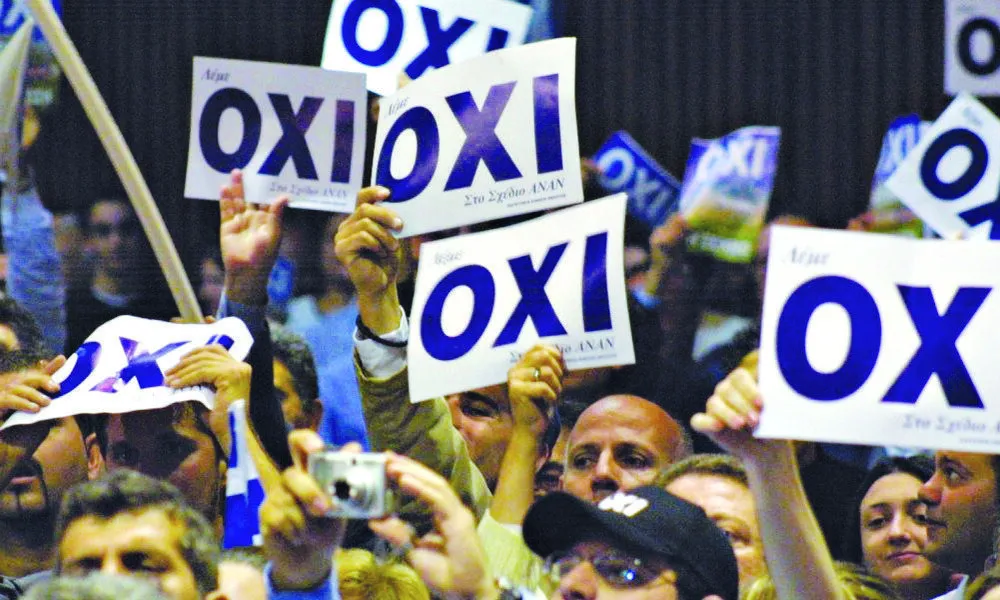
Since 2004, we have repeatedly asked citizens, particularly Greek Cypriots, to vote for a future they cannot see, touch or test. We ask them to place faith in promises, texts and international guarantees that feel fragile in the public imagination. The result is predictable. It may be time to think differently.
A phased settlement could be such an idea, with serious advantages. It reflects a hard reality shaped by two failed attempts at comprehensive resolution. If we return to referendums without tangible, pre referendum gains, society is likely once again to choose fear over hope.
Why the all or nothing model failed
The Annan Plan was not rejected in 2004 only because of its content, which, compared to today’s realities on the ground, was arguably more favourable. It was rejected for many reasons, but mainly because many Greek Cypriots felt, or were persuaded, they would be giving everything upfront without simultaneously seeing troop withdrawals, territorial returns or a functioning federation in practice.
Turkish Cypriots, meanwhile, fear, not without reason, that even if they say yes again and Greek Cypriots say no, they could wake up the next day still isolated.
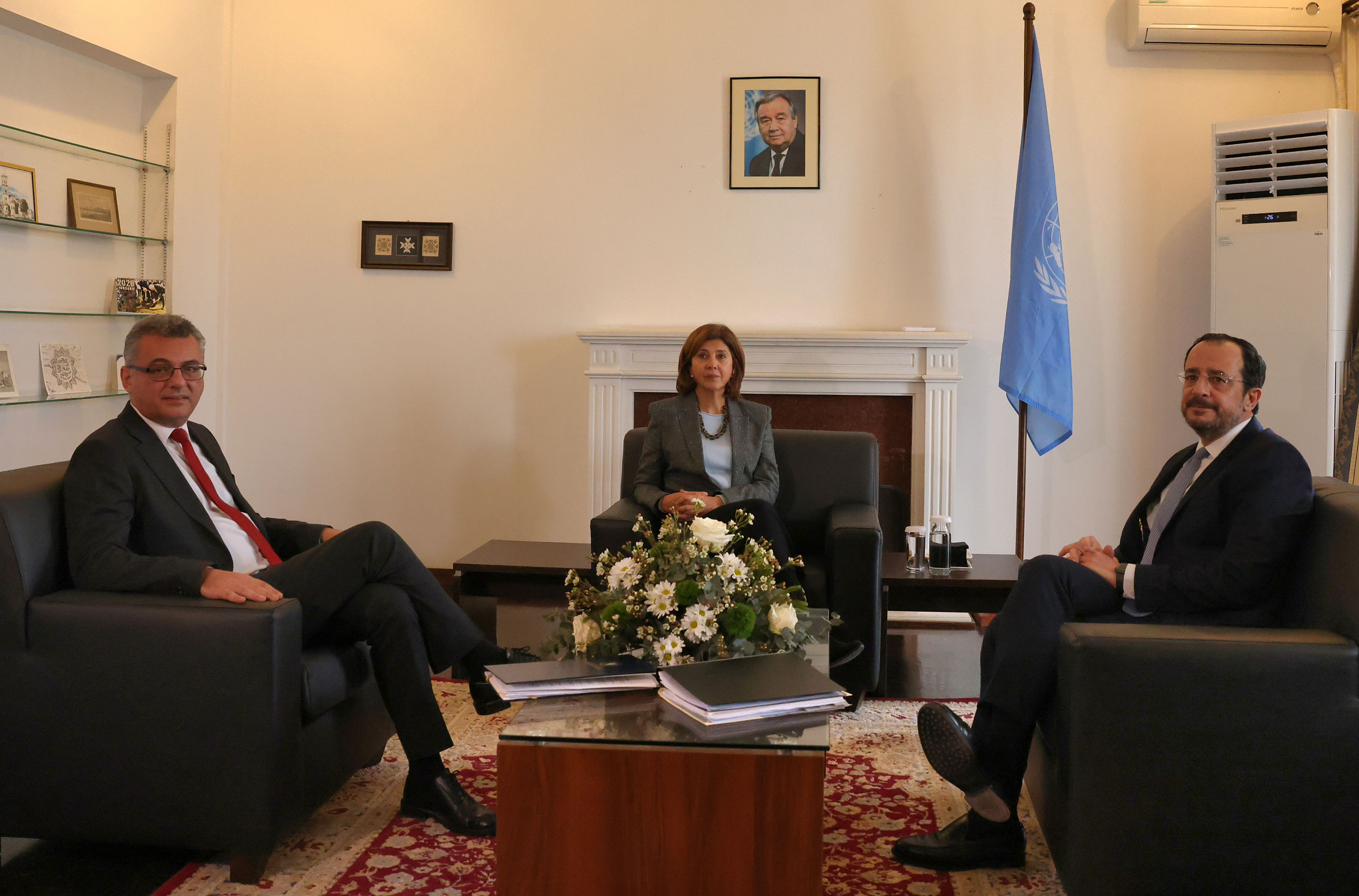
This mutual distrust cannot be resolved through slogans, whether President Nikos Christodoulides’ claim that he is ready to resume talks, or Tufan Erhürman’s condition that he cannot enter negotiations without guarantees and that, in the event of a new deadlock, Turkish Cypriot isolation must be lifted. The Cyprus problem will move only if there is productive time, new thinking, real testing, and gradual trust building.
What a phased settlement means
Most people broadly understand what a Cyprus settlement would look like. The parameters have been discussed for decades. In 2017, according to Antonio Guterres, we came close to agreement.
Today we should accept that reunification is unlikely to happen through a single giant leap. It may be more feasible through smaller, steady steps. That means defining what minimum agreements must be reached, what needs to happen before referendum day is set, and what must follow afterwards.
Phase 1: Agreement on four essentials
Before implementation can even begin in practice, there would need to be agreement on at least four points.
- First, a full settlement text, with all chapters closed.
- Second, a binding phased implementation timetable.
- Third, international oversight of implementation, including a dispute resolution mechanism.
- Fourth, clarification of Erhürman’s requested clause aimed at safeguarding Turkish Cypriots in the event of another failure.
Phase 2: A transitional period before referendums, six to twelve months
This is where trust building becomes tangible. The transitional period could follow a simple principle: whatever can be reversed is implemented before referendums; whatever cannot be reversed begins only after a yes vote.
The point is straightforward. Both sides would gain concrete benefits before being asked to decide.
What Turkish Cypriots could gain
- A controlled opening for direct trade with the EU, without political recognition.
- Participation in a committee with substantive responsibilities for natural gas management. Under these conditions, Turkish companies could also be invited to participate in drilling in Cyprus’ exclusive economic zone.
- Access to European programmes as a constituent community of Cyprus.
- Participation in transitional bi communal bodies preparing the new state, not as a minority but as an equal partner.
- What Greek Cypriots could gain
- A mapped and legally secured commitment for the return of specific territories after a yes vote.
- Pilot property returns in cases where no Turkish Cypriot displacement is involved, such as the fenced off city of Varosha or the area of Achna.
- An international presence, through the UN, NATO, the EU, or other arrangements, to monitor security and implementation.
Phase 3: Referendums
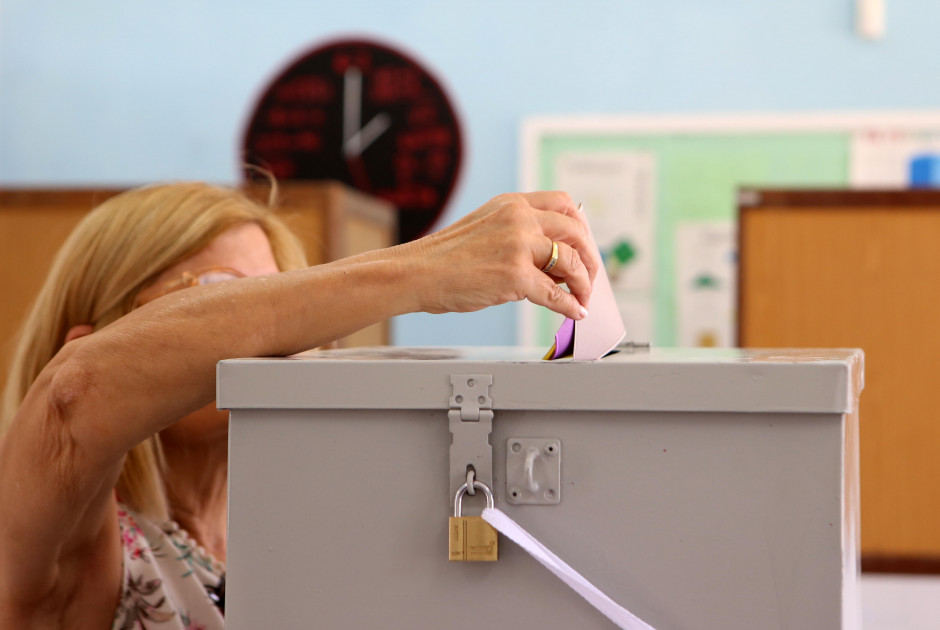
Both communities would vote knowing what happens the next day, having already gained something tangible. The vote would no longer feel like a decision made in mid air, as many experienced it in 2004. If the referendums pass, the process moves immediately to implementation.
Phase 4: Substantive implementation begins, zero to twelve months
This is where the major, irreversible steps start.
Greek Cypriot priorities
- Return of agreed territories according to the timelines negotiated.
- Launch of compensation and property return processes.
- Gradual withdrawal of foreign troops, with the aim of rapidly returning to the levels associated with ELDYK and TOURDYK (Hellenic and Turkish Forces in Cyprus).
Turkish Cypriot priorities
- Elections and integration into the new federal state with political equality. This would include Turkish Cypriot participation in federal ministries, involvement in appointments to independent institutions such as the attorney general and auditor general, and representation in European institutions according to the agreed allocation. A first phase of salary equalisation between Greek Cypriot and Turkish Cypriot public servants would also be pursued.
- Immediate easing of international isolation, with an initial step being the integration of Turkish Cypriot diplomats into the foreign ministry.
- Access to EU funds as a constituent community, comparable to how federal entities operate in countries such as Belgium and Germany.
Phase 5: Full implementation over three to five years
During this period, the following are completed:
- Territorial adjustments based on the Geneva 2017 map.
- Full implementation of property regulation mechanisms.
- Clarification and finalisation of the security regime in combination with guarantees.
- The full constitutional experiment of a Cypriot federation operating inside the EU.
What if Greek Cypriots say no again
Based on the 2004 experience, Erhürman has raised a politically reasonable question: if there is another Greek Cypriot no, what is the future for Turkish Cypriots?
The clause he seeks is not necessarily blackmail, particularly if a similar safeguard applies, by analogy, to Greek Cypriots. It reflects a real anxiety that Turkish Cypriots should not again live through decades of isolation because a referendum failed.
A realistic clause in the event of a failed referendum could state that the gains of the transitional period remain in force regardless of the outcome.
Politically, this would mean the following:
- If Greek Cypriots vote no, Turkish Cypriots do not return to full isolation. Trade and participation in European programmes continue.
- If Turkish Cypriots vote no, commitments on territory and property do not disappear. The settlement framework remains alive.
- In other words, a no vote would freeze the final transition, not the possibility of future progress, and not the economic cooperation already built between the two communities.

Risks and how they might be addressed
A staged approach is not a cure all. It carries risks.
- First, the creation of a permanent semi solution, a grey zone neither partition nor reunification.
- Second, Turkey could exploit the transitional period to entrench faits accomplis.
- Third, Greek Cypriots could feel they are legitimising occupation without meaningful returns.
One way to address these risks would be to shift the referendums to the end of the process. If referendums were held in five years, after all phases of implementation, with a clear agreement that a no vote would require an orderly move towards an alternative arrangement, then a route forward might emerge.
In that period, Greek Cypriots would have territorial returns and significant property progress. Turkish Cypriots would have developed their economy within the euro area, largely through tourism and broader EU linked activity. In that scenario, referendums would come to confirm a final direction, whether federation, two states, or another EU linked arrangement for Turkish Cypriots, and citizens would be forced to own the consequences of their choice.
A phased settlement does not guarantee success. It could, however, provide what is dramatically missing today: trust before the final leap.
In the Cyprus problem, real courage is not the comfort of maximalist slogans. Real courage is designing a path that reduces fear without cancelling rights.
If we keep asking people to vote without seeing light at the end of the tunnel, in a Cyprus and a Europe that are changing rapidly and increasingly vulnerable to xenophobia and nationalism, we may end up back in 2004. Only this time, everyone will be more exhausted, and even more divided.