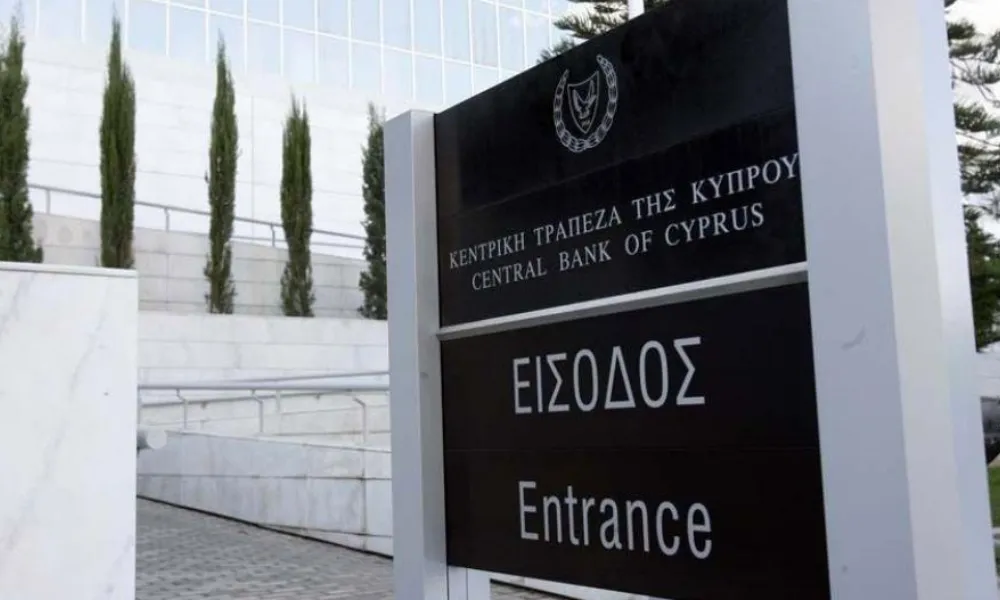

More than a decade after the 2013 banking crisis, Cyprus’s banking sector has undergone a profound transformation. A sharp reduction in non-performing loans has strengthened balance sheets and restored lending capacity, yet a large stock of problematic debt now sits with credit-acquiring companies, representing an ongoing structural challenge.
Banking sector resilience and capital strength
Speaking at the 13th Banking, Payments & Fintech Forum and EXPO, the Governor of the Central Bank of Cyprus, Christodoulos Patsalides, stated that the Cypriot banking sector constitutes a pillar of resilience and a driver of growth.
According to his remarks, the Common Equity Tier 1 capital ratio stands at around ten percentage points above the euro area average, while liquidity levels rank among the strongest in Europe. As a result, banks are now in a position to fulfil their core role of financing households and businesses.
Reduction of non-performing loans after 2013
The current position follows a targeted strategy adopted after the 2013 banking crisis. Central to this approach was the transfer of non-performing loans (NPLs) to credit-acquiring companies, which significantly reduced the NPL ratio in banks from around 50 percent in 2014 to below 4 percent today.
At the end of October 2025, the NPL ratio of the Cypriot banking sector, excluding loans and advances to central banks and credit institutions, declined to 4.2 percent, compared with 4.5 percent at the end of September 2025. Using the methodology applied in the European Banking Authority Risk Dashboard, which includes loans and advances to central banks and credit institutions, the ratio fell to 2.1 percent in October 2025 from 2.3 percent a month earlier.
Asset quality indicators and loan restructuring
The coverage ratio of NPLs with impairment provisions rose to 70.7 percent at the end of October 2025, up from 68.5 percent at the end of September 2025. Total restructured loans stood at €1.1 billion, of which €0.5 billion continued to be classified as non-performing.
Regulatory reforms in supervision and loan management, combined with the activity of credit-acquiring companies, enabled banks to shed toxic portfolios and refocus on healthy financing. New lending to businesses and households exceeded €4 billion in 2025, according to the latest available data.
Scale of non-performing loans outside banks
Despite progress within the banking system, the majority of NPLs remain outside banks. Data published by the Central Bank show that in the first half of 2025, credit-acquiring companies held loans totalling €19.7 billion, of which €18.5 billion were non-performing and €1.16 billion were performing. The total number of borrowers stood at 69,494.
In the second half of 2024, these companies held loans amounting to €20.97 billion, including €19.663 billion non-performing and €1.31 billion performing loans, with 73,815 borrowers.
The underlying economic burden
The €18.5 billion in non-performing loans held outside the banking system represents an underlying burden for the economy. While the banking clean-up strategy has proven effective, the stock of distressed debt remains substantial and continues to require careful management.
The approach adopted by the Central Bank of Cyprus and the European Central Bank prioritises restructuring of problematic debt through licensed loan servicers, ensuring that foreclosure remains a last-resort option rather than a primary tool.
Continuity and consistency in NPL management
Returning to the Governor’s assessment, the existing framework for managing non-performing loans has delivered tangible results and enabled the recovery of the banking sector. At the same time, the persistence of NPLs outside banks highlights the need for consistency in policy and implementation to safeguard financial stability and support sustainable economic growth.
Source: Politis Sunday edition