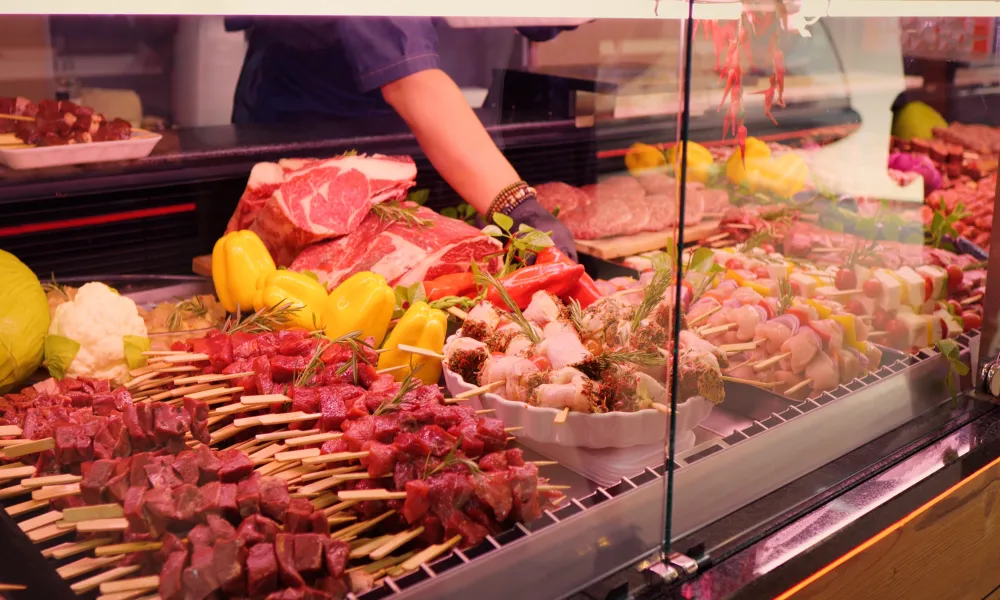
The rise in foot‑and‑mouth disease (FMD) cases and the ongoing culling of animals have created uncertainty in the domestic meat market, both in terms of supply as Easter approaches and price levels.
“The situation is very fluid,” head of the Butchers’ Association, Kostas Leivadiotis, told Politis, noting that “no one has a full picture” of how extensive the culling will eventually be.
Consumer concern is already visible in purchasing behaviour, with many people buying early, Leivadiotis said. He clarified, however, that the trend is not yet strong, as it is still the fasting period.
A key factor is the situation in the slaughterhouses, which have also been affected by the biosecurity measures in force. Carcasses from farms in supervised areas must be transported separately, at wider intervals, and transport vehicles must be disinfected, Leivadiotis explained.
Marios Antoniou, secretary‑general of the Cyprus Retail Association, told Politis that “the market will certainly be affected”, but it is still unclear how Easter supplies will be impacted. For now, he said, deliveries are proceeding normally.
Possible imports, but with obstacles
Under these conditions, one option is to resort to imports if domestic production cannot meet demand – a possibility confirmed by both the Retail Association and the Butchers’ Association. Cyprus typically imports Greek lamb, smaller quantities of pork and some beef.
However, this option may not fully address domestic shortages. Greece itself is dealing with outbreaks of sheep pox and some cases of foot‑and‑mouth. At the same time, Catholic Easter falls earlier than Orthodox Easter, meaning demand from Spain and Italy is already elevated.
Decisions on next steps
The Butchers’ Association has called a nationwide meeting with POVEK (the General Confederation of Professional Craftsmen and Shopkeepers) to discuss how to manage the situation, including potential imports and restrictions on slaughtering and the movement of animals between units.
“No one can make a firm decision,” Leivadiotis said, adding that “it will depend on how extensive the damage is.”
“We are very worried about what we will be able to sell for people’s Easter,” he concluded.