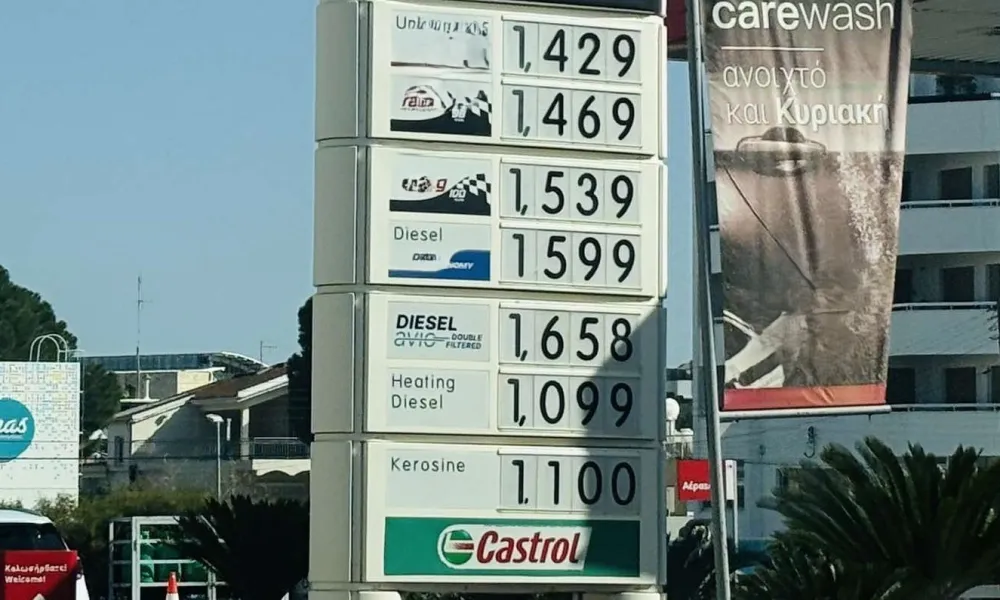

Fuel prices in Cyprus are expected to continue rising in the coming period, according to the President of the Cyprus Petrol Station Owners Association, Savvas Prokopiou.
Speaking to the Cyprus News Agency, Prokopiou said recent increases have been gradual but persistent, with price adjustments occurring every two to three days.
“We expect to at least reach previous peak levels and possibly rise by another five to six cents,” he said, noting that the situation remains fluid and difficult to predict.
No immediate concerns over supply
Despite the upward pressure on prices, Prokopiou said there are currently no concerns over fuel availability.
He noted that Cyprus maintains fuel reserves sufficient for approximately 90 days, adding that shortages have not been an issue in the past.
“If there is a supply problem, it will not affect Cyprus alone but many countries,” he said, describing the scenario as unlikely.
Calls for targeted government intervention
Prokopiou argued that the most effective government intervention at this stage would be fuel subsidies, similar to those implemented in 2022. At that time, subsidies reduced fuel prices by 8.3 cents per litre and heating oil by 6.5 cents. He also pointed out that the state benefits from rising fuel prices through increased VAT revenues, suggesting that part of these gains could be redirected to support consumers.
Price cap seen as impractical
The possibility of imposing a price cap on fuel was described as difficult to implement in Cyprus. Prokopiou referred to a previous attempt to cap retail fuel prices, which failed to remain in place for more than 24 hours. He said that for such a measure to work, it would need to be applied at the wholesale level, requiring fuel importers to temporarily reduce profit margins. Petrol station owners, he added, already operate within narrow margins, limiting their ability to absorb price controls.
Market pressures and oversight
According to Prokopiou, fuel stations have faced six price increases from import companies within a 13-day period. He said the Consumer Protection Service is responsible for monitoring pricing practices and addressing any cases of profiteering. He added that increased scrutiny is expected as prices rise, with authorities likely to carry out more frequent inspections.
Broader impact on economy
Prokopiou warned that continued increases in fuel prices could have wider economic consequences, driving up the cost of goods and services.
“If this situation continues and prices rise further, we will see increases across many products, and some of these prices may not come down again,” he said.
He added that while fuel and raw material prices may eventually decline, certain goods could remain permanently more expensive.
Source: CNA