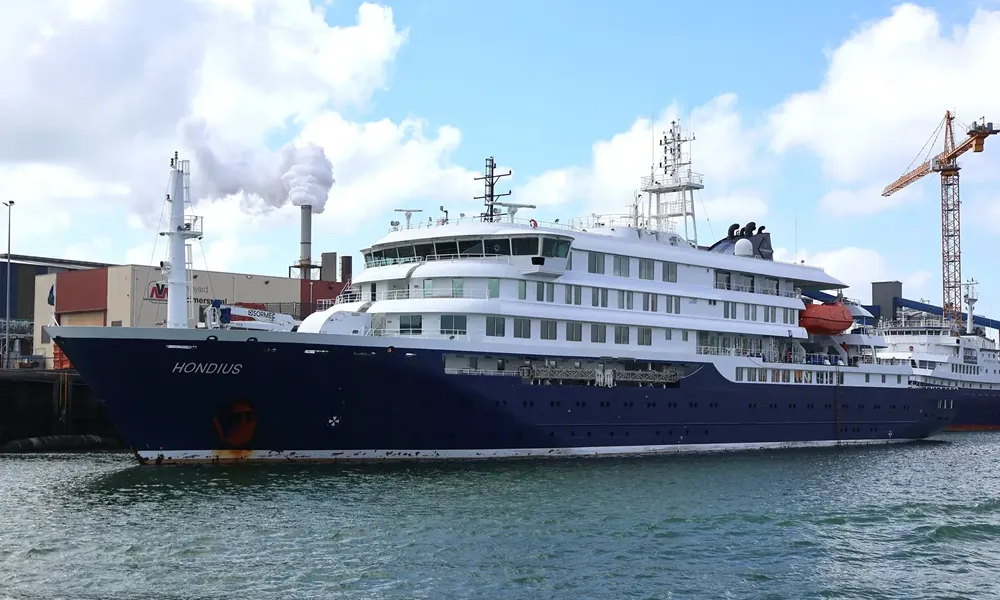

Three people have died and at least seven cases of hantavirus have been identified aboard a luxury cruise ship stranded off the coast of Cape Verde, with around 150 passengers and crew still confined on board as health authorities work to arrange evacuations and determine how the outbreak began.
The Dutch-flagged MV Hondius, operated by Netherlands-based Oceanwide Expeditions, left Ushuaia in southern Argentina in March on a voyage marketed as an Antarctic nature expedition, with berth prices ranging from €14,000 to €22,000. It travelled past mainland Antarctica, the Falklands, South Georgia, Nightingale Island, Tristan da Cunha, St Helena and Ascension Island before reaching Cape Verdean waters on 3 May. Cape Verdean authorities refused to allow the vessel to dock as a precaution, and the ship is now considering sailing on to Las Palmas or Tenerife for passenger screening and disembarkation. Spanish authorities said they had not yet received a formal request.
The dead are a Dutch couple and a German national. A British passenger was medically evacuated and is being treated at a private clinic in Johannesburg. South African health authorities confirmed that the British patient tested positive for hantavirus. The Netherlands confirmed the virus in the Dutch woman who died.
A timeline of deaths the passengers did not know about
The first victim, a 70-year-old Dutch man, died on 11 April as the ship was heading towards Tristan da Cunha, a remote volcanic island in the south Atlantic. His body remained on board for 13 days before being disembarked on St Helena on 24 April, with his wife accompanying the repatriation. Three days later, the wife fell ill. She later collapsed at O.R. Tambo International Airport in South Africa and died. On 2 May, a German passenger also died on board. Oceanwide Expeditions said the cause of that death had not yet been established.
Throughout this period, life on the ship continued with little apparent awareness of the unfolding crisis. On 1 May, the ship's chef posted a joyful video of himself and colleagues swimming in the ocean off a rubber dinghy, the Hondius anchored in the background. Reuters could not establish whether he was aware of the deaths at the time.
"All we want is to feel safe"
The human cost of the quarantine was put into words by Jake Rosmarin, an American travel blogger on board, whose social media posts traced the arc from ordinary expedition cruise to containment ordeal. Days before the crisis became public, he had been filming cows on Tristan da Cunha and recording the sighting of a critically endangered Wilkins's Finch on Nightingale Island.
On the evening of 2 May, he posted that he was on board the Hondius, declining to say more out of respect for those involved. The following day, visibly distressed, he addressed his followers directly. "We're not just headlines. We're people with families, with lives, with people waiting for us at home," he said, his voice trembling. "All we want is to feel safe and to get home."
The virus and its origins
Hantavirus can cause fatal respiratory illness and is primarily spread when particles from rodent droppings or urine become airborne. It does not transfer easily between humans, though there is some documented evidence of human-to-human transmission in the Andes Virus strain found in Argentina and Chile. The World Health Organisation confirmed seven cases on board, two laboratory-confirmed and five suspected, and said the risk to the wider public was low, with no need for travel restrictions.
The Netherlands' National Institute for Public Health and the Environment said the source of the outbreak remained unclear. "You could imagine, for example, that rats on board the ship transmitted the virus," a spokesperson said. "But another possibility is that during a stop somewhere in South America, people were infected via mice and became ill that way." Daniel Bausch, a visiting professor at the Geneva Graduate Institute, noted the significance of the ship's Argentine departure point given the presence of the Andes Virus strain in that region, but added: "The good news is this is not going to be a big outbreak."
As a precaution, all passengers have been instructed to remain in their cabins. The incubation period for hantavirus can last several weeks, meaning some on board may not yet be showing symptoms. There are no specific drugs to treat the disease; care focuses on supportive treatment, including ventilation in severe cases.
Both Cape Verde and South African authorities sought to reassure the public. Since the Hondius has remained at sea, Cape Verde said, "there is currently no risk to the population on land."
Source: Reuters