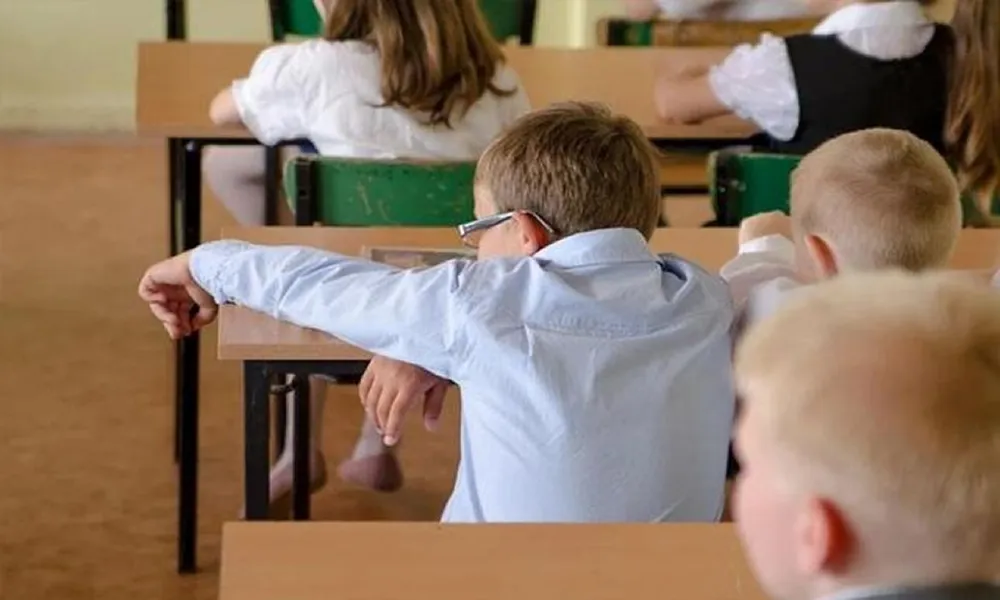
At a time when children increasingly grow up reading from screens, Cyprus is taking part in an international assessment that examines not only whether pupils can understand a text, but also how they perform in a digital reading environment. From 21 April to 29 May, Year 4 pupils from 150 primary schools across Cyprus are participating in the main phase of the PIRLS 2026 international study.
PIRLS (Progress in International Reading Literacy Study) is one of the most important global assessments of reading literacy. It measures children’s ability to understand written texts, while also examining the broader contexts in which reading skills develop.
Cyprus’ participation this year carries particular significance, as the assessment is conducted electronically, marking the country’s first participation in ePIRLS. This component evaluates pupils’ ability to read and understand digital and online non-linear texts on a computer. In practical terms, the test goes beyond traditional reading and also looks at how children navigate pages featuring images, information, hyperlinks and multiple layers of text.
What the study measures
As part of PIRLS, pupils complete electronic reading comprehension tests, alongside questionnaires completed by students, teachers, schools and parents or guardians. The study captures not only pupils’ performance, but also the factors that influence it.
These include reading habits at home, children’s attitudes towards reading, teaching practices and the resources available in schools. The choice of Year 4 is not incidental. At this age, children have typically mastered the basic mechanics of reading and begin to use reading as a tool for learning. The assessment therefore focuses not simply on decoding words, but on deeper comprehension of meaning.
What the previous cycle showed
Cyprus is taking part in PIRLS for the third time, following its involvement in 2001 and 2021. In the previous cycle, Cypriot pupils recorded an average score of 511 points, improving on the country’s first participation in 2001, when the average stood at 494 points.
The 2021 results, however, did more than indicate overall progress. They also highlighted disparities of clear relevance to education policy. Girls outperformed boys, scoring 515 points compared with 506. An even wider gap emerged in relation to socio-economic background. Pupils from more advantaged backgrounds recorded an average score of 543 points, compared with 457 points for those from less advantaged backgrounds.
Children’s relationship with reading itself also proved significant. In PIRLS 2021, 37 per cent of pupils in Cyprus reported a very positive attitude towards reading, 41 per cent a somewhat positive attitude and 21 per cent no positive attitude at all. Pupils with high confidence in their reading abilities achieved markedly better results than those who reported low confidence.
This year’s assessment will therefore offer an updated picture of where Cyprus stands in reading literacy. The key question is not only whether pupils can understand a text, but also whether the improvement recorded in 2021 has been sustained.