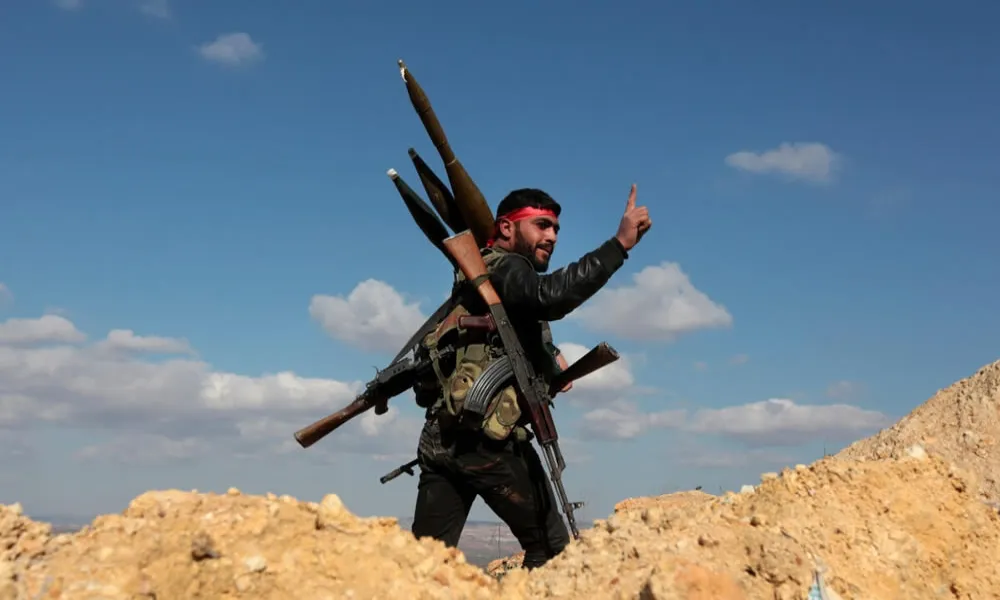
The issue first surfaced in a report by CNN, which cited intelligence sources claiming that the administration of President Donald Trump had opened discussions with Iranian Kurdish factions about the possibility of arming them and using them as “boots on the ground” in a potential land campaign against Iran. According to the report, the talks involved Kurdish groups operating from Iraq’s autonomous Kurdistan region and focused on whether they could launch cross-border operations into western Iran while U.S. and Israeli forces continued their aerial campaign.
The White House denied that President Trump had authorized any plan to deploy Kurdish fighters into Iran but acknowledged that contacts with Kurdish actors had taken place in the context of broader regional consultations. Following the CNN report, the issue was quickly taken up by international media outlets and analysts, triggering debate about whether Washington might be exploring a proxy ground option in the conflict.
The strategy discussed in these reports centers on the possibility of arming or coordinating with Iranian Kurdish opposition factions based in Iraq’s Kurdistan region. For Washington, the idea fits a familiar operational pattern: using local forces to complement U.S. airpower and weaken adversaries without deploying large numbers of American troops. But for Türkiye, the prospect revives long-standing fears that American reliance on Kurdish militias to advance regional objectives could destabilize Türkiye’s own domestic security environment.
A new front in an expanding war
The current war between Iran and the United States, launched after coordinated U.S.-Israeli strikes on Iranian military infrastructure in late February, has so far remained largely an aerial campaign.
Operation Epic Fury, as described by U.S. officials, aims to degrade Iran’s missile capabilities, air defenses, naval assets and command structures. American and Israeli aircraft have targeted military installations across Iran, while cyber and intelligence operations have reportedly intensified.
Yet airpower alone rarely determines the outcome of conflicts involving large territorial states. Military planners have long recognized that pressure from multiple directions, including internal unrest or insurgency, can amplify the impact of external strikes. Iran’s Kurdish regions, stretching across the mountainous northwest near the Iraqi border, offer precisely such a potential pressure point.
Iran’s Kurdish population, estimated at several million people, has historically maintained a tense relationship with Tehran’s central authorities. Kurdish political movements in Iran have sought greater cultural rights, autonomy or federal arrangements, while armed factions have periodically conducted insurgent activities.
The geography also matters. Kurdish opposition groups operate bases in Iraq’s Kurdistan region, just across the border from Iran. These mountainous areas are difficult for conventional armies to fully control and have long served as sanctuaries for Kurdish guerrilla organizations.
From a purely military perspective, the logic of the reported U.S. discussions is clear. Kurdish fighters could harass Iranian security forces along the border, forcing Tehran to divert troops away from other fronts and potentially encouraging broader unrest inside the country.
However, strategy rarely exists in isolation from regional politics.
The Kurdish question and great-power strategy
The Kurdish issue has repeatedly intersected with the strategic calculations of outside powers.
Spread across Türkiye, Iran, Iraq and Syria, the Kurdish population numbers between 25 and 30 million people, making it one of the world’s largest stateless ethnic groups. Kurdish political movements have historically pursued autonomy, cultural rights or statehood in different forms across these four countries.
For global powers, Kurdish groups have often been useful partners in regional conflicts.
The United States has worked with Iraqi Kurdish factions since the 1990s, when a Western-enforced no-fly zone effectively created the foundations of today’s Kurdistan Regional Government (KRG). After the 2003 invasion of Iraq, Kurdish peshmerga forces became key partners for the U.S. military.
More recently, Kurdish militants in Syria formed the backbone of the Syrian Democratic Forces, Washington’s primary ground partner in the campaign against the Islamic State group between 2014 and 2019. These partnerships have delivered tactical successes for Washington. Kurdish militias proved effective local forces capable of controlling territory while minimizing American casualties.
But the relationships have also generated deep regional tensions, particularly with Türkiye.
Türkiye’s longstanding red lines
Ankara views many Kurdish armed movements through the prism of its decades-long conflict with the outlawed Kurdistan Workers’ Party (PKK), which both Türkiye and the United States designate as a terrorist organization. From Ankara’s perspective, groups such as the Kurdistan Free Life Party (PJAK) in Iran and the PYD/YPG in Syria are part of a broader PKK-linked network operating across borders and sharing personnel, logistics and ideology.
For years Turkish officials have warned that arming Kurdish groups in neighboring countries risks strengthening militant structures that could ultimately threaten Türkiye’s territorial integrity. Security planners in Ankara see the Kurdish militant landscape as a transnational ecosystem in which weapons, fighters and operational experience move fluidly between Syria, Iraq, Iran and Türkiye.
The United States partnership with Syrian Kurdish forces during the anti-ISIS campaign became one of the most contentious issues in U.S.-Turkish relations over the past decade. Ankara repeatedly argued that weapons supplied to Kurdish militias in Syria could eventually reach PKK networks targeting Türkiye. Although Washington insisted the cooperation was limited to counterterrorism operations against the Islamic State, the dispute left a lasting imprint on bilateral trust.
If Washington now extends military support to Iranian Kurdish factions, Turkish policymakers fear that a similar dynamic could emerge along another frontier. PJAK, active in Iran’s Kurdish regions and linked to the PKK, is viewed in Ankara as part of the same militant architecture Türkiye has fought for decades. Analysts warn that turning Iranian Kurdish groups into partners in a broader anti-Iran campaign could transform the Iran-Iraq borderlands into a new operational hub for PKK-linked organizations, enabling weapons flows, recruitment and operational coordination across the region.
The timing is particularly sensitive. In recent months Ankara has signaled cautious interest in reducing tensions surrounding the Kurdish issue through a mix of security measures and political engagement. Any surge in Kurdish militant activity in neighboring countries, especially if backed by external powers, could complicate these fragile efforts by emboldening hardline factions and weakening incentives for disarmament or political integration.
For Türkiye such a development would represent more than a diplomatic dispute with Washington. It would directly affect a domestic security challenge that Ankara has long tried to manage through a combination of military operations, political reforms and regional diplomacy.
Why Ankara’s reaction matters
Türkiye’s concerns carry weight partly because of its military capacity and regional role. With roughly 550,000 active personnel, the country fields the second-largest army in NATO after the United States. Its air force operates more than 250 combat aircraft, while a rapidly expanding defense industry has produced advanced systems including Bayraktar TB3 unmanned aircraft, the SİPER air defense system and indigenous ballistic missiles such as Bora and Tayfun.
Over the past decade Türkiye has also demonstrated a readiness to use military force beyond its borders when it perceives direct security threats. Turkish forces have repeatedly conducted operations against PKK bases in northern Iraq and launched several large-scale incursions into northern Syria.
This posture suggests that any U.S. effort to arm Kurdish factions along Türkiye’s southern or eastern periphery would not remain a purely diplomatic disagreement. Ankara has previously shown it is prepared to respond militarily when it believes Kurdish militant networks are expanding with external support.
Risks of escalation
Beyond Türkiye’s concerns, the strategy itself carries broader regional risks.
Iran has already demonstrated its willingness to respond forcefully to Kurdish opposition groups operating from Iraqi territory. In recent days, Iran’s Islamic Revolutionary Guard Corps conducted drone and missile strikes against Kurdish militant bases in Iraq’s Kurdistan region, claiming they were targeting “terrorist” organizations.
Such strikes raise the possibility of escalating cross-border violence that could destabilize Iraq’s relatively autonomous Kurdish region.
Baghdad has historically struggled to control armed groups operating within its borders, and any sustained confrontation between Iran and Kurdish militias could further complicate Iraq’s fragile internal balance.
The Kurdistan Regional Government also faces difficult choices. While Kurdish political leaders maintain relations with Washington, they are wary of being drawn into direct confrontation with Iran, a powerful neighbor with significant influence in Iraqi politics.
The NATO dimension
For Washington, the challenge is not only managing tensions with Iran but also avoiding a confrontation with a critical NATO ally. American cooperation with Kurdish militias in Syria during the fight against ISIS already strained relations between Washington and Ankara. If similar support were extended to Iranian Kurdish factions such as the Kurdistan Democratic Party of Iran or the PKK-linked PJAK, Turkish officials warn that the consequences could be even more severe.
Ankara could respond through diplomatic protests, expanded cross-border operations in northern Iraq, or economic pressure on Iraq’s Kurdistan region, including restrictions on energy flows and trade routes.
Such tensions could complicate NATO coordination at a time when the alliance is already confronting multiple security challenges, from the war in Ukraine to instability across the Middle East.
Some analysts caution that sustained disagreements over Kurdish militias could also push Türkiye to deepen pragmatic cooperation with other regional powers, including Iran or Russia, on issues related to border security and Kurdish militancy.
Kurdish calculations
For Kurdish opposition groups themselves, the situation is equally complex and far from unified. Some Iranian Kurdish factions see the current confrontation between Iran and the United States as a potential strategic opening. Leaders of several organizations have called on Iranian security forces to defect and suggested that unrest in Kurdish regions could expand if Tehran’s military capabilities weaken under sustained external pressure.
Yet Kurdish political and armed movements are fragmented, with different agendas, ideological orientations and regional alliances. Regional Kurdish alliances add another layer of complexity. In Iraq, the Kurdistan Regional Government is dominated by two rival parties, the Kurdistan Democratic Party (KDP) and the Patriotic Union of Kurdistan (PUK). While both maintain relations with the United States, they must also balance sensitive ties with neighboring Iran and Türkiye, which are critical for trade, energy flows and political stability.
Hosting Iranian Kurdish opposition groups along the border has therefore long been a delicate balancing act for Iraqi Kurdish authorities. Openly facilitating cross-border insurgency against Iran risks retaliation from Tehran and straining relations with Turkiye. Iran’s Revolutionary Guard has already launched missile and drone strikes against Kurdish militant positions in northern Iraq in response to such threats.
The broader Kurdish political landscape across the region also shapes these calculations. Kurdish forces in Syria, particularly those linked to the Syrian Democratic Forces, remain closely connected to the PKK network and maintain varying degrees of cooperation with the United States. Developments involving Iranian Kurdish groups inevitably resonate across this wider Kurdish political sphere.
At the same time, Kurdish movements remain deeply conscious of their history with external powers. Repeated episodes in which foreign support was withdrawn, from Iraq in the 1970s to more recent developments in Syria, have fostered caution among Kurdish leaders about relying too heavily on outside military backing.
For many Kurdish factions, the dilemma is familiar. Cooperation with external powers can provide leverage against regional governments such as Iran, but such alliances have often proven temporary. Without sustained international support, any uprising could provoke severe retaliation from Tehran’s security apparatus.
As a result, while some Kurdish groups may view the current crisis as an opportunity, most appear cautious about committing fully to a confrontation whose outcome remains highly uncertain.
Washington’s strategic dilemma
For the United States, the potential use of Kurdish fighters illustrates a broader strategic dilemma in confronting Iran. Direct American ground intervention would carry enormous political and military costs. Using local forces offers a more flexible and politically manageable alternative.
Yet relying on proxy forces inevitably entangles Washington in complex regional rivalries. Supporting Kurdish factions could strain relations not only with Türkiye but also with Iraq’s central government and potentially other regional actors concerned about ethnic fragmentation.
President Trump and the US policymakers must therefore weigh the short-term tactical benefits of opening a Kurdish front against the long-term geopolitical consequences.
An uncertain path ahead
As of now, the scenario remains largely speculative. No confirmed U.S.-backed Kurdish ground operation has begun, and Washington continues to emphasize that its campaign against Iran remains focused on degrading Tehran’s military capabilities.
Yet the mere possibility of mobilizing Kurdish militias underscores how the conflict could evolve beyond airstrikes into a more complex regional struggle. For the Kurds, the moment presents both opportunity and danger. For the United States, it offers a potential strategic lever but one laden with geopolitical risk. And for Türkiye, it revives a familiar concern: that great-power competition in its neighborhood may once again intersect with the unresolved Kurdish question in ways that threaten regional stability and its own national security.