People who live, work or move around in the countryside can take simple precautionary measures to avoid snake bites and reduce risk, according to Ilias Strachinis, a biologist and PhD candidate at the Department of Biology of Aristotle University of Thessaloniki.
Speaking to the Athens–Macedonian News Agency, Strachinis said basic preventive measures include wearing sturdy, high footwear that covers the ankle and gloves – preferably welding gloves – when carrying out manual work outdoors.
He also stressed the importance of paying attention to where one places hands and feet, while hikers should stick to open, clear paths and avoid walking through tall grass, especially when wearing low shoes.
“There are snakes with dangerous bites that carry venom and whose bite can be potentially fatal,” he noted.
“We know that the viper exists in its habitat, so it is our responsibility to take very simple safety precautions.”
Strachinis likened snake awareness to road safety:
“When we drive, we don’t pass a stop sign without stopping. We know another car may be coming, so we slow down and check. We must do exactly the same in environments where there is a risk from snakes.”
When is there danger?
Asked when people are actually at risk, Strachinis was clear:
“We are at risk of being bitten by a viper only if we grab it, step on it, or approach it at very close range – especially when it is warning us by hissing. In the wild, being grabbed means death, so the viper defends itself; it does not attack.”
“There are no snakes that stalk humans or set ambushes to bite us, as is often claimed. A bite occurs only if we deliberately or accidentally grab a viper, step on it, or approach within a few centimetres while it is hissing and warning.”
In short, if we encounter a snake in the countryside, there is no need to panic or kill it. The correct response is to move away calmly and leave it alone. Snakes do not attack humans unless they feel their life is threatened.
According to Cypriot naturalist Giorgos Konstantinou, when a person gets too close, a snake adopts a defensive posture and produces a hissing sound to warn them to back away. In most cases, however, a snake will flee as soon as it detects a human presence.
How to recognise a bite
If bitten and unsure whether the snake was venomous, the bite mark can offer clues.
- Non‑venomous snakes usually leave a reddish mark shaped like a horseshoe or clock, requiring only basic disinfection.
- Venomous snakes, such as the viper, leave one or two small puncture wounds at the bite site.
What to do after a bite
Strachinis emphasised that first actions after a bite are critical, warning that many online instructions are inaccurate or outdated.
According to updated guidelines aligned with the World Health Organization (WHO):
- Stay calm
- Do not walk or drive
- Seek immediate transport to hospital
- Keep the bitten limb immobilised
- Do not tie off the limb
- Do not cut the skin
- Do not suck out venom
- Do not apply ice
- Do not take painkillers or alcohol (except paracetamol)
- Do not use venom extraction devices
- Call 112 for emergency assistance
In Cyprus, hospitals are within safe reach wherever one may be located.
Strachinis stressed that tourniquets must not be used, as restricting blood flow can lead to clot formation and tissue necrosis. Venom spreads primarily through the lymphatic system, making tight binding ineffective and dangerous.
“The period between the bite and hospital arrival is crucial. Wrong actions can seriously endanger life. Some actions are far more dangerous than any venomous animal – such as tight bindings, cutting the skin, sucking venom, panic and walking.”
The use of antivenom in the field is also not recommended, due to the risk of severe allergic reactions. Antivenom administration must be decided only by specialised doctors in hospital settings, and only in serious cases.
Snakes and the ecosystem
“Snakes are extremely important, like all members of an ecosystem that has evolved over tens or hundreds of thousands of years,” Strachinis said.
“They are like gears in a finely balanced machine.”
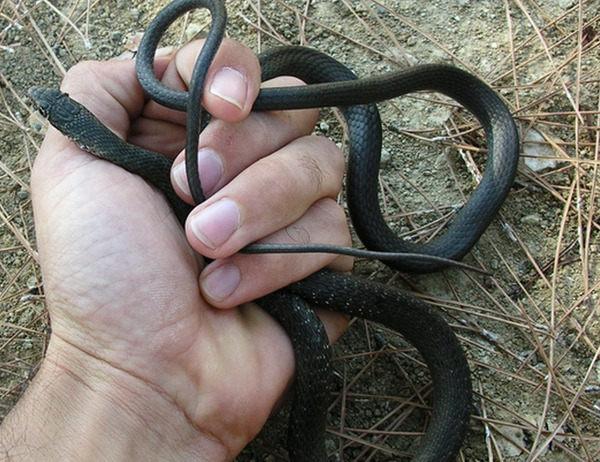
Snakes act both as predators of smaller animals and as prey for larger animals, including strictly protected bird species. They also help control rodent populations, which can multiply rapidly, as well as certain large insects.
Cyprus: watch out for the viper
According to naturalist Giorgos Konstantinou, all snakes are active from spring to autumn, as reptiles are cold‑blooded and rely on environmental heat to function. In winter they hibernate, though Cyprus’ mild climate means snakes may occasionally be seen even in winter on sunny days.
Cyprus is home to eight snake species, of which three are venomous, but only one is dangerous to humans: the viper (fina or ochia).
- Viper – widespread from coastal areas to the highest peaks of Troodos
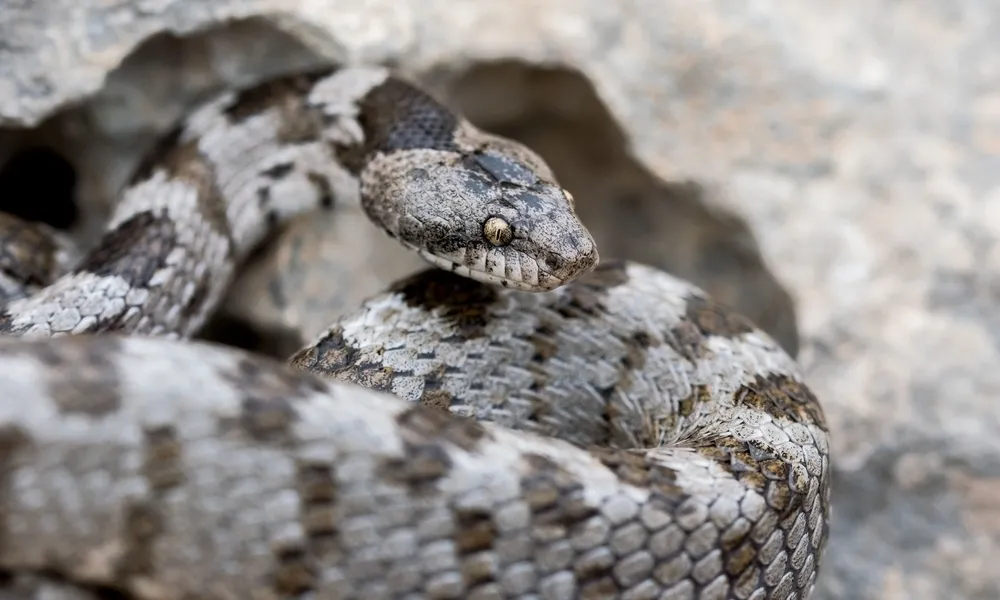
- Arrow snake (saita) and cat snake (xylodropis) – venomous but harmless to humans; rear‑fanged with mild venom used only to subdue prey
- Cyprus whip snake – endemic to Cyprus, found mainly in Troodos forests
- Cyprus water snake – endemic subspecies, endangered; found at Paralimni Lake and parts of Troodos foothills
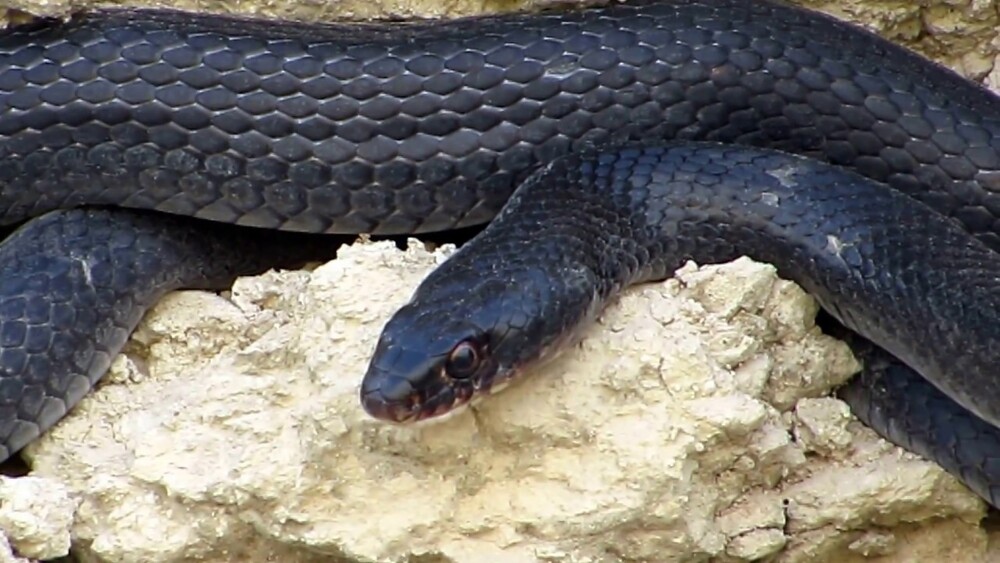
- Black snake (therko) and dromos snake – widespread
- Blind snake (typhlinos or anilios) – subterranean, feeds on ant eggs, mostly in lowland areas