
By Eleni Alexiadou*
The European Union is accelerating its transition to organic farming, setting a strategic target for 25 per cent of total agricultural land to be farmed organically by 2030. Today, organic farming already covers 17.7 million hectares across the EU, accounting for 10.9 per cent of total agricultural land. Brussels is investing substantial funds and policy tools through programmes such as Horizon Europe’s OrganicTargets4EU and the new Common Agricultural Policy (CAP) to speed up the green transition of Europe’s primary sector.
Within this European framework, Cyprus is seeking to emerge as one of the Mediterranean’s most dynamic examples of organic production growth. Holding the rotating Presidency of the Council of the EU in the first half of 2026, the country has set a target of reaching 11,000 hectares of organic farming by 2027, covering around 9 per cent of its cultivable land.
Cyprus’s CAP Strategic Plan 2023–2027 (PEPAC) foresees a 250 per cent increase in supported organic farmland, confirming a clear policy direction towards a more sustainable agricultural model.
This evolution is particularly significant given that, just two decades ago, organic farming in Cyprus accounted for barely 2 per cent of agricultural land. Today, the figure has already reached 8.3 per cent, with the country systematically investing in quality products, green practices and export‑oriented production.
The challenge of expanding organic production in EU member states and in Cyprus was placed at the centre of the DG AGRI Press Trip in Cyprus, a journalistic mission organised by the European Commission.
Feed cereals
As explained by Krystallia Constantinou, head of the Quality Products Unit at Cyprus’s Ministry of Agriculture, Rural Development and Environment, organic farming in Cyprus began cautiously in the early 2000s but is now recording steady and continuous growth.
The bulk of organic production consists of cereals for animal feed, which account for around 60 per cent of organic farmland. Olive groves follow at 17–18 per cent, vineyards at approximately 4 per cent, with smaller areas dedicated to crops such as carob trees and vegetables.
At the same time, organic livestock farming is also on an upward trajectory. Cyprus already has four organic cattle farms and 27 sheep and goat farms, supporting, among other products, the production of organic halloumi. There are also organic egg units and limited organic poultry production.
A new action plan
Cyprus’ new organic farming strategy to 2030 does not focus solely on increasing acreage. It places particular emphasis on building consumer trust and cultivating a culture around organic products.
According to Constantinou, the national action plan was designed in a simple and practical manner, as Cyprus is effectively building a comprehensive policy model for the sector from the ground up.
Planned measures include awareness campaigns, participation in festivals, promotional activities in supermarkets, and educational programmes in schools focusing on the European organic logo.
Special emphasis is also placed on green public procurement for the period 2027–2030, drawing on the Danish model, alongside the creation of technical support groups for producers in all districts.
The message from the Cypriot authorities is clear: organic farming cannot rely solely on subsidies.
“We want farmers to choose organic farming because they believe in it, not just because they are paid to do so,” Constantinou said.
Organic and premium
As part of the Commission‑organised DG AGRI Press Trip, Cyprus showcased success stories of agricultural enterprises that are moving away from mass production and intensive cultivation, seeking instead to build a different future for agriculture – more sustainable, higher quality and deeply connected to nature and local identity.
From Ygea Farm in the hills of Mathiatis to the historic Strakka Estate in Deftera, a new generation of Cypriot farms is investing in organic cultivation, biodiversity, reforestation and premium high‑value products, addressing the challenges of climate change, water scarcity and international competition.
The heads of both units presented their operating models to the visiting journalists.
Nature is in control
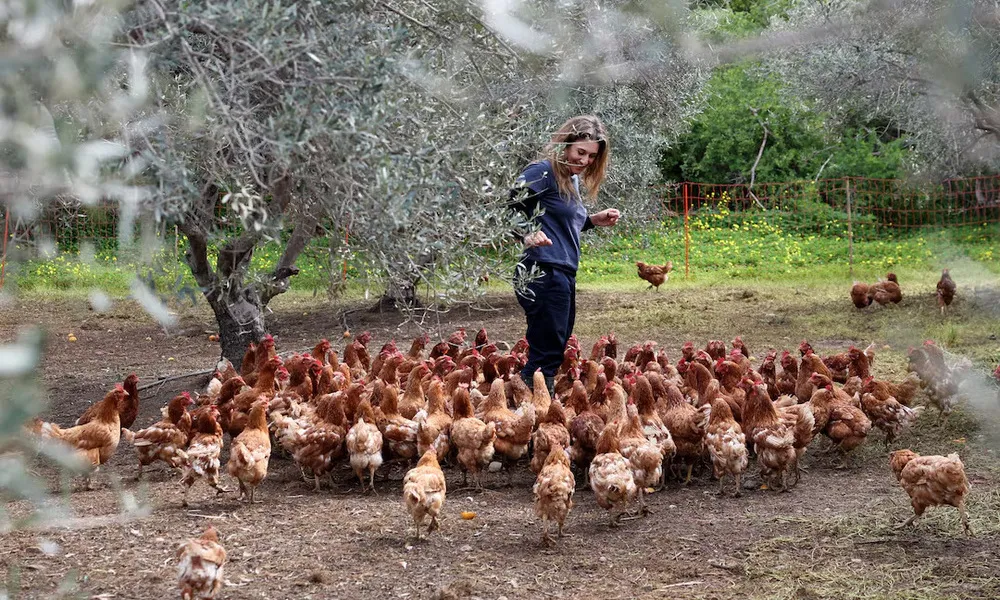
In the hills of Mathiatis, just outside Nicosia, Ygea Farm, founded by Giorgos Konstantinidis, resembles a natural ecosystem more than a conventional agricultural unit. Among olive trees, carob trees, cypresses, fig trees and aromatic plants, around 6,000 laying hens are raised freely under low‑stress conditions, without chemical interventions.
The farm produces up to 150,000 organic eggs per month, supplied mainly to high‑end restaurants, brunch venues and specialised organic retailers. As Konstantinidis explains, the farm’s philosophy is built on the principle that “nature is in control”.
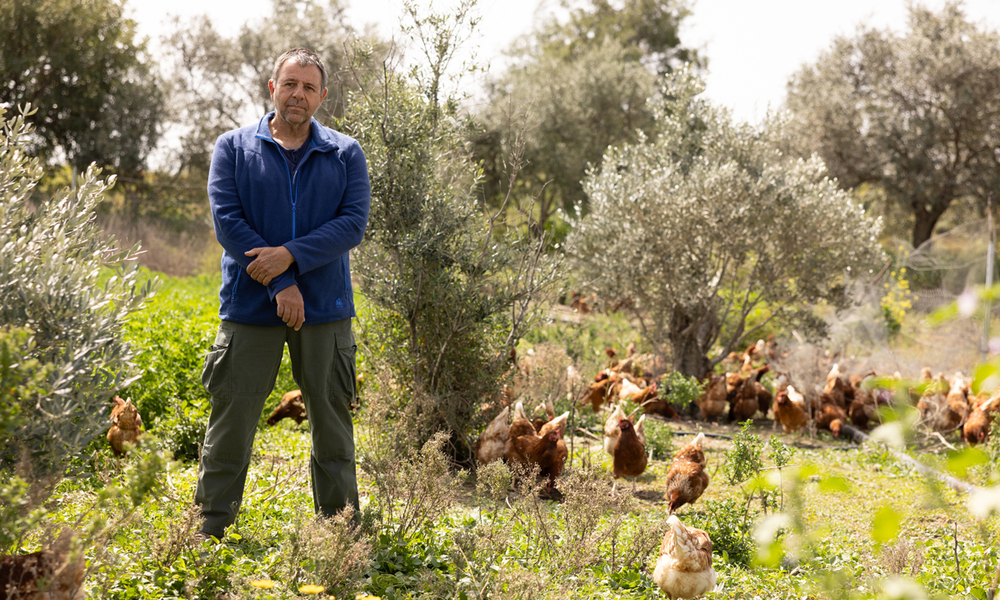
“Nature can live without us. We cannot live without nature,” he says, describing a production model without chemical fertilisers or pesticides, relying instead on natural fertilisation from the hens themselves and preserving wild vegetation to protect the soil.
The story of the farm is deeply personal. The family lost land, livestock and property following the events of 1974 in the occupied areas.
“You can buy land again. We never found my grandfather,” Konstantinidis says emotionally, explaining that the project also serves as a personal tribute to his family’s history.
Olive oil from trees up to 700 years old
Beyond eggs, Ygea Farm manages around 2,000 olive trees, including ancient specimens estimated to be up to 700 years old. Cultivation is carried out without ploughing and with natural ground cover from wild vegetation, a practice that helps retain moisture and soil fertility.
The resulting olive oil is organic, extra virgin and cold‑pressed, with high polyphenol content and low acidity. Yet the most ambitious aspect of the project is not production itself, but reforestation and ecosystem restoration. Each year, new trees are planted and natural vegetation reinforced, with the aim, as the founder puts it, “to pass on to future generations land that is better than what we inherited”.
Five centuries of history
A few kilometres away, in Deftera, Strakka Estate carries five centuries of history. Operating since the Venetian period and recorded on Abraham Ortelius’s historic 1573 map of Cyprus, the estate has evolved into a modern model of organic cultivation and premium olive oil production.
According to founder Antonis Papantoniou, Strakka Estate turned to organic farming as early as 1998, investing in sustainability and quality.
“The first years of transition were difficult and yields were lower. Today, however, we see that quality and sustainability can coexist,” he notes.
The estate manages around 30 hectares of olive groves and produces an average of 20 tonnes of olive oil per year, mainly from Koroneiki, Kalamon and local Cypriot olive varieties.
High polyphenols
In recent years, Strakka Estate has invested dynamically in premium, high‑value products, such as olive oils with high polyphenol content and flavoured versions infused with lemon, orange, garlic, chilli and Cypriot herbs.
For more than a decade, it has collaborated with the Cyprus Institute on research programmes focusing on sustainable agriculture, water management and improved irrigation. Around 80 per cent of production is sold on the Cypriot market, with the remainder exported abroad.
At a time when Mediterranean agriculture faces mounting pressure from climate change, water scarcity and global competition, both Ygea Farm and Strakka Estate highlight an alternative development model: smaller‑scale, more sustainable, focused on quality, biodiversity and a strong connection between product, place and history.
A second life
Two further examples of next‑generation agricultural investment combining innovation, sustainability and outward orientation are Akaki Grove and Bio‑Solea, also presented during the DG AGRI Press Trip.
One of Cyprus’s most distinctive circular‑economy models is developing at Akaki Grove, the model farm created in 2019 by Elena Christoforou in the village of Akaki, Nicosia district. Drawing on her academic background in geography, anthropology and psychology, Christoforou transformed farmland into a regenerative agriculture model based on permaculture principles and environmental sustainability.
Certified organic since 2022, the farm spans around 10 hectares and hosts approximately 1,000 olive trees and 1,200 citrus trees. Due to water scarcity and growing climate pressure, production is now increasingly focused on olives, as citrus crops require up to eight times more water.
The most innovative aspect is the ‘Kot‑kot project’. Retired laying hens are introduced into the olive groves, where they roam freely, contributing to natural soil fertilisation and reducing pests and weeds. At the same time, Akaki Grove collaborates with local schools and businesses to collect food waste used as poultry feed, reducing food waste and greenhouse‑gas emissions.
The model combines organic cultivation, circular economy principles and environmental education, aiming to create a scalable agro‑ecosystem model for the future.
Organic honey on international markets
In the mountainous regions of Cyprus, Bio‑Solea is transforming beekeeping into an integrated ecosystem of sustainable agriculture, agro‑tourism and premium exports. Founded by Chrysanthos Hatzigiannis, the company began in 2011 as a small natural beekeeping unit and has since expanded into a multi‑activity venture linking production, biodiversity, education and sustainable development.
Despite its relatively small production base, Bio‑Solea has already opened export channels to markets such as France, the Nordic countries and Japan, focusing on premium, fully traceable, high‑quality products.
The company manages around 250 hives and 200 nucleus colonies, aiming to reach 500 hives in the coming years. Annual honey production ranges from 2.5 to 5 tonnes, with a long‑term target of 10 tonnes.
Varieties include thyme honey, forest honey, blossom honey, as well as more distinctive flavours such as myrtle and sumac. The honey remains raw, unfiltered and unheated, produced without pesticides or chemical interventions.
A botanical bee park
At the heart of Bio‑Solea’s philosophy is the Botanical Bee Park, a 12‑hectare biodiversity park featuring more than 1,000 plant species, aromatic herbs and native Cypriot flora.
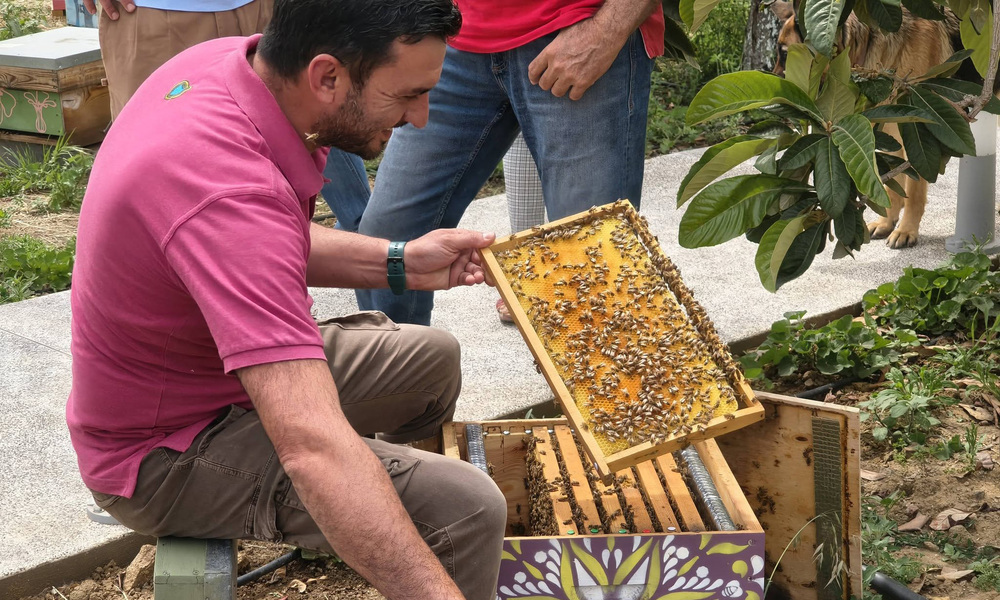
Citrus trees, pomegranates, apples, cherries, figs and nuts are also cultivated, creating a natural ecosystem that supports bee nutrition year‑round. From next month, the site will be open to the public, as part of an agro‑tourism investment aimed at creating a comprehensive ecological and educational destination in Cyprus’s mountain areas.
With investments exceeding €3 million and plans for new products, dairy units and wellness centres, Bio‑Solea seeks to showcase a new model of agricultural development that links nature, sustainability and international outreach.
Europe steps up inspections of organic units worldwide
At the same time, Brussels is intensifying inspections of imported organic products, as more than 2.9 million tonnes of organic goods enter the EU market each year from 126 countries. The EU now operates an extensive international inspection system covering farms, warehouses, processing facilities and certification bodies from Latin America to Africa and Asia.
A notable example is Peru’s San Martín region, once known for illegal coca cultivation, which has been transformed through international programmes into a major centre for organic coffee and cocoa production.
Since the application of Regulation 848/2018 in 2022, the EU has enforced common standards for all organic products, whether produced within or outside the Union. Today, more than 500,000 certified producers operate in organic agriculture across Europe, while Cyprus aims – through investments of €454.9 million under the new CAP – to turn organic farming and quality products into a key driver of rural development and exports.
Experimental sparkling Cypriot wine
The European press mission also reached the steep slopes of the Commandaria region, where a young Cypriot winemaker is re‑imagining the relationship between tradition and contemporary wine.
Andreas Evangelou, a fourth‑generation vine grower and founder of Commandaria Evangelou Winery in Agios Konstantinos, Limassol district, presented not only his historic Commandaria but also an innovative new product: a natural pét‑nat sparkling wine with natural bubbles, still at the experimental stage and not yet on the market.
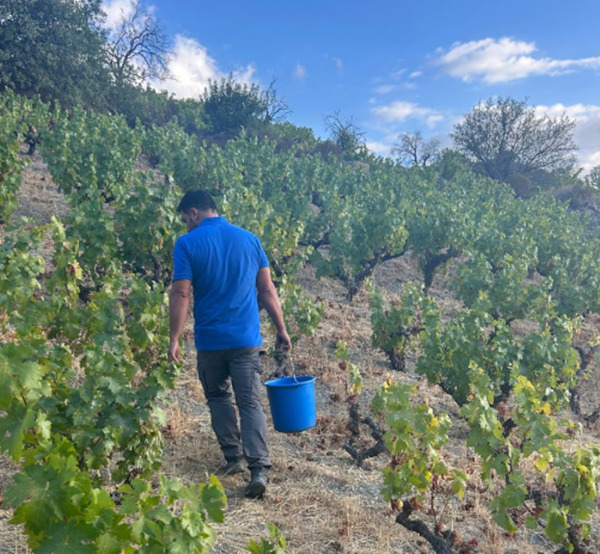
Produced using the Pétillant Naturel method – natural carbonation during fermentation without added interventions – the wine follows the philosophy of natural wines. All vineyard work is done manually, without mechanical intervention, adhering strictly to organic and precision viticulture principles.
The vineyards cover around seven hectares at altitudes between 820 and 920 metres, in a mountainous Mediterranean environment with pronounced day‑night temperature differences. Despite its small production – around 4,000 bottles per year – the winery already exports to the UK and the Netherlands, with discussions under way to enter markets such as Greece, Australia, the United States and Sweden.
At the same time, investments continue to transform the winery into a visitor‑friendly wine‑tourism destination, expected to be completed by 2027.
In an era when the global wine market seeks authenticity, small‑scale production and natural methods, Evangelou is determined to prove that even a small mountain village in Cyprus can give birth to a new, contemporary wine identity with international prospects.
*Special correspondent of AMNA in Cyprus