
US President Donald Trump has suggested that negotiations between Washington and Tehran could resume within days, pointing to renewed diplomatic momentum despite a stalled first round of talks.
Speaking by phone to a reporter in Islamabad, Trump said developments could unfold “over the next couple of days”, indicating a shift from earlier scepticism about the likelihood of progress in Pakistan’s capital. He later described a return to negotiations as “more likely”, praising Pakistan’s army chief, Asim Munir, for his role in facilitating the process.
The initial round of talks over the weekend, led by Vice President JD Vance, ended without a breakthrough. However, officials in Islamabad say efforts are ongoing to keep both sides engaged.
UN Secretary-General António Guterres has called for a resumption of “serious negotiations”, reiterating that the crisis cannot be resolved through military means.
Israel and Lebanon move towards direct talks
Alongside the US–Iran track, diplomatic activity is also intensifying between Israel and Lebanon. Representatives of the two countries agreed in Washington to begin direct negotiations aimed at reaching a longer-term settlement, following what both sides described as productive preliminary discussions.
Details including the timing and venue of the talks are yet to be finalised.
Israel’s ambassador to the United States, Yechiel Leiter, said the discussions showed both sides were aligned in their objective of countering Hezbollah. He also made clear that Israel does not support French involvement in the process.
Lebanon’s ambassador, Nada Hamadeh Mouawad, described the meeting as constructive and called for a ceasefire between Israel and Hezbollah.
Despite the diplomatic signals, fighting has continued. Israel maintains that Lebanon is not covered by the US–Iran ceasefire arrangement and has stepped up air strikes and ground operations in the south. Hezbollah, which was not part of the talks, condemned the process and claimed responsibility for rocket fire targeting Israeli border areas.
Conflict continues as humanitarian toll rises
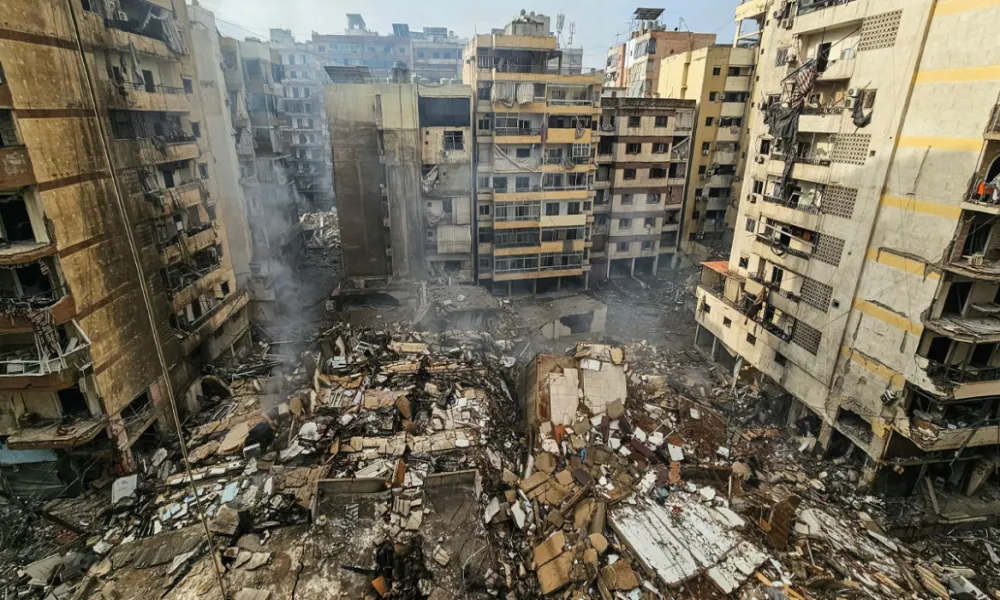
Lebanon has been drawn deeper into the regional conflict since early March, when Hezbollah launched attacks in support of Iran following a large-scale US and Israeli offensive. Israel responded with sustained bombardment and ground operations.
According to Lebanese authorities, more than 2,000 people have been killed and around one million displaced, roughly a fifth of the population. Israel says it has lost 13 soldiers, with additional injuries reported in recent clashes.
In Beirut, residents voiced fatigue after weeks of fighting, with some expressing cautious support for negotiations if they can lead to a lasting peace.
Gulf tensions and market reaction
In the Gulf, the US military said it prevented six vessels from leaving Iranian ports within 24 hours of imposing a blockade, in response to what Washington described as Iran’s effective closure of the Strait of Hormuz.
The disruption initially drove oil prices higher, though markets later eased on expectations that renewed US–Iran talks could reduce tensions. US crude fell below $100 per barrel, with West Texas Intermediate at $91.28 and Brent at $94.79.
While the prospect of renewed negotiations has offered some relief, uncertainty remains over whether diplomacy can translate into a sustained de-escalation.
Source: CNA