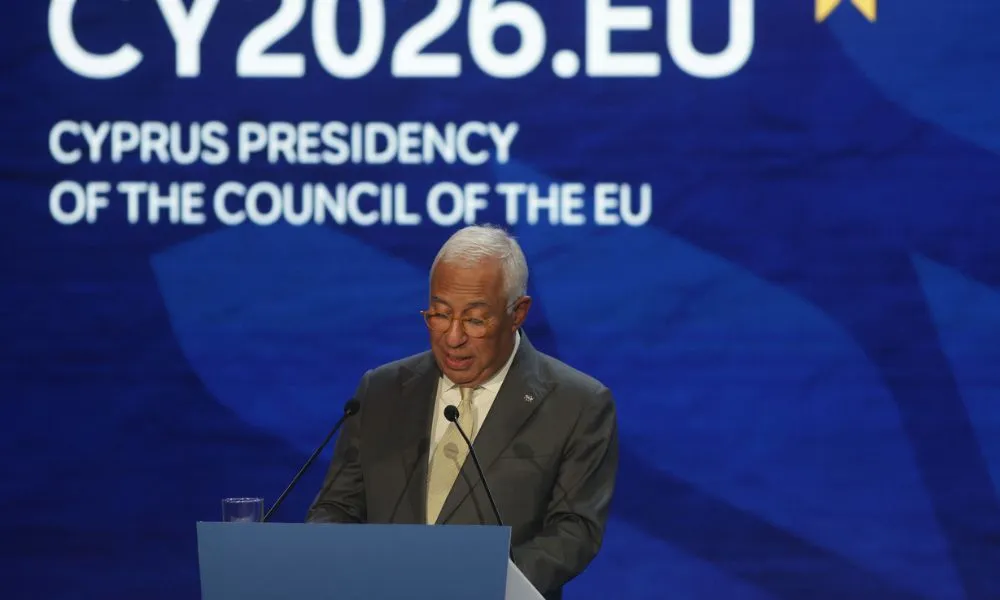

The European Union will not accept violations of international law, whether in Cyprus, Ukraine, Gaza, Latin America or Greenland, European Council President António Costa said on Wednesday, delivering a firm geopolitical message from Nicosia during the opening ceremony of Cyprus’ Presidency of the Council of the EU. Speaking at the Cyprus Theatre Organisation (THOC), Costa underlined that respect for international law and multilateralism remains a non-negotiable principle for the Union at a time when the global rules-based order is increasingly under pressure.
International law as Europe’s red line
Costa said Cyprus assumes the EU presidency at a particularly challenging moment, as unilateral actions and breaches of international norms undermine global stability. He stressed that Cyprus’ own history of occupation and division gives it a profound and practical understanding of the value of international law for peace and security among nations.
“The European Union cannot accept violations of international law – whether in Cyprus, Latin America, Greenland, Ukraine, or Gaza,” he said.
Referring specifically to Greenland, Costa underlined that it belongs to its people. “Nothing can be decided about Denmark or Greenland without Denmark or Greenland,” he said, reaffirming the EU’s full solidarity with both.
A presidency rooted in unity and engagement
Addressing President Nikos Christodoulides, Costa said that under his leadership, Cyprus’ presidency will help make Europe “more secure, more prosperous, more engaged and more united.” He described the presidency’s motto, “An autonomous Union. Open to the World,” as particularly timely.
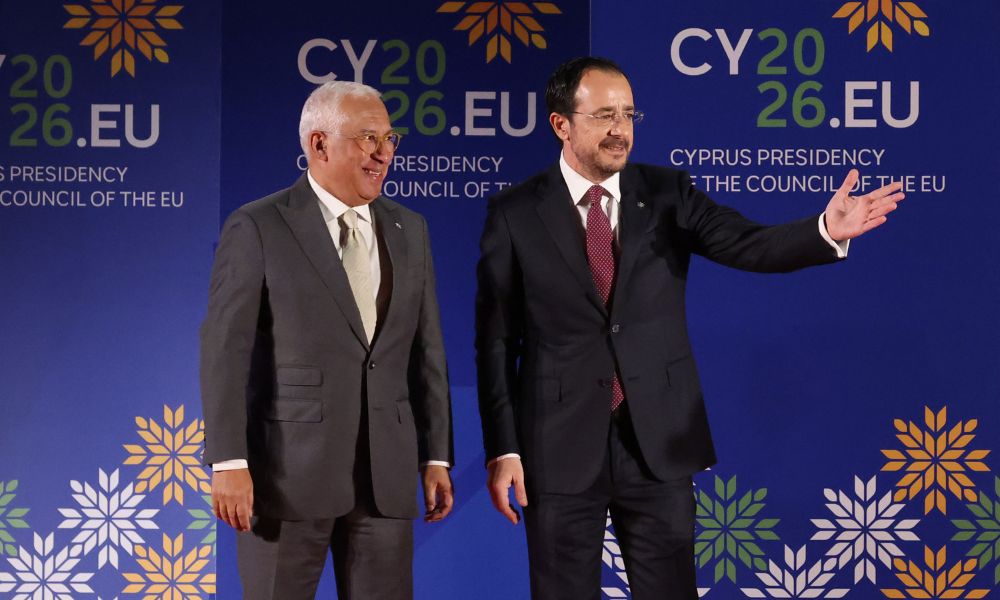
As a Mediterranean island at the crossroads of Europe, the Middle East and Africa, Costa said Cyprus brings a unique perspective to the EU’s work, understanding the importance of building bridges, fostering dialogue and advancing inclusive European solutions.
Ukraine, enlargement and Europe’s credibility
Costa stressed that Europe will remain an unwavering defender of international law and multilateralism, warning that unilateralism has repeatedly led to conflict, violence and instability. He cited Russia’s invasion of Ukraine as a clear example of a war of aggression in violation of the United Nations Charter.
Reaffirming the EU’s steadfast support for Ukraine, he said the Cypriot presidency will be critical in sustaining assistance for Ukraine’s reconstruction and advancing its path towards EU membership. Enlargement to Ukraine, Moldova and the Western Balkans, he added, is essential to strengthening the Union as a geopolitical actor and securing long-term peace and prosperity.
Security, competitiveness and Europe’s future
Looking ahead, Costa said Europe must continue strengthening its defence readiness while giving new momentum to economic competitiveness. Social cohesion, he noted, cannot exist without prosperity, underlining the need to fully harness the potential of the Single Market and reinforce Europe’s economic resilience.
He also highlighted the importance of preparing the EU’s next long-term budget framework, stressing that Cyprus’ leadership will be key in ensuring financial resources align with Europe’s strategic ambitions in security, competitiveness and fairness.
Cyprus as a bridge in the wider region
Costa pointed to Cyprus’ proximity and diplomatic engagement with the Mediterranean, the Middle East and the Gulf as a strategic asset for the EU. He praised Cyprus’ role in humanitarian assistance to Gaza through the Amalthea initiative and its contribution to regional stability and dialogue.
Concluding, Costa said Cyprus’ strong commitment to the European project and its understanding of the Union’s challenges position it well to lead the Council in the months ahead. Together, he said, the EU will remain united and decisive, acting firmly in defence of its citizens, its values and international law.