


As Donald Trump intensifies pressure on Europe through tariff threats tied to Greenland, European capitals are moving cautiously, awaiting political direction while warning against fragmentation. At the centre of the response is the question of trade, with Cyprus, holding the EU Council Presidency, calling for unity within.
ECOFIN waits for political direction
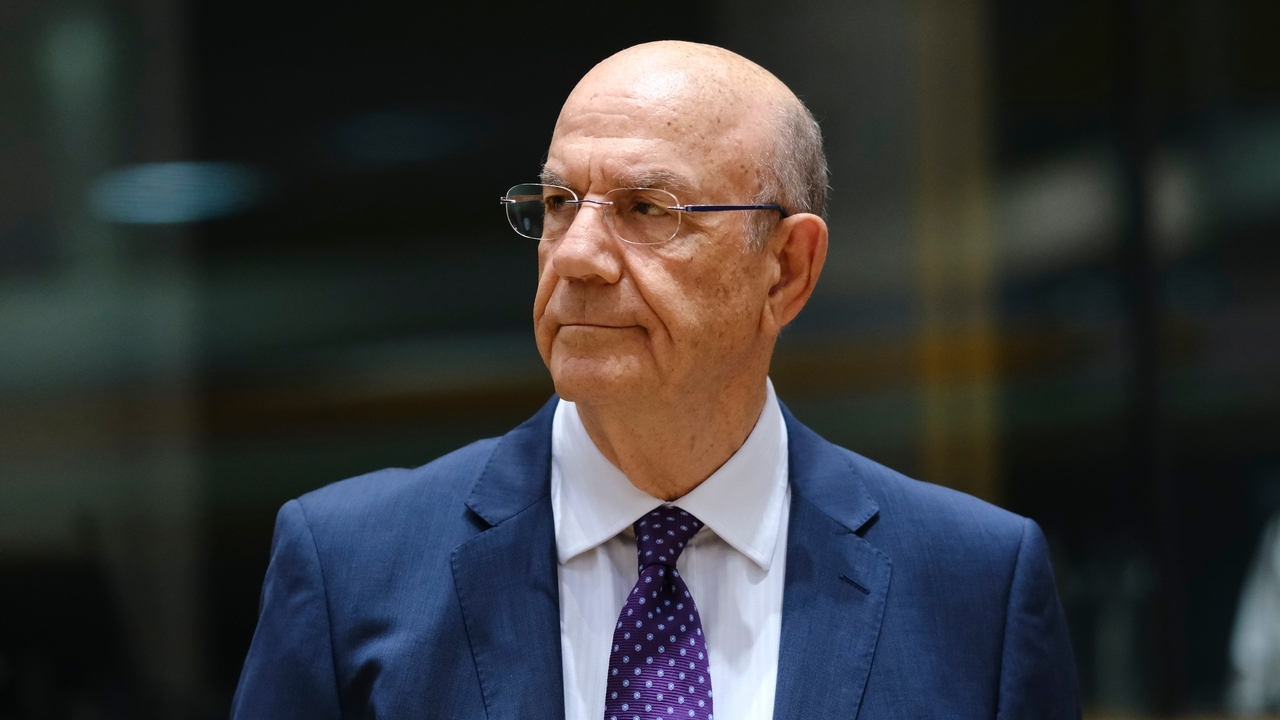
Speaking ahead of Tuesday’s ECOFIN meeting, Cyprus Finance Minister Makis Keravnos made clear that substantive decisions on a response to potential US tariffs will depend on guidance from EU leaders at Thursday’s extraordinary European Council.
“The Council will wait for directions from the leaders so that we know which tools are preferable,” Keravnos said, according to CNA, referring to possible countermeasures against US tariff increases linked to Greenland. He stressed that while exchanges of views may take place at ministerial level, any deeper discussion requires political clarity.
Keravnos underlined that this was the first ECOFIN meeting under the Cypriot Presidency, noting that unity would be essential at a moment of growing external pressure. “The important message is that the EU must remain united and remain committed to international law, international rules and the sovereignty of states,” he said.
Beyond trade, the agenda included discussions on Russia’s war against Ukraine, the 2026 Alert Mechanism Report, changes to the Recovery and Resilience Facility and broader issues of EU economic governance. Still, the shadow of tariffs dominated the political backdrop.
France warns against coercion
France’s Agriculture Minister Annie Genevard described Trump’s threat to impose tariffs of up to 200 percent on French wine and champagne as unacceptable, violent and ineffective, CNA reported.
The threat followed France’s refusal to participate in a US-backed “Peace Council” initiative on Gaza. Genevard framed the move as economic coercion, warning that Europe must be prepared to use available resistance mechanisms and assume its responsibilities.

French wine and champagne exports to the United States reached €3.8 billion in 2024, accounting for roughly a quarter of France’s total exports in the sector. Any escalation would hit producers directly and risk spillover effects across the European agricultural economy.
Trump doubles down
Trump, meanwhile, has escalated the dispute. In a series of posts on Truth Social, he reiterated that Greenland is “of vital importance for national and global security” and suggested that the United States cannot retreat from its position. He confirmed a “very good” phone call with NATO Secretary General Mark Rutte on the issue and said discussions with “various parties” would take place at the World Economic Forum in Davos, according to CNA.
He also posted screenshots of private messages from European leaders. A message from French President Emmanuel Macron, authenticated by the French presidency, showed Macron expressing alignment on Syria and Iran while telling Trump, “I do not understand what you are doing with Greenland.” Macron also proposed a post-Davos G7 meeting in Paris and invited Trump to dinner.
CNN reported that Trump also shared a message purportedly from NATO’s Secretary General praising his leadership and expressing commitment to finding a way forward on Greenland, though the message could not be independently verified. In parallel, Trump attacked the UK’s decision to transfer control of the Chagos Islands to Mauritius, linking it to his broader national security argument for acquiring Greenland.
Europe weighs its options
French President Macron has vowed that intimidation will not influence Europe’s stance on Greenland or Ukraine, while other leaders have urged caution and diplomacy. Analysts quoted by the New York Times noted that Europe remains heavily dependent on the United States for security guarantees, even as it explores ways to reduce that reliance over time.
For Cyprus, the challenge is to steer consensus. As Keravnos indicated, decisions on tariffs will not be improvised at ministerial level.
With French exporters warning of immediate damage, Washington signalling little willingness to step back and EU leaders preparing to meet, the coming days are likely to determine whether tariff threats remain leverage or turn into a trade confrontation with tangible costs for Europe.