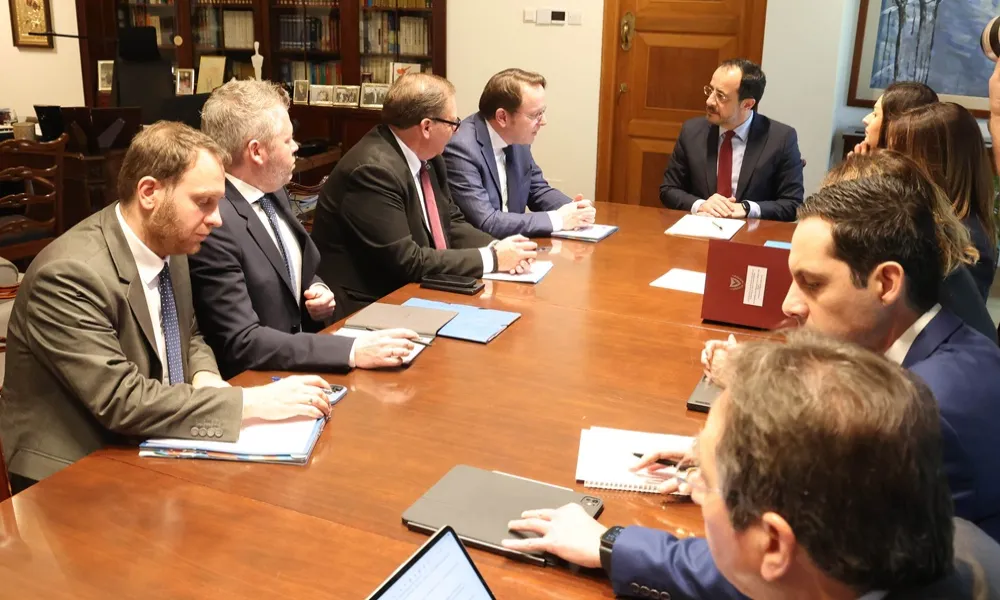
The European Union’s Commissioner for Health and Animal Welfare, Oliver Varhelyi, ruled out any relaxation of EU rules on foot-and-mouth disease during a series of meetings in Cyprus on Friday, stressing that strict European protocols must be applied in full to contain the outbreak.
Varhelyi held meetings with farmers’ organisations, livestock breeders, government officials and President Nikos Christodoulides, emphasising that the European regulation governing the disease leaves no room for exceptions. He said the rules are clear that animals in infected farms must be culled as part of the effort to contain the virus.
The visit took place amid pressure from agricultural organisations and livestock farmers who have called for an end to mass culling in affected units. In recent days, veterinary services had proceeded with more selective culling, mainly targeting cattle showing severe symptoms, while vaccination campaigns continued across all districts.
Meetings with authorities
Following his meeting with President Christodoulides at the Presidential Palace, Varhelyi stressed that the European Commission stands by Cyprus during the crisis and will support farmers throughout the response.
“We are here to help. We will not leave farmers alone,” he said.
Asked by journalists about the different approach reportedly followed in the northern part of the island, where animals are not being culled, Varhelyi confirmed that a different strategy is being applied there because the area is not part of the European Union.
“We are trying to convince them of the effectiveness and the higher level of safety offered by our rules. I hope we will succeed,” he said.
He stressed that the full implementation of EU protocols across the entire island is essential to controlling the outbreak quickly and avoiding major livestock losses and serious economic damage for farmers.
Strict biosecurity measures
Varhelyi described foot-and-mouth disease as one of the most destructive animal diseases in the world and said strict compliance with the rules is necessary to protect consumers, farmers, livestock and the wider European market.
Under EU regulations, all animals on farms where a case is detected must be culled and the meat cannot be used. Authorities must also establish a protection zone of three kilometres around infected farms, followed by a surveillance zone extending ten kilometres where enhanced biosecurity measures must be applied.

The commissioner urged the public to avoid entering these areas without serious reason, warning that the virus can easily be transferred by people without them realising it.
“Do not go there for protests. Do not go there for interviews. The virus can easily travel on your shoes, jacket or hands,” he said, noting that people often underestimate the role they can play in spreading the disease.
A highly resilient virus
Varhelyi said the virus is extremely resilient and can survive in a wide range of environmental conditions, which makes strict control measures essential.
“It can survive in the sun, in rain, in heat and in cold. It can survive in almost any conditions,” he said.
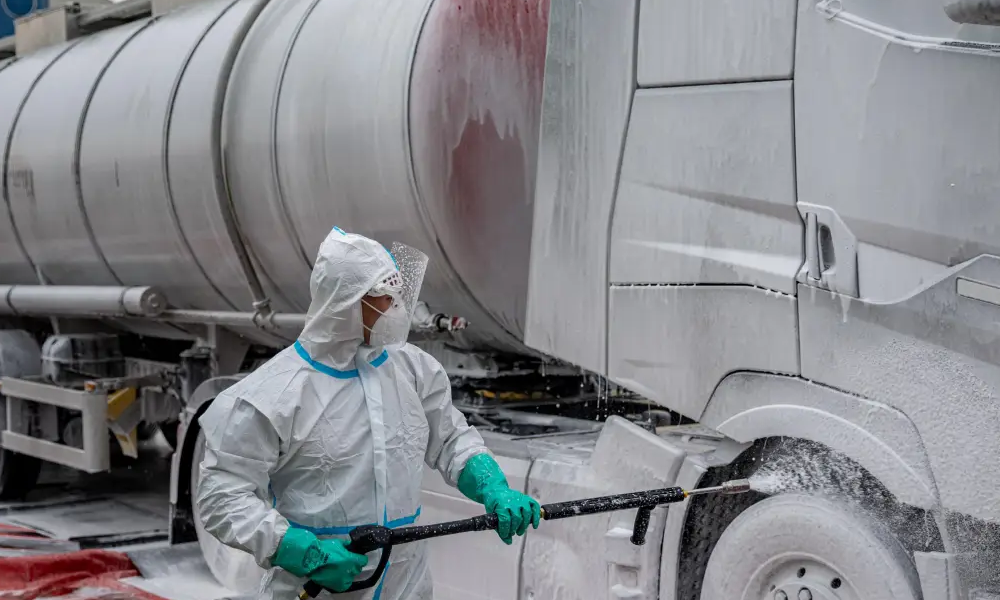
When animals cannot be culled immediately, vaccination may be used first to reduce the viral load in the air before the culling process takes place. Strict movement controls must also be respected, with trucks entering or leaving restricted areas required to undergo full disinfection, and similar precautions applied to people moving in and out of affected zones.
Lessons from previous EU outbreaks
The commissioner referred to similar outbreaks in Slovakia and Hungary, saying that strict enforcement of European protocols had proven effective in eliminating the disease in those cases.
“I am confident Cyprus will also succeed because these rules are based on science and have been applied many times with success,” he said.
Alongside culling measures, the government has introduced vaccination campaigns and additional preventive steps in parts of the island that have not been affected. However, Varhelyi warned that the risk remains greater than it may currently appear.
Risk of island-wide infection
Referring specifically to the Larnaca region, he noted that the area hosts around 34 per cent of the country’s total livestock population and warned that failure to control the outbreak could have serious consequences.
“If measures are not taken, there is a risk that the entire island could become infected and the entire livestock population of Cyprus could be lost,” he said.
“We want Cyprus to avoid that outcome and we want farmers to avoid that outcome.”
EU support and compensation
Varhelyi said the European Union will support farmers throughout the crisis and will provide financial compensation linked to the culling of animals and the destruction of carcasses, meat, dairy products and milk.
The EU has already supplied vaccines and veterinary teams, he said, while further compensation for economic losses may be provided once the government submits a report assessing the damage.
He added that once Cyprus regains its status as free of the virus, additional support will be available to help rebuild the country’s livestock population.
Situation in the north of the island
Responding to questions about conditions in the northern part of Cyprus, Varhelyi said the European Union has also provided vaccines there and that communication is taking place between veterinary authorities on both sides of the island in an effort to coordinate responses.
However, he confirmed that different strategies are currently being followed and reiterated that the European Commission is attempting to persuade the authorities there to adopt EU standards.

Political and sector reactions
The meetings also drew political criticism and questions from representatives of the farming sector. Yiannakis Gavriel, chairman of the House agriculture committee and an MP from AKEL, argued that the government had reacted too slowly to the crisis.
“If this meeting had taken place in December, when the disease was first detected in the north, we would be talking about completely different results,” he said.
He also questioned why vaccination strategies differ between the two sides of the island and raised concerns about the long-term impact on Cyprus’s livestock sector.
Farmers raise concerns
Panicos Hambas, secretary general of the Union of Cypriot Farmers, asked why Cyprus had not been allowed to proceed with vaccination of livestock near the buffer zone earlier, when the disease was first detected in the north.
He also questioned whether the European Union should have stronger oversight of funds provided to the Turkish Cypriot community in relation to animal health controls. Farmers have warned that rebuilding livestock populations takes years and stressed that failure to contain the outbreak quickly could have long-term consequences for the agricultural sector.
President Christodoulides was expected to hold a broader meeting later in the day with all stakeholders involved in managing the outbreak, while authorities continue to monitor reactions from livestock farmers who have already staged protests against the policy of mass culling.