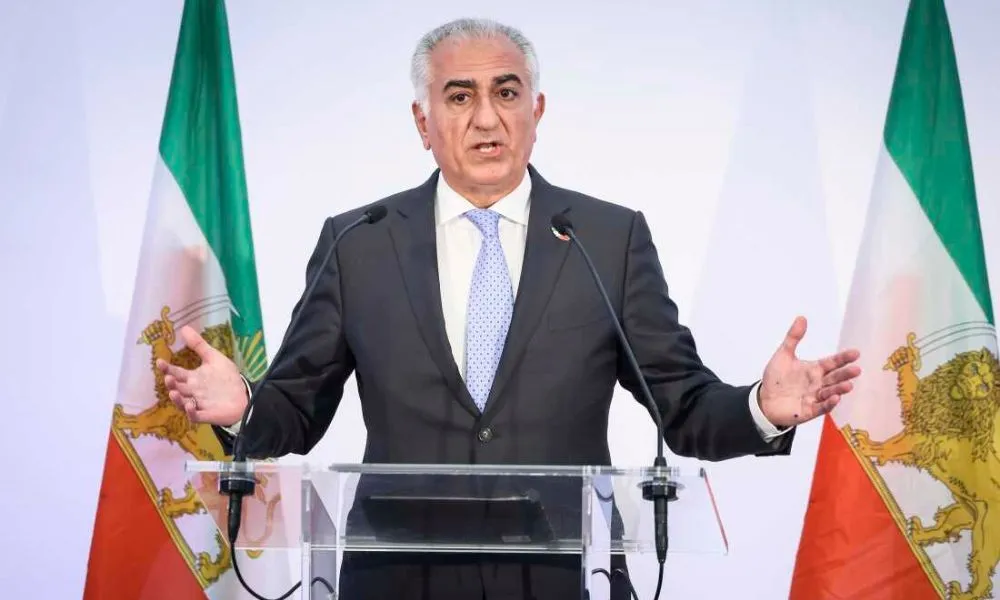
As Iran enters a new phase of unrest, Reza Pahlavi is once again attempting to present himself as a point of reference for those calling for regime change, at a time when no organised opposition with structure and unified representation is visible, either inside the country or across the diaspora.
Pahlavi is the exiled son of Mohammad Reza Pahlavi, the last monarch to rule Iran before the Iranian Revolution of 1979. The monarchy was overthrown and replaced by the Islamic Republic. Pahlavi left Iran shortly before the collapse of his father’s regime and has lived abroad ever since.
Analysts note that there are signs, mainly from street slogans and online discussion, that his appeal may have grown. This, however, is not because he has built a coherent political programme, but because many Iranians express deep frustration and see few alternatives. Ali Vaez, Iran expert at the International Crisis Group, told the Financial Times that in recent years Pahlavi has worked systematically on his public image, while despair inside Iran has rekindled, for some, nostalgia for the period before the 1979 revolution.
Others, however, warn that his real influence is impossible to measure and that there is no evidence of nationwide support. In major cities such as Tehran, many regime opponents reject the idea of a return to the past and instead speak of democratic change aimed at an elected, republican system of governance.
A “transitional leader” without a political machine
Pahlavi, who presents himself as a “transitional leader”, lacks an organised political apparatus. For years, he was criticised for being distant from Iranian society and for relying on scattered monarchist circles inside and outside Iran. Still, as the Islamic Republic faces simultaneous internal unrest and external pressure, his supporters argue that he may be able to capitalise on the moment.
Calling protesters to coordinated action
Earlier this week, Pahlavi urged protesters online to chant a specific slogan in a coordinated manner “exactly” at 8pm on two consecutive evenings. Videos circulating online showed large gatherings in Tehran and elsewhere, while authorities imposed a widespread internet blackout, sharply limiting the flow of information abroad.
Ellie Geranmayeh of the European Council on Foreign Relations said that although protests would have taken place regardless, in some cases turnout appeared higher and slogans invoking Pahlavi’s name were heard. She cautioned, however, that with the internet cut, it is extremely difficult to determine what can be attributed specifically to him.
Geranmayeh also noted that Pahlavi’s media visibility is reinforced by Iranian television channels broadcasting from abroad that are widely watched inside the country, despite Tehran treating them as hostile. At the same time, she stressed that Iran is a country of 90 million people, many of whom continue to push for “home-grown” democratic change beyond figures from the diaspora.
Fragmented opposition, familiar slogans
The regime, meanwhile, has systematically prevented the emergence of an organised internal opposition through arrests of activists, critics, and even former supporters who distanced themselves. In the diaspora, competing voices have traditionally undermined attempts at unified representation.
Even so, analysts say that today Pahlavi is, by a wide margin, the most recognisable figure of the exiled opposition. On the streets, anti-regime slogans such as “death to the dictator”, referring to Supreme Leader Ali Khamenei, are consistently heard. In some areas, pro-monarchy slogans have also appeared, including “long live the shah” and “Pahlavi will return”, with reports suggesting stronger support in western and southern provinces where the dynasty historically enjoyed greater backing.
Foreign interference, Israel, and unanswered questions
Tehran has also revived the narrative of “foreign interference”. Khamenei accused protesters of acting on behalf of Donald Trump, who has said the US would support demonstrators if a crackdown occurs. At the same time, tensions with Israel and fears of new strikes persist, adding to the uncertainty.
Analysts say Pahlavi’s relationship with Israel could also prove a liability, recalling that he met Israeli Prime Minister Benjamin Netanyahu during a visit in 2023. Trump himself appeared cautious when asked whether he would meet Pahlavi, describing him as “likable” but saying it was unclear whether such a meeting would be appropriate at this stage.
Vali Nasr, professor at Johns Hopkins SAIS and former US official, said Pahlavi may help shift the debate from purely economic grievances to the question of “what the alternative is”. At the same time, he doubts that Pahlavi has the foundations needed to play a role in a transition should the regime seriously weaken. In a worst-case crisis scenario, Nasr argues, an “internal move”, even a form of coup, is more likely than a collapse of the Islamic Revolutionary Guard Corps.
In the background remains the most organised exiled force, the Mujahedin-e Khalq (MEK), which is deeply unpopular inside Iran due to its past, according to the Financial Times. Mehrzad Boroujerdi, professor at the Missouri University of Science and Technology, describes the regime as economically, regionally and militarily weaker than at other moments, but sees “paralysis” within the opposition as well. While Pahlavi is the most recognisable name, he says, he has failed to bridge the deep divisions that continue to fragment the exiled opposition.
Source: lifo.gr