Beyond the political and ethical dimensions of the issue, the controversial video also brings to the surface the vast and unresolved problem of how presidential candidates and political parties are financed, and their dependency on powerful business figures seeking public contracts through procedures that should, by definition, be beyond reproach.
A stacked deck
“What emerges is an image that casts shadows even over the tendering process, suggesting that outcomes are guided by a stacked deck. And this perception is not unfounded. There may be an independent authority awarding tenders, but in reality what matters are the terms set by ministries, which, if they so choose, can favour specific business interests. What is therefore needed is a formula that ensures the financing of the President and political parties no longer leads to these tragic phenomena.
“On the one hand, we had Marfin and Andreas Vgenopoulos, who managed to penetrate the political system and was later implicated in a bribery case involving a former Central Bank governor. Cyprus paid a heavy price for the scandalous management of Marfin, with the collapse of its economy. On the other hand, we had the so-called Arab investors exposed through the Al Jazeera investigation. And in the past week, we saw what is presented in the video. These are situations that irreparably expose presidential candidates and political parties alike,” says former MP and legal expert Christos Pourgourides.
It is worth recalling that, at an earlier stage and independently of the current affair, the Audit Office had issued reports touching precisely on these issues. One concerned the private power station in Vasiliko and the irregularities recorded there. Another focused on construction companies bidding for major public works, from which the figure of a so-called “national contractor” emerged.
Parties at risk of irrelevance
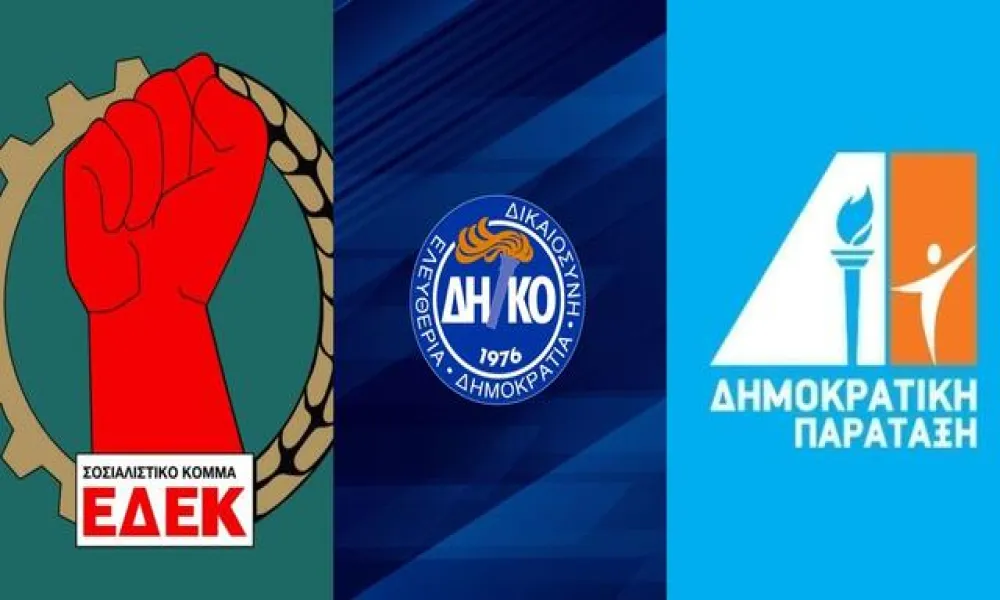
Another aspect highlighted by Pourgourides concerns the three parties supporting President Christodoulides.
“They have an obligation to clearly distance themselves. To condemn the conduct and, if necessary, to withdraw their support for the President. If we do not reach a point where parties place the public interest above so-called party interests, and I say ‘so-called’ because in this case their silence will cause immense damage and lead to their own discredit, then we are heading for collapse.”
Parliamentary elections are not far off. “An electorate angered by the video and mindful of what has preceded it will turn to extremely dangerous choices for democracy. The side effects of this entire affair will be enormous for democratic governance,” Pourgourides warns.
Government responsibility
What actions, beyond communication tactics that merely insult citizens’ intelligence, could help limit public shaming, humiliation, and institutional degradation? What could ease public outrage at the reasonable suspicion of a corrupt political leadership?
“First and foremost, the government must assume responsibility. Second, the government spokesperson must stop trying to justify the unjustifiable. It only makes things worse. The protagonists of the video speak clearly. One is a close associate with an institutional role, the other one of the architects of the President’s election campaign. There are therefore political responsibilities. If the President continues to keep them in place and fails to distance himself, this is a recipe for destruction and for the humiliation of the political system.”
As for the three parties supporting the government, Pourgourides argues that they must leave the governing coalition and, together with the opposition, begin applying step-by-step pressure to restore lost credibility.
“Credibility is not built with words but with actions. Citizens no longer take parties’ statements at face value. If we continue to behave with the same cynicism, democracy itself is put at risk.”