UPDATE: US Travel Advisory for Cyprus a Routine Measure, Diplomatic Sources Say
The updated United States travel advisory for Cyprus constitutes a standard precautionary procedure and does not indicate any immediate threat, diplomatic sources in Nicosia have said.
According to the sources, the current stage represents the mildest level of measures that can be adopted. In practice, it does not concern the removal of personnel nor does it imply the existence of any direct security risk. It simply provides the option, should they so wish, for family members of diplomats or a limited number of non-essential staff to depart temporarily.
They further clarified that an “authorised departure” differs substantially from a “mandatory departure”, which entails compulsory evacuation of personnel. The latter has been implemented in a number of Middle Eastern and Gulf countries due to regional developments, which is not the case for Cyprus. The Republic of Cyprus, they added, remains in continuous communication and coordination with its partners and competent authorities, while the situation is being constantly assessed, with no indication warranting concern regarding security in the country.
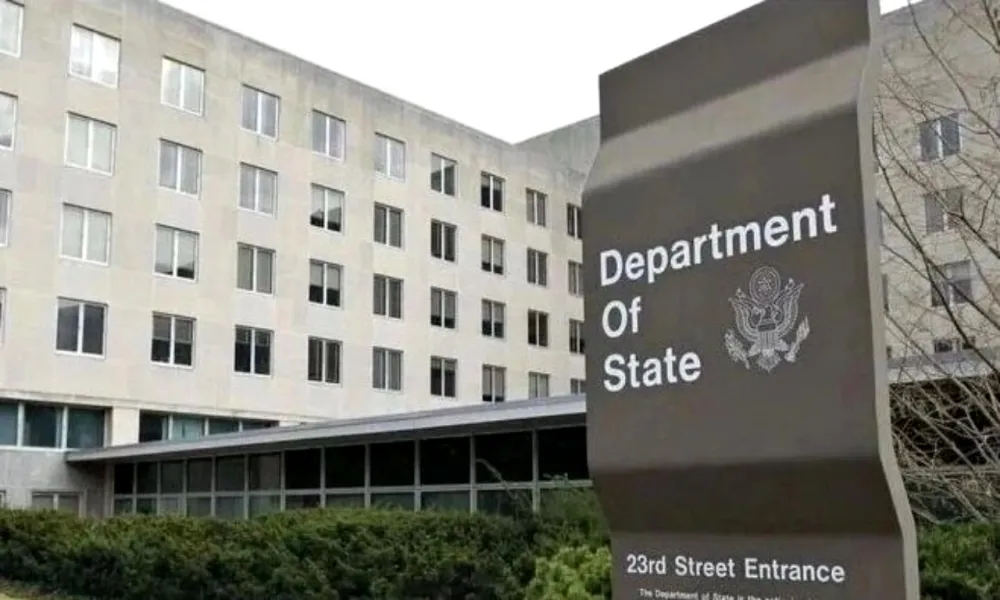
The United States Department of State has raised its travel advisory for Cyprus to Level 3, advising citizens to reconsider travel and authorising the departure of non-essential government personnel and their family members. The decision follows the outbreak of hostilities between the United States and Iran on 28 February and a reported drone strike within the British Bases area on 2 March.
The updated advisory refers to security concerns, disruptions to commercial flights and limitations in consular assistance in areas not under the control of the Republic of Cyprus.
Updated travel guidance and staff departure
The United States Department of State confirmed that it has authorised the departure of employees who are not deemed essential, as well as their family members, due to security risks.
It states that, following the start of hostilities between the United States and Iran on 28 February, there have been significant disruptions to commercial flights.
The advisory level for Cyprus has been raised to Level 3, with US citizens advised to reconsider travel due to “the threat of armed conflict and limited assistance from the U.S. Embassy for Americans in the area administered by Turkish Cypriot authorities”.
The Department of State notes that a drone struck a building in the area of the British Bases in Cyprus on 2 March. It further underlines that the US Embassy in Nicosia has limited ability to assist US citizens in the area administered by Turkish Cypriot authorities.
Legal and entry framework
The advisory recalls the situation on the island since 1974 and states that the United States does not recognise the “TRNC”.
US citizens are urged to enter and exit the island only through Larnaca and Paphos airports or the ports of Limassol, Larnaca and Paphos.
According to the statement, the Republic of Cyprus does not consider entry or exit through Ercan airport or any port in the north to be lawful. US citizens departing the island via Ercan may face difficulties when seeking to return to the Republic of Cyprus in the future.
The advisory also reminds citizens that they cannot obtain residence permits from the Republic of Cyprus in order to reside in the area administered by Turkish Cypriots.
“The Republic of Cyprus does not recognise residence permits issued by Turkish Cypriots. If you arrive on the island via a northern port or Ercan airport or remain in the area administered by Turkish Cypriots for more than 90 days, you may be denied entry into the Republic of Cyprus,” the Department of State states.
Consular services and registration
The Department of State reiterates that the US Embassy has limited ability to assist US citizens in the area administered by Turkish Cypriots, noting that the Government of the Republic of Cyprus does not control that area.
US citizens are encouraged to enrol in the STEP platform to receive important updates and alerts from the Embassy or a US consulate and to monitor local media for emergency developments.