China has strongly condemned the United States and Israeli attacks against Iran, yet analysts assess that Beijing is unlikely to risk a direct confrontation with Washington by providing military assistance to Tehran. Despite the strategic importance of Iran to China’s energy supply, experts indicate that Beijing will likely limit its response to diplomatic positioning.
The ongoing conflict in the Middle East and the disruption of traffic through the strategic Strait of Hormuz have raised concerns about energy security for China, which imports a large share of its oil from the region.
China’s diplomatic position on the conflict
The Chinese government has condemned the US and Israeli strikes that killed Iran’s Supreme Leader Ali Khamenei and called for an end to military operations in order to prevent a wider escalation of the conflict.
However, analysts believe Beijing is unlikely to go beyond verbal condemnation.
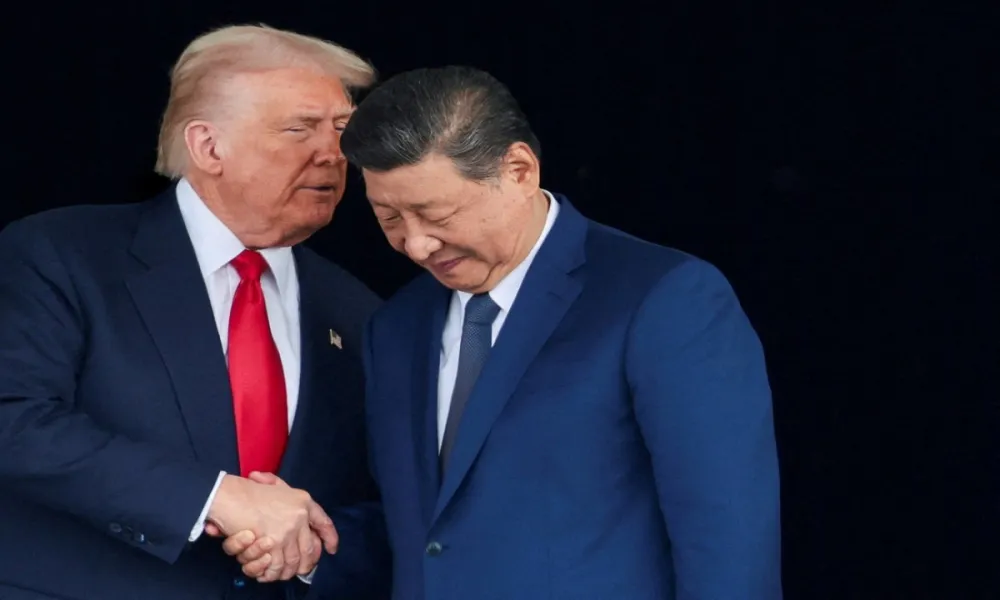
Dan Wang, Director for China at the Eurasia Group, told Agence France-Presse that the Iranian crisis is unlikely to derail the expected meeting between Chinese President Xi Jinping and United States President Donald Trump scheduled for 31 March, provided that the United States does not target the flow of Iranian oil exports to China.
According to Wang, Beijing views Iran primarily as a strategic partner rather than a military ally. She also noted that China maintains relations with other Gulf states, making direct military assistance to Tehran highly unlikely.
Energy dependence on the Middle East
China has increased its diplomatic presence in the Middle East in recent years. In 2023, Beijing mediated an agreement between Iran and Saudi Arabia to restore diplomatic relations between the two countries, which had been long-time regional rivals.
Iran later joined the Shanghai Cooperation Organisation as a full member. The organisation brings together ten countries including China, India and Russia and was designed as a counterweight to the United States and its allies.
China’s growing reliance on Middle Eastern energy supplies remains a key factor in its policy calculations. According to the analytics firm Kpler, domestic production covers only about 30 percent of China’s internal oil demand.
Kpler estimates that the Middle East accounted for 57 percent of China’s seaborne oil imports in 2025, equivalent to around 5.9 million barrels per day. Of that total, approximately 1.4 million barrels per day originated from Iran.
Strategic reserves and supply security
Despite this dependence, analysts say China has built substantial strategic reserves that could help manage supply disruptions in the short term.
According to Kpler analyst Muyu Xu, China has accumulated around 1.2 billion barrels of crude oil through years of continuous stockpiling. These reserves correspond to approximately 115 days of seaborne imports.
Xu noted that the scale of these reserves provides a significant buffer, allowing the country and its refineries to withstand supply disruptions from the Middle East and potential price increases.
Strait of Hormuz and regional stability
Approximately half of China’s crude oil imports pass through the Strait of Hormuz. Analysts Gareth Leather and Mark Williams of Capital Economics state that this creates a direct interest for Beijing in ensuring the continuation of energy flows through the region.
For this reason, they conclude that China is unlikely to increase its support for Iran. Another factor cited is Beijing’s concern that it could be perceived as facilitating attacks against the United States.
Potential impact on global energy markets
According to Muyu Xu, Russia could benefit from the conflict in the Middle East, particularly if the disruption of shipping through the Strait of Hormuz continues.
Russian oil supplies could become one of the most readily available alternatives for India and China to replace potential shortages of Middle Eastern crude, she said.
Source: AFP