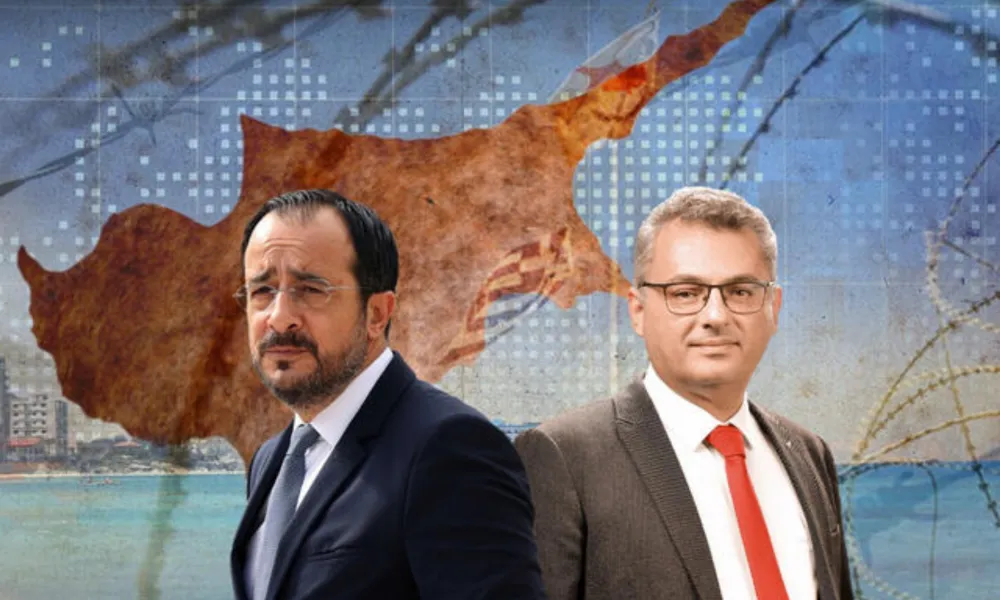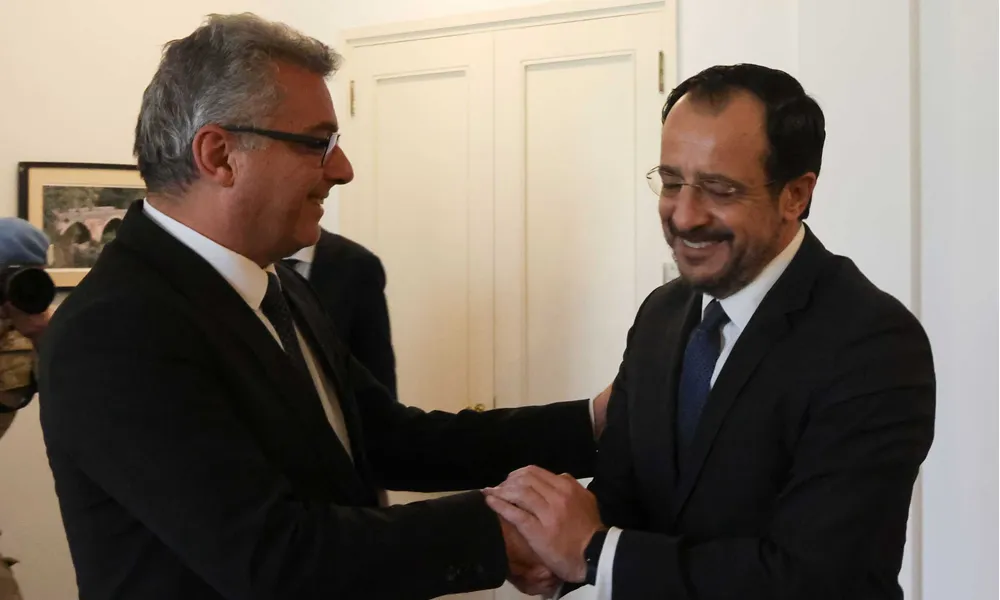

If Nikos Christodoulides and Tufan Erhürman genuinely mean that talks on the Cyprus issue should resume from where they left off at Crans-Montana, then the discussion cannot remain vague, open-ended and indefinite. Reference to Crans-Montana has specific political content. It means preserving what has been achieved in negotiations, it means the Guterres Framework, and it implies a bizonal, bicommunal federation with political equality – the basis still recognised by the UN Security Council.
From this starting point, three key conclusions emerge. First, the solution sought is federal, even if Tufan Erhürman avoids describing it in terms preferred by the Greek Cypriot side for domestic political reasons. Second, if talks indeed resume from Crans-Montana, even without explicit reference to the Guterres Framework, they do not start from zero. They begin at an advanced stage, with convergences, outstanding issues and known points of disagreement. Third, the process cannot drag on indefinitely. Timeframes must therefore be introduced.
The problem is political
The real problem is not negotiating detail. It is political and psychological. It concerns transparency in negotiations and, above all, the fears of the two communities about what follows a settlement.
Greek Cypriots still carry the trauma of 2004 and the idea of ‘upfront’ concessions used by Tassos Papadopoulos. They fear that under a deal they would grant political equality, shared governance, Turkish Cypriot participation in institutions and a meaningful share of federal power from day one, while their own gains – mainly on territory, property and security – would come later, if at all. That fear has grown given that today’s Erdoğan is very different from the Erdoğan of 2004, and because the economic and demographic realities in northern Cyprus have also changed.
Turkish Cypriots, on the other hand, fear the opposite. They worry that they would sign a federal solution within the EU, abandon their existing separate administrative reality, and then face a Greek Cypriot majority that, backed politically and institutionally by the EU, would attempt in practice to restrict or nullify the constitutional rights they believe they held as a founding community in 1960 and lost after the crisis of 1963-64. This position is somewhat contradictory, given that they seek EU membership, while Turkey itself considers an upgraded customs relationship with the EU more than necessary. In short, one cannot aspire to join the EU while distrusting it.
A phased approach
These fears, real or not, must be addressed. In this context, the concept of a phased solution, with no return to the previous state of affairs, is not a technical detail. It may be the only way to turn a solution from a promise into lived reality.
The logic is simple: citizens should not be asked to vote based on fear, memory and suspicion, as happened in 2004, but on a process already producing results. Instead of approving a lengthy plan without seeing anything implemented, both communities could be led to referenda after a transitional period of two or three years during which key provisions of the agreed final settlement have already been put into practice. It is worth recalling that the Zurich-London agreements also involved a lengthy transition, although the comparison cannot be exact.
This approach requires a clear distinction. It does not concern piecemeal confidence-building measures, which are implemented independently of a solution and often end up sustaining the status quo. It refers instead to the gradual implementation of an agreed comprehensive federal settlement. The overall framework – governance, security, guarantees, territory, property, EU matters, economy and hydrocarbons – is agreed first. Implementation then follows through binding, reciprocal and irreversible steps.
The phrase ‘no return to the previous status’ is critical. One side cannot secure its benefit, freeze the process and revert to the old situation. Nor can the other invoke gradualism to delay its obligations indefinitely. Each step must be matched by a corresponding step by the other side, under the supervision of the UN, the EU and possibly a dedicated implementation mechanism.
Indicatively, such an approach could include trade-offs such as:
- The return of the fenced-off city of Varosha under Greek Cypriot administration, combined with the operation of Tymbou airport under Turkish Cypriot administration within a unified FIR.
- Agreed return of Morphou and other areas included in the territorial map, combined with the opening of ports for Turkish Cypriot trade under EU acquis rules.
- Gradual opening of parts of the buffer zone to lawful owners for development, habitation or joint economic activity, alongside institutionalised Turkish Cypriot participation in hydrocarbons management and revenues through a federal or transitional fund.
- Progressive establishment of federal institutions – parliament, executive, federal court, civil service – combined with concrete steps on territorial return and property implementation.
- Phased troop withdrawals in parallel with constitutional provisions for political equality and effective participation in decision-making.
- Creation of a compensation fund for property, with international financing, alongside clear arrangements for restitution, compensation and exchange.
- Gradual application of the EU acquis in the north, alongside transitional safeguards addressing Turkish Cypriot concerns about becoming a minority in a Greek Cypriot-dominated state.
- Abolition of the 1960 guarantees and replacement with Cyprus joining NATO, with British bases converted into NATO installations under rotating command of British, Greek, Turkish and American commander.
This breakdown may not be perfect. Others, such as former negotiators Özdil Nami and Andreas Mavroyiannis, together with current negotiators Menelaos Menelaou and Mehmnet Dana, could likely produce a more balanced structure.
A controlled transition
This model would turn the solution from a leap into the unknown into a controlled transition. Greek Cypriots would see in practice that territory, property and security are not deferred indefinitely. Turkish Cypriots would see that political equality, institutional participation and economic integration into the EU – which could quickly double their income – are real, not promises.
The final referendum would take on a completely different character. It would not be a referendum of fear, as in 2004. It would present a clear choice: accept a federal solution already partly implemented, or consciously reject it and bear the political consequences.
Here lies the most difficult but also the most honest element of the proposal. If Greek Cypriots, after seeing implementation in practice – territory returned, guarantees altered, troops withdrawn and federal structures functioning – still reject the solution, they cannot expect Turkish Cypriots to remain indefinitely bound by that refusal. A new ‘No’ vote from the Greek Cypriot side would effectively acknowledge the right of Turkish Cypriots to seek a separate future, whether as an independent state, a second Cypriot state within the EU, a special-status entity like Monaco, or even a province of Turkey.
In simple terms, a negative vote would weaken the Greek Cypriot side’s political and moral argument for maintaining the current international stance. Conversely, if Turkish Cypriots reject an agreed federal settlement after already benefiting from gradual integration, no state or organisation could use that rejection to justify recognition. Responsibility for failure would then be clear, with northern Cyprus remaining a ‘pseudo-state’, perhaps with a status somewhat below that of Taiwan, in the best-case scenario.
Risks
This proposal, like any other, carries risks. If not carefully designed, it could evolve into a disguised slide towards partition. It could also allow Ankara to pursue an upgraded status for the breakaway entity without genuine intent for a federal solution, particularly at a time when Turkey still promotes a two-state approach.
For this reason, a phased solution must be discussed only under strict conditions: first a comprehensive federal agreement, then phased implementation; first a binding roadmap, then reciprocal concessions; first legal safeguards by the UN and the EU, then transitional arrangements. Above all, no provision should prejudge recognition of a separate state before the final decision of both communities.
The fundamental question remains: if nothing is done, where does that lead? Who benefits from the status quo? If Crans-Montana was indeed the closest point to a solution, then the aim today should not be endless talks, but a mechanism that makes the solution credible and tangible. Gradual implementation, with reciprocal trade-offs and no return to square one, may answer the central question that has hovered over Cyprus for decades: not whether a solution exists, but whether the two communities can trust that this time it will be implemented.