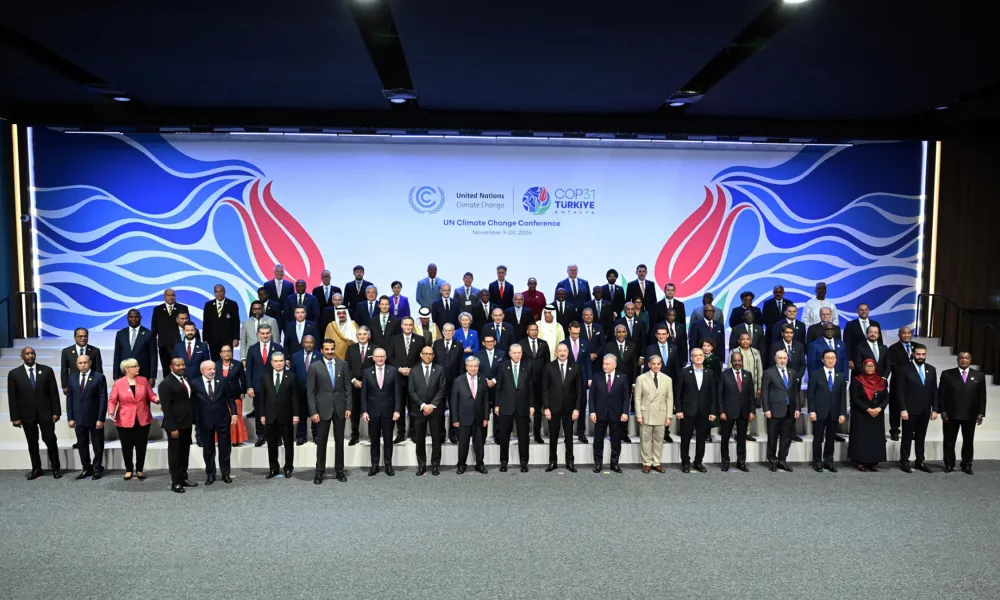

The world is on a catastrophic course because of the slow international response to climate change, UN Secretary-General António Guterres warned world leaders at the COP31 climate conference in Antalya on Wednesday. The presidents of Brazil and Turkey, who spoke after him, said wars and trade disputes must not distract the international community from tackling global warming.
“The hard truth is that the climate crisis is outpacing us. This is the path to mutually assured destruction,” Mr Guterres said. He referred to rising emissions, increasing global temperatures and worsening climate-related disasters, and called for immediate action to reverse this course.
The speeches came on the third day of the summit, at the start of the leaders’ statements, which are expected to give political momentum to negotiations on a new agreement against climate change.
“More about weapons and tariffs”
Brazilian President Luiz Inácio Lula da Silva, whose country hosted the previous conference, criticised the way climate has slipped down the international political agenda.
“A year ago, the planet left COP30 with renewed momentum. But that momentum faded at the start of this year. Climate change disappeared from the speeches and texts of world leaders,” he said.
“We started talking more about weapons and tariffs than about the survival of future generations. The planet cannot be at the mercy of competition for hegemony,” he added.
Turkish President Recep Tayyip Erdoğan struck a similar tone. “Wars, crises, migration, hunger and poverty increase the need for international solidarity every day,” he said.
Energy crisis and the transition from fossil fuels
The US and Israeli war against Iran has disrupted crude oil shipments from the Middle East this year and sent fuel prices soaring worldwide, triggering a scramble to secure reliable supplies.
These developments have pushed tackling global warming down the list of immediate priorities for some governments. Climate organisations argue instead that the crisis shows the need for a faster shift to clean energy as an alternative to oil.
At COP31, negotiators from almost 200 countries are seeking agreement on a Turkish proposal to increase the share of electricity in global energy consumption. They are also trying to give new impetus to efforts to transition away from fossil fuels, which have stalled.
Warning on the 1.5C limit
A UN report published last month found that the world is on track to exceed the 1.5C temperature rise limit, which countries agreed to pursue under the Paris Agreement to avoid the worst effects of climate change.
2026 was also marked by successive extreme heatwaves in Western Europe and a glacier collapse in Nepal, which caused a catastrophic flood that left more than 1,450 people dead and thousands missing.
Former French Prime Minister Laurent Fabius, who presided over the 2015 Paris conference and heads an advisory body of former COP presidents, told Reuters the speeches must give political momentum to the negotiations.
“It is an opportunity for leaders to make announcements and, even more so this time, to explain how they will implement them, because the key word in Antalya is implementation,” he said.
Absences from the conference
Wednesday’s scheduled speakers include European Commission President Ursula von der Leyen, Chinese Vice-President Han Zheng and Marshall Islands President Hilda Heine.
The United States, historically the country with the largest cumulative greenhouse gas emissions, is absent from the talks for a second consecutive year. After returning to the presidency in 2025, Donald Trump, who has called global warming a “hoax”, withdrew the US from international climate cooperation.
Other G7 countries, namely France, Germany, Japan, Italy and Canada, did not send their top leaders to the conference this year.
“The world’s largest economies should be leading the response to the climate crisis, not leaving it to others,” said Mohamed Adow, director of the climate and energy think tank Power Shift Africa.
With information from Reuters