
REPORTING FROM DUBLIN: FILIP POLO
The resumption of Cyprus negotiations from the point where they broke down at Crans-Montana in 2017 remains, according to Nicosia, a key condition for meaningful progress in relations between Turkey and the European Union.
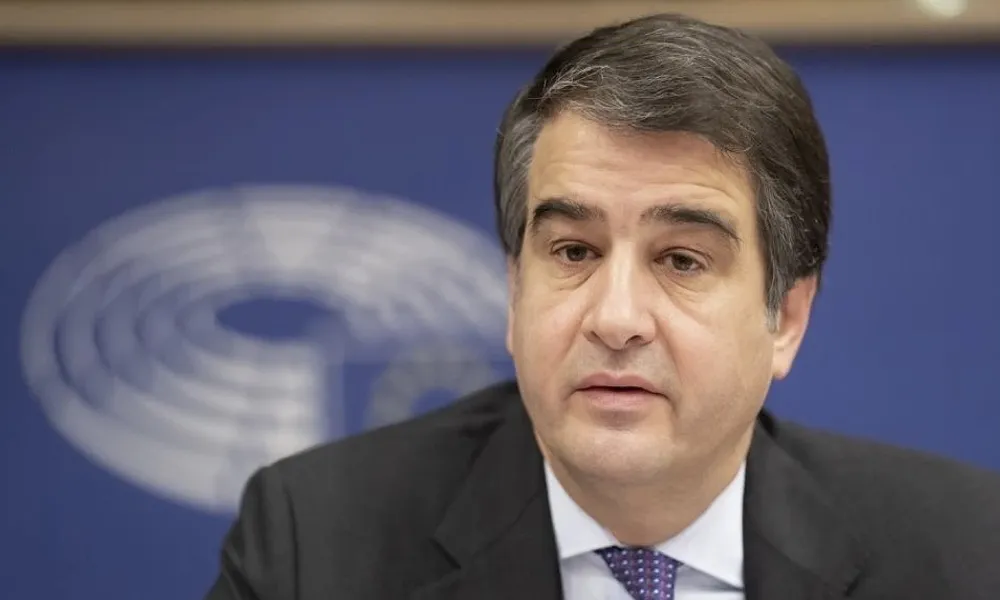
The message is expected to feature prominently in the discussions of European Commission Special Envoy for the Cyprus issue, Raffaele Fitto, who will travel to Ankara on 20 November for a meeting with Turkish Foreign Minister Hakan Fidan.
The agenda includes Turkey’s three main requests to the EU, as well as the prospect of restarting negotiations on the Cyprus issue.
According to diplomatic sources, Fitto’s visit to Turkey forms part of ongoing contacts on matters affecting relations between Ankara and the European Union. The Cyprus issue is expected to feature prominently in the discussions, as the Cypriot side maintains that progress on Turkey’s European demands cannot take place independently of its obligations and outstanding issues concerning the Republic of Cyprus.
Cyprus issue remains a key condition
Nicosia’s position is that the key to progress on matters of interest to the Turkish side in its relations with the European Union remains the resumption of negotiations from where they broke down at Crans-Montana in 2017.
According to the same sources, the Cypriot side is seeking meaningful progress through the upcoming contacts, with the aim of convening a trilateral meeting, followed by an expanded meeting in the 5+1 format.
The objective is to ensure that the process does not end with yet another meeting, but instead creates the conditions for the substantive resumption of negotiations.
In this context, the United Nations Secretary-General’s aim, as conveyed by diplomatic sources, is either to achieve a resumption of negotiations during his term in office or to establish a framework for progress that would allow him to hand over to his successor a process with realistic prospects of restarting.
Nicosia also rejects the idea that Turkey’s demands towards the EU should be met first, with discussions on the Cyprus issue taking place afterwards.
As it points out, the Greek Cypriot side cannot be expected to agree in advance to specific procedures or outcomes as a precondition for restarting negotiations, when Turkey is not taking corresponding steps towards the launch of substantive talks on the Cyprus issue.
The three issues of interest to Ankara
On the European front, Turkey’s main priorities are the modernisation of the Customs Union, visa liberalisation for Turkish citizens and participation in the EU’s SAFE funding instrument, which aims to strengthen Europe’s defence industry and defence capabilities.
Advancing these requests requires political decisions at EU level, with some requiring unanimity among member states.
According to diplomatic assessments, visa liberalisation and participation in SAFE face reservations from several member states, while Greece also has objections concerning the latter.
Particular importance is attached to the Customs Union issue, as the Republic of Cyprus is one of the EU’s 27 member states involved in the decision-making process.
Nicosia believes that the Customs Union cannot be upgraded without addressing the outstanding issues concerning Cyprus.
The Cypriot government stresses that Turkey cannot seek closer relations with the EU while leaving unresolved matters concerning the Republic of Cyprus.
Optimism over Cyprus joining Schengen
As regards Cyprus’s accession to the Schengen Area, the target of joining in 2027 remains in place, according to diplomatic sources.
The process is proceeding according to plan and, the same sources say, the technical preparations on the Cypriot side have been completed.
The remaining issues concern the necessary legal steps, as well as the political decision that must be taken at the Council of the European Union.
4 December could be an important date for the process, with relevant matters expected to be examined at the Justice and Home Affairs Council.
Speaking in Dublin on Thursday, President Nikos Christodoulides expressed his expectation that Cyprus would be able to join the Schengen Area by 1 July 2027, when Greece assumes the Presidency of the Council of the European Union.
In response to a question from Politis, Christodoulides referred to the specific issue of the two crossing points within the British Bases, at Pergamos and Strovilia, which represent one of the outstanding matters that must be resolved as part of Cyprus’s accession process.
According to information emerging from the relevant contacts, Nicosia is coordinating with London with the aim of introducing checks at the two crossing points equivalent to those in force at crossings controlled by the Republic of Cyprus.
The proposed arrangement provides for the British side to upgrade its checks to meet Schengen requirements.
Particular care has been taken to ensure that the solution does not affect Turkish Cypriots or their day-to-day movement. According to the information available, an arrangement has been found that addresses the relevant concerns, while cooperation with the British side is described as particularly good.
At the same time, objections previously raised by EU member states over the issue appear to have been substantially overcome, as the proposed solution addresses the concerns that had been expressed.
Despite the progress made at technical level, the political decision remains the decisive outstanding requirement.