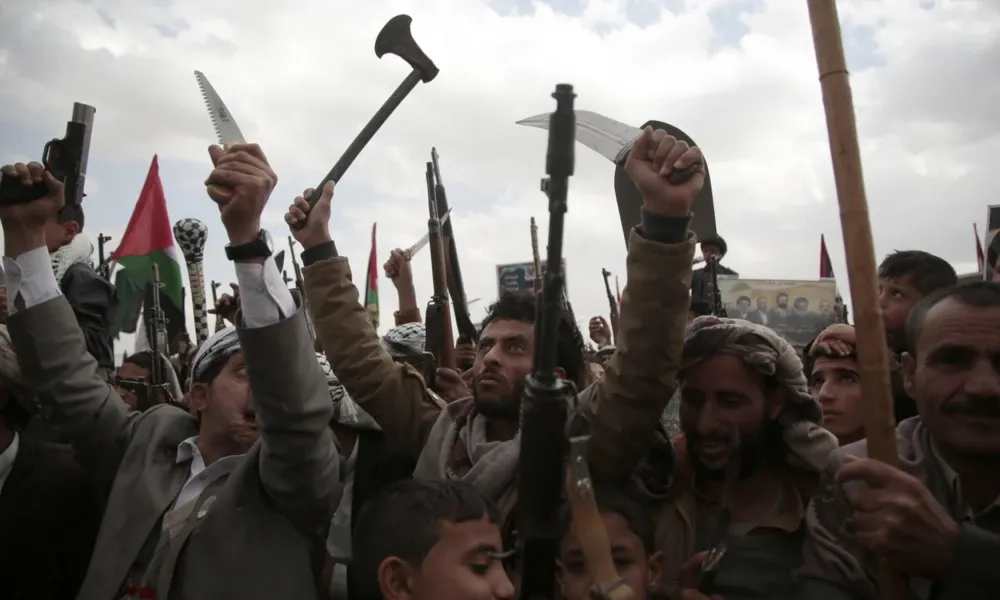

Saudi Arabia is pressing the European Union to designate Yemen’s rebel movement Ansar Allah, also known as the Houthis, as a terrorist organisation. However, the initiative faces resistance amid concerns in Brussels that such a move could undermine any future peace process in Yemen, according to six sources within European institutions cited by Reuters.
The effort forms part of a broader Saudi campaign to intensify international pressure on the movement, which has carried out near-daily attacks against the kingdom since October, following the resurgence of the war in Yemen in July after four years of relative calm.
Existing EU sanctions against the Houthis
The EU has already imposed sanctions on Ansar Allah, including an arms embargo and the freezing of assets belonging to 12 of its members, particularly those associated with its military wing.
Brussels has also designated Iran’s Islamic Revolutionary Guard Corps (IRGC), the country's ideological military force and a key supporter of Ansar Allah, as a terrorist organisation.
Nevertheless, the EU remains reluctant to designate Ansar Allah itself as a terrorist organisation, unlike governments in several Western countries, including the United States, Australia and Canada.
Saudi Arabia’s involvement in the Yemen war
In March 2015, Saudi Arabia, leading a military coalition, intervened in the war in Yemen in support of the internationally recognised government and against Ansar Allah.
The movement had seized the capital, Sanaa, in late 2014 and continued advancing southwards.
European officials have explained that designating the Houthis as a terrorist organisation could undermine the already limited communication channels maintained with the movement. It could also restrict the EU’s ability to contribute to any future peace process in Yemen, according to the Reuters sources.
Unanimous EU approval required
Adding the movement to the EU’s list of terrorist organisations would require a unanimous decision by all 27 member states.
At present, the number of governments supporting such a move is relatively small, one source said. The source declined to identify them, explaining that discussions on the issue are not public and that the matter is particularly sensitive.
The Saudi government's communications office did not respond to Reuters' request for comment.
Meanwhile, EU foreign policy spokesperson Anouar El Anouni said Brussels maintains regular contact with Riyadh on a range of issues, including regional developments. However, he declined to provide details about the content of current discussions.
Source: CNA