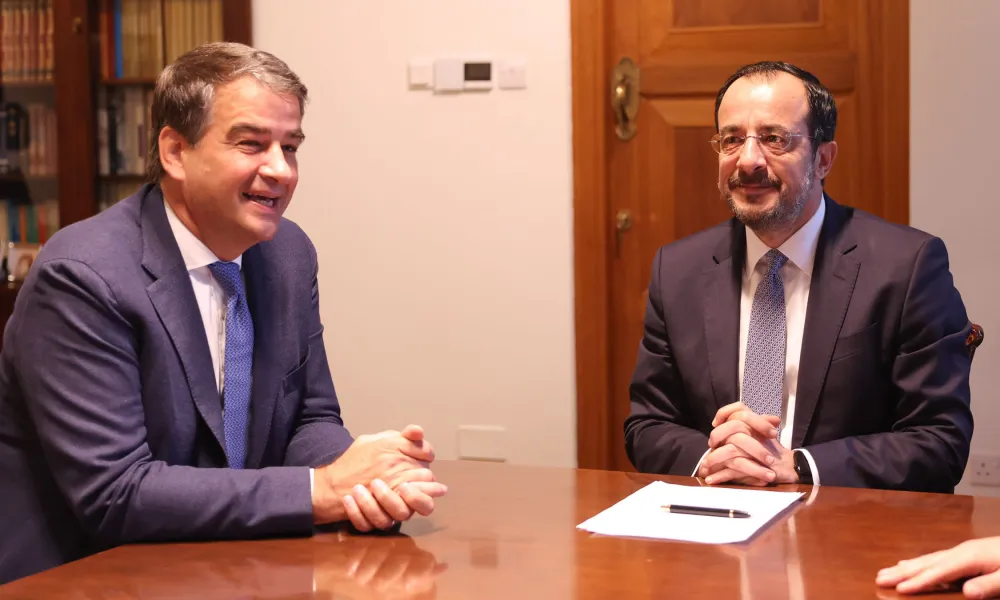

The diplomatic management of the Cyprus issue has long been characterised by the contrast between the strong communications image that the current President frequently seeks to build and the hard reality of the balance of power.
At the heart of this approach lies the anxiety of Nikos Christodoulides and the Greek Cypriot side to continuously project "signs of progress" or expectations of imminent movement. This is a tactic driven primarily by domestic communications and electoral calculations, allowing him to sustain a broad narrative of "readiness for a solution" while, in reality, his management of the issue, much like that of the Turkish Cypriot side, remains trapped at the level of wishful thinking that produces no tangible results because there has been no change in the realities shaped by Turkey's position.
The Presidential Palace's systematic effort to present every diplomatic contact as a precursor to substantive developments was clearly illustrated by the visit of European Commission Executive Vice-President and EU special representative for the Cyprus issue Raffaele Fitto to Ankara.
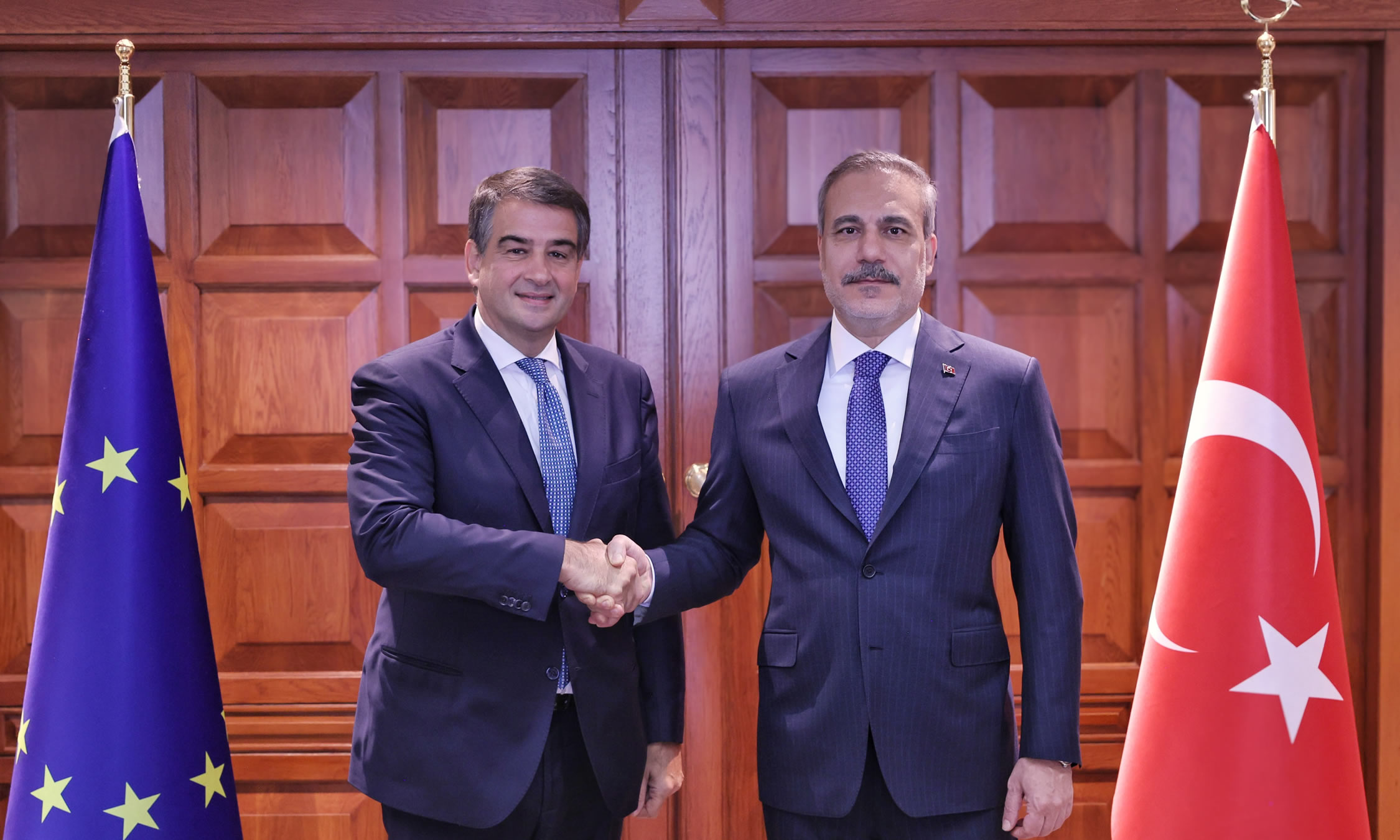
Before his meeting with Turkish Foreign Minister Hakan Fidan, Nicosia, both through leaks to friendly media outlets and through subsequent statements by the President himself and his associates, suddenly transformed a virtual reality into "reality" because it suited the narrative of the current presidency. In short, the impression was cultivated that Mr Christodoulides was acting as a central interlocutor and almost as a representative of Ursula von der Leyen and Antonio Guterres, invoking references allegedly made to him by international actors without any confirmation.
Trade-offs and illusions
In this way, the President and his associates, aided by certain willing media outlets, sought to convey to the domestic audience the message that the European Union, through Raffaele Fitto's visit to Ankara, was bringing a specific proposal concerning the resumption of suspended discussions on the EU-Turkey customs union in exchange for the resumption of Cyprus talks.
This constant recycling of "waiting" functions as a political lifeline ahead of the election period. The government seeks to prove that its strategy is yielding results and that Nicosia retains the initiative, while avoiding engagement with the actual requirements of such a process.
Yet this communications construct collides with the institutional realities of the European Union itself. As emerges from the European Commission's official position, the modernisation of the Customs Union remains politically frozen because the European Council, namely the 27 member states acting at the intergovernmental level, has not approved the negotiating directives pending since 2016. Consequently, neither the President of the Commission nor Mr Fitto had the institutional authority to offer Ankara such a concession. Presenting such a prospect as a "locked-in" diplomatic move reveals the priority given to creating impressions over substance.
Converging stagnation and rhetoric
The outcome of the Fitto-Fidan meeting in Ankara confirmed the lack of substance behind this rhetoric. The European Commission spokesperson's statement was confined to the usual general references to "maintaining dialogue" and a repetition of the longstanding assessment that progress on the Cyprus issue would create a more positive environment for EU-Turkey relations. No formula of direct linkage was confirmed.
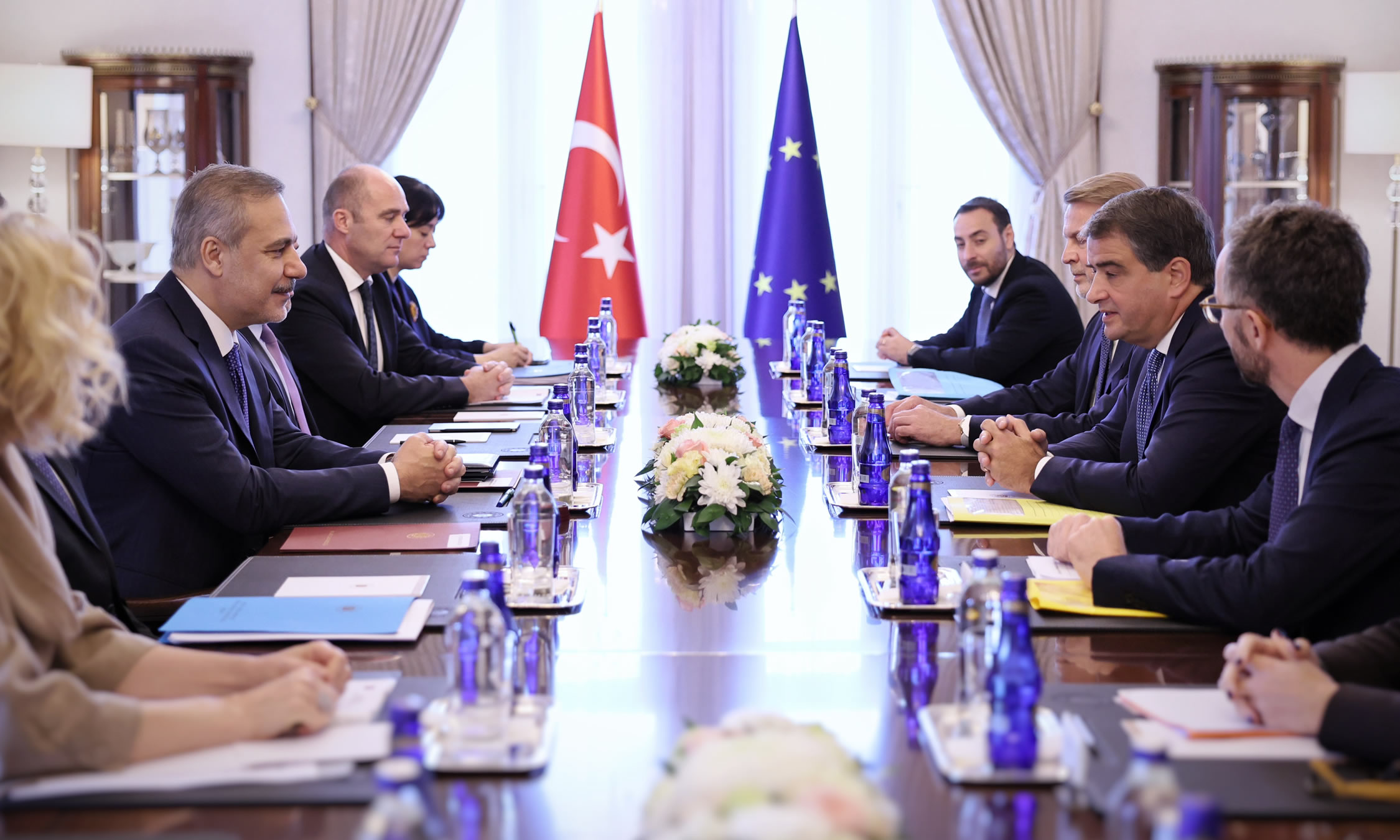
For its part, Ankara, following its own agenda, moved quickly to close any such window. As noted in yesterday's Politis report by Stefanos Evripidou:
- Hakan Fidan explicitly rejected linking the Customs Union to the Cyprus issue, stating that Turkey-EU relations cannot be "held hostage" by the Republic of Cyprus.
- Both the Turkish government and the Turkish Cypriot leadership refuse even to recognise Raffaele Fitto as special representative for the Cyprus issue, engaging with him exclusively in his capacity as a Commission vice-president.
- Turkey is advancing four specific demands: modernisation of the Customs Union, participation in the "Made in EU" initiative, visa liberalisation despite failing to meet six key benchmarks, and inclusion in European defence mechanisms, seeking benefits without political cost on the Cyprus issue.
The convergence of inertia
This is precisely where the two sides converge, centred on inertia.
On the one hand, Ankara seeks the complete decoupling of EU-Turkey relations from the Cyprus issue, as Hakan Fidan stated on Friday, in order to reap economic and geopolitical benefits without making concessions. On the other, Nicosia invokes a "virtual" linkage without having prepared the ground, settling instead for managing appearances.
While Mr Christodoulides proclaims at every opportunity his readiness for the resumption of talks, in practice he avoids difficult political decisions, sustaining a climate of expectations that serves as an electoral narrative, while the diplomatic process conducted through the UN Secretary-General's envoy is exhausted in endless discussions even on secondary issues such as crossing points, which repeatedly appear close to opening only to stumble over contradictory moves by the sides.
There is a precedent
The experience of almost a decade of stagnation demonstrates that the "diplomacy of linkages" cannot function in a vacuum, nor can it be replaced by communications fireworks.
Practice shows that linking EU-Turkey relations to the Cyprus issue only works when it is embedded in the so-called Community method, under which dialogue is conducted and supported by binding, carefully calibrated decisions.
For genuine progress rather than a simple recycling of wishful thinking, a clear and binding formula of two parallel and mutually reinforcing tracks is required. Such an approach led to developments in 2004 and to the near-agreement reached in Crans-Montana in 2017.
The first concerns the United Nations level. In coordination with the EU, the UN should announce the resumption of negotiations on the substance of the problem, based also on the Secretary-General's six-point framework, avoiding endless dialogue and setting a deadline, after first securing and verifying the commitment of Turkey and both leaders in Cyprus to the substance and methodology of the process.
The second concerns the level of the EU's 27 member states, with the prior consent of both Cyprus and Greece. In essence, the member states would need to adopt a common negotiating position, lifting existing vetoes and authorising the European Commission to conclude negotiations on an upgraded Customs Union according to the timetable established for the Cyprus talks.
Such an approach requires political courage, realism and a clear definition of reciprocal trade-offs. As long as strategy remains trapped by the need to generate domestic impressions for electoral gain, declarations of readiness will remain hollow, entrenching a dangerous status quo from which there will be no escape and creating a dangerous and evolving permanence on the island.