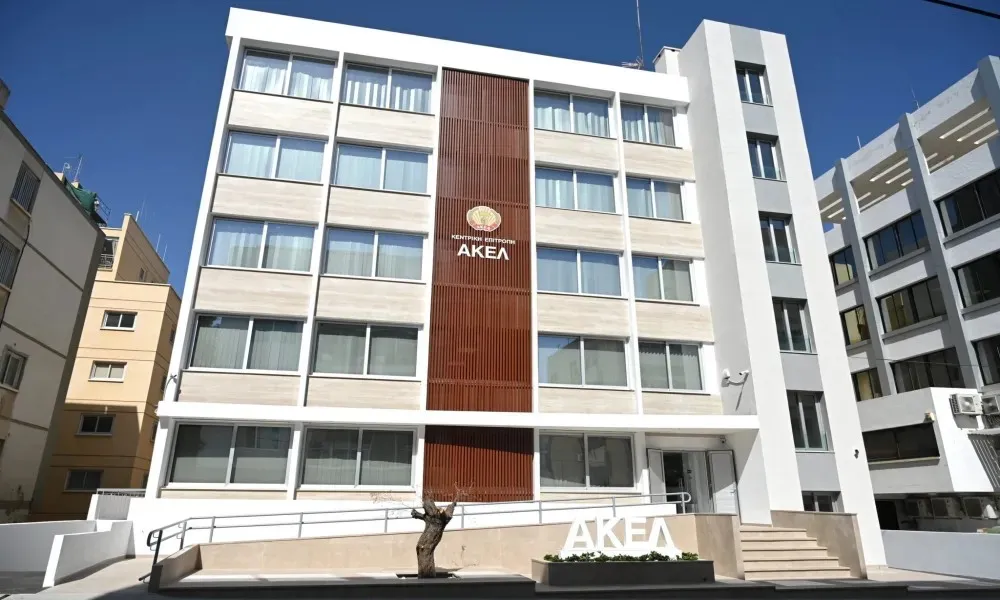

AKEL emerged from the 2026 parliamentary elections with the same 15 seats and more options for the 2028 presidential elections. ALMA's entry into the House of Representatives, together with Volt, which remained outside Parliament, allows the party of the Left to explore a partnership beyond its traditional interlocutors in the Centre. The first sign that the new arithmetic carries political weight came in June. In the election for the Speaker of the House, ALMA's four MPs voted for Stefanos Stefanou, who received 19 votes. Annita Demetriou was re-elected with 29 votes, from DISY, DIKO and Direct Democracy.
What changes for the centre-left
In the parliamentary elections, AKEL won approximately 24%, ALMA 5.8% and Volt 3.1%. Together, AKEL and ALMA reach approximately 29.7%, almost equal to the 29.59% with which Andreas Mavroyiannis made it to the second round in 2023. With Volt, the total rises to 32.8%, close to the 32.04% with which Nikos Christodoulides came first at the time. If Direct Democracy, which is in talks, EDEK, which is even proposing a joint candidate, and the Ecologists are added, the percentage arithmetically exceeds 40%. The comparison shows the electoral scale of a possible partnership. However, a place in the second round will be decided by the number and strength of the candidates, turnout, and how many voters follow party decisions.
According to information, Odysseas Michaelides may also put other names on the table, such as Irene Charalambides, former Attorney-General Costas Clerides and the chairman of the Anti-Corruption Authority, Harris Poyiadjis.
The substantive change is that AKEL can now begin discussing how it would govern as the head of such an alliance, and with what commitments. On 31 October, AKEL Secretary-General Stefanos Stefanou presented the framework for "progressive change", built around the Cyprus problem, the welfare state, the rule of law and tackling the far right. Odysseas Michaelides has also placed transparency, institutional reform and the reduction of inequalities at the centre of his contacts. Here, there is a basis for a joint programme. The test begins when general principles become commitments on taxation, housing, the role of the state in the economy and the handling of the Cyprus problem.
Fidias's Direct Democracy shows how easily electoral arithmetic can lead to hasty conclusions. With 5.4% and four seats, it has the size to influence a partnership. It is among AKEL's interlocutors, yet in the election for Speaker of the House it backed Annita Demetriou from the first round. Its percentage nonetheless has a place in any analysis of the balance of power, and its stance in each contest remains to be shaped.
The centre-right's dilemma
ELAM rose from approximately 6.8% in 2021 to 10.9% in 2026, doubled its seats from four to eight and moved into third place, ahead of DIKO at 10%. For a centre-right candidacy, a formal agreement with the far right could carry a cost among the moderate voters it needs in order to broaden its appeal and win. Mr Koulias has already expressed outright opposition to such a prospect, proposing cooperation with AKEL instead.
An independent run by ELAM, on the other hand, would increase competition for votes in the first round. In 2023, Christos Christou received 6.04%, and his party called on its voters to vote according to their conscience in the second round. This remains a possible scenario for 2028. The influence of ELAM voters may prove significant even without a public agreement at leadership level, as became evident in the second round of the 2023 presidential elections in favour of Nikos Christodoulides. Pressure on ELAM to back Christodoulides from the first round is nonetheless expected to intensify, given the heavy losses suffered by those who supported him in 2023 (DIKO, EDEK, DIPA). This, of course, has not only positives but also a host of negatives. Mr Christodoulides would appear as a representative of the far right, DISY might seek his expulsion from the European Christian Democrats, and the Makarios-aligned DIKO might also remember that ELAM is home to people who supported the junta and the coup.
The 2026 parliamentary elections give AKEL the opportunity to contest the Presidency with an alliance that has a joint programme from the first round. The problem is who will lead it. At the same time, the rise of ELAM, the infighting within DISY and the competition between candidates for the same voters are complicating matters on the centre-right.
For DISY, the most immediate question is whether it can keep its own electoral base united, given that Nikos Christodoulides will seek re-election. In 2023, DISY's official candidate, Averof Neophytou, failed to reach the second round with 26.11%, just 3.48 percentage points behind Mavroyiannis. Christodoulides, whose political roots lie in DISY, had at the time the official support of DIKO, EDEK, DIPA and Solidarity, parties which, as mentioned above, lost a significant share of their strength in the 2026 parliamentary elections.
What is certain is that, of the 27.5% DISY won in the parliamentary elections, Nikos Christodoulides is competing for perhaps as much as a third of the party's voters. According to political observers, this share could rise even higher if the internal tension is not defused. That tension was created by Averof Neophytou when he threatened Annita Demetriou that he would run as an independent unless she withdrew her bid for the party's nomination ahead of the presidential elections. Some of the party's older members argue that a public and sincere apology from the former DISY leader might change the course of events.
The person who can win a second round
In 2023, Andreas Mavroyiannis started from 29.59% and reached 48.03%. He gained 18.44 percentage points between the two rounds and lost the Presidency by a margin of 3.94 points. His performance shows how much wider than AKEL's party base a candidate's audience can become. In 2008, Demetris Christofias reached the second round with 33.39% and won with approximately 53.4%, after the support of DIKO and EDEK was added. The two contests show how different the work of each round is. In the first, enough mobilisation is needed to qualify. In the second, access is needed to voters who had made a different choice.
The names in play on the centre-left
For 2028, based on surveys and party dynamics, the centre-left has the potential to go into the first round with a joint programme and more partners than in 2023. Unlike the centre-right, which has clear options, either Nikos Christodoulides or one of the Averof-Pamborides duo, the potential centre-left coalition does not appear to have a clear picture of its candidate. For a great many people, Andreas Mavroyiannis appears to be the obvious choice, since all recent opinion polls highlight his considerable popularity. AKEL is considering him but, by all appearances, is betting at this first stage far more on securing partnerships than on choosing a person.
EDEK appears to be joining the dance of partnerships by putting forward the name of economist Tasos Yiasemides, a name that ALMA does not reject.
According to information, Odysseas Michaelides may also put other names on the table, such as Irene Charalambides, former Attorney-General Costas Clerides and the chairman of the Anti-Corruption Authority, Harris Poyiadjis.The first two do not have strong chances, but Mr Poyiadjis's name could certainly be discussed.
The name of the candidate in a coalition with many ideological and social convergences is of enormous importance. It concerns the candidate's acceptance and, by extension, their ability to convince that they can retain the voters of the parties backing them and add others on the second Sunday. In short, they must convince the majority of people who want a change in government but still hesitate to entrust it to an alliance with AKEL at its core.