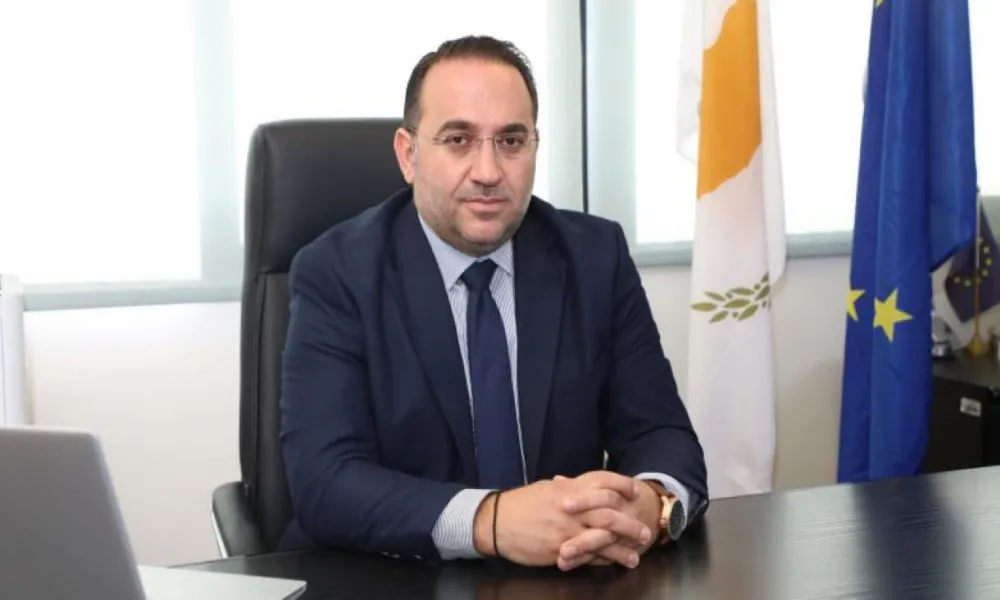

The deputy ministry of tourism is targeting a return to the performance levels recorded in 2025 by 2027, Deputy Minister of Tourism Costas Koumis said, outlining plans for the future of Cyprus tourism following the disruption caused by the March 2026 crisis.
In an interview with Politis, Koumis set out measures aimed at strengthening the destination's competitiveness, diversifying source markets and making greater use of new technologies.
A key focus is the use of artificial intelligence in promoting Cyprus abroad. Koumis revealed that the deputy ministry this week launched its first two AI-generated productions, developed in cooperation with the team of Chief Scientist Demetris Skourides.
The productions are short promotional films featuring the goddess Aphrodite and draw on Cyprus' mythology and cultural heritage through the use of AI technology.
Koumis said advances in artificial intelligence could improve a range of tourism services, although he cautioned that excessive reliance on technology could, in some cases, reduce the human element of hospitality.
The deputy ministry is also placing particular emphasis on developing new markets. Koumis said growth in the Spanish market is a strategic objective and disclosed that two additional initiatives are currently being implemented and are expected to be launched early next year.
Cyprus continues to expand its reach across international markets, attracting visitors from more than 40 countries, he said, highlighting Kazakhstan as a particularly successful addition.
"We managed to open another market, the market of Kazakhstan, which is going very well and is satisfying us," he said.
March crisis
Referring to the tourism crisis that followed events in March 2026, Koumis said the impact on the sector had been unavoidable given the uncertainty generated internationally.
He said authorities had focused on ensuring that airlines which suspended or reduced services to Cyprus would restore their schedules as quickly as possible, while efforts were also made to maintain support for the destination from major tour operators.
Koumis said he believed 2027 would bring a significant improvement in Cyprus' air connectivity.
According to the deputy minister, the objective for 2027 is clear: a return to results comparable to those achieved in 2025, a year regarded as a benchmark for Cyprus tourism.
The deputy ministry is also placing greater emphasis on the winter season, seeking both higher visitor numbers and a gradual extension of the tourism period.
"Our target is to increase visitor numbers during the winter period and gradually gain additional weeks in the long-standing goal of extending the season," he said.
Looking further ahead, Koumis said the greatest challenge was not only managing the next tourism season but planning for the industry's development over the coming decade.
He said that strategy should include policies supporting the green and digital transitions, improving accessibility and completing long-delayed legislative reforms.

Asked whether Cyprus itself bore any responsibility for the March tourism crisis, Koumis said safety must remain a top priority for every country and noted that Cyprus had faced an unprecedented event that attracted international attention and concern.
"We had an unprecedented event. Our country was struck for the first time since 1974. It was natural that this event would receive international publicity and cause concern. Statements were made by leaders of other countries as well. Let me remind you that Benjamin Netanyahu had stated that European territory had been struck," he said.
"You understand that these kinds of statements had an impact, became international headlines and, yes, affected the tourism sector negatively. At the same time, we were trying to respond and better address this negative news by providing positive messages."
Koumis also highlighted the prospects for sports tourism and gastronomy as sectors with significant growth potential.
On short-term rental platforms, he revealed that a new legislative framework is being prepared and that additional measures are being examined to address market distortions.
Responding to a question on the concentration of tourists in areas such as Ayia Napa and Protaras, Koumis said Cyprus was not currently suffering from overtourism, although he acknowledged it was a growing threat for many destinations worldwide.
"It is a threat that concerns a great many destinations around the world at the moment and we must take our measures," he said. "The state must know how many visitors individual destinations can receive so that targets can be set again and the measures required can be taken to ensure these visitors receive the proper hospitality."
"So the answer is that there is no overtourism in Cyprus at the moment. However, we are taking measures for the future."
On hotel prices, Koumis said lower-cost options were available but required research by travellers, noting that prices vary depending on both the time of year and the location chosen.