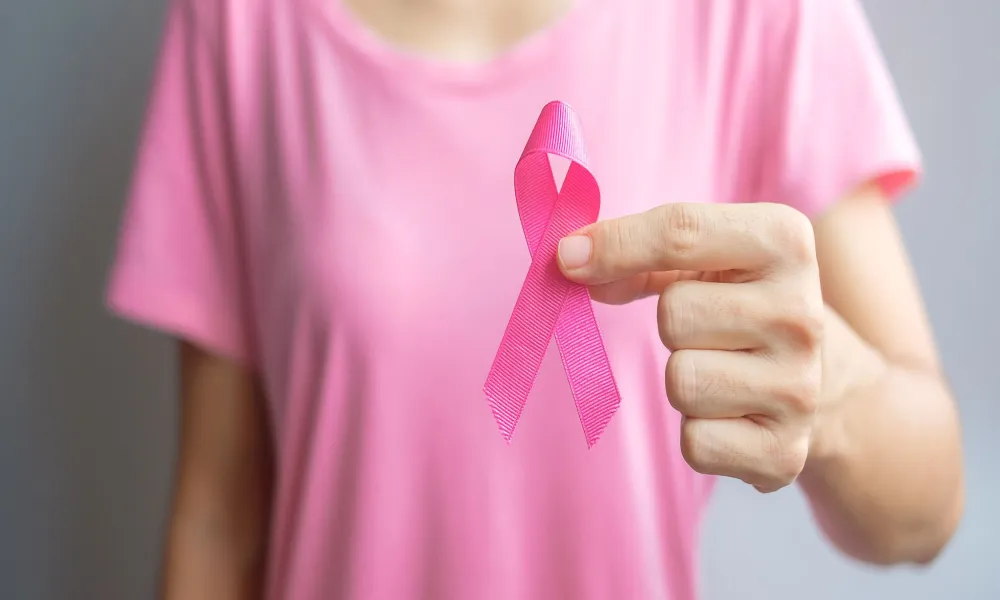

Today, the pink ribbon is one of the most recognisable health-awareness symbols worldwide.
Every October, it appears on fundraising campaigns, awareness drives, charity events and illuminated landmarks, helping to promote breast cancer awareness and support for people affected by the disease.
What is less widely known is that the movement originally began not with a pink ribbon, but with a peach-coloured one.
How it started
In the early 1990s, American activist Charlotte Haley, whose family had been affected by breast cancer, began hand-making peach ribbons to highlight what she believed was inadequate funding for breast cancer prevention and research.
Her campaign attracted national attention and eventually caught the interest of Self magazine and major corporations.
However, Haley opposed commercialising the initiative and declined requests to allow her ribbon to be used in a broader corporate campaign.
The birth of the pink ribbon
The refusal prompted a new approach.
In 1992, Alexandra Penney, then editor-in-chief of Self, joined forces with Evelyn Lauder of Estée Lauder, who had been diagnosed with breast cancer in 1989.
Together, they adopted the pink ribbon as the symbol of a major awareness campaign focused on breast health and breast cancer education.
From campaign symbol to global movement
The campaign gained significant momentum in October 1992, when approximately 1.5 million pink ribbons were distributed through Estée Lauder counters and retail locations across the United States.
The symbol quickly spread beyond the cosmetics industry and was embraced by hospitals, patient organisations, charities and awareness groups.
As the campaign expanded internationally, the ribbon became closely associated with breast cancer awareness, early detection and support for patients and survivors.
A lasting legacy
Evelyn Lauder later founded the Breast Cancer Research Foundation, an organisation dedicated to funding scientific research.
Over time, landmarks, public buildings and monuments around the world began lighting up in pink during October, further cementing the ribbon's status as an international symbol of awareness.
Today, the pink ribbon serves as a reminder of the importance of education, screening and early diagnosis, while also expressing solidarity with those affected by breast cancer.
Interestingly, there is no single official shade of pink associated with the movement, although a soft pastel pink has become the colour most commonly used.
Source: LiFO, National Breast Cancer Foundation, Self Magazine