By Kenan Şener and Yusuf Kanli
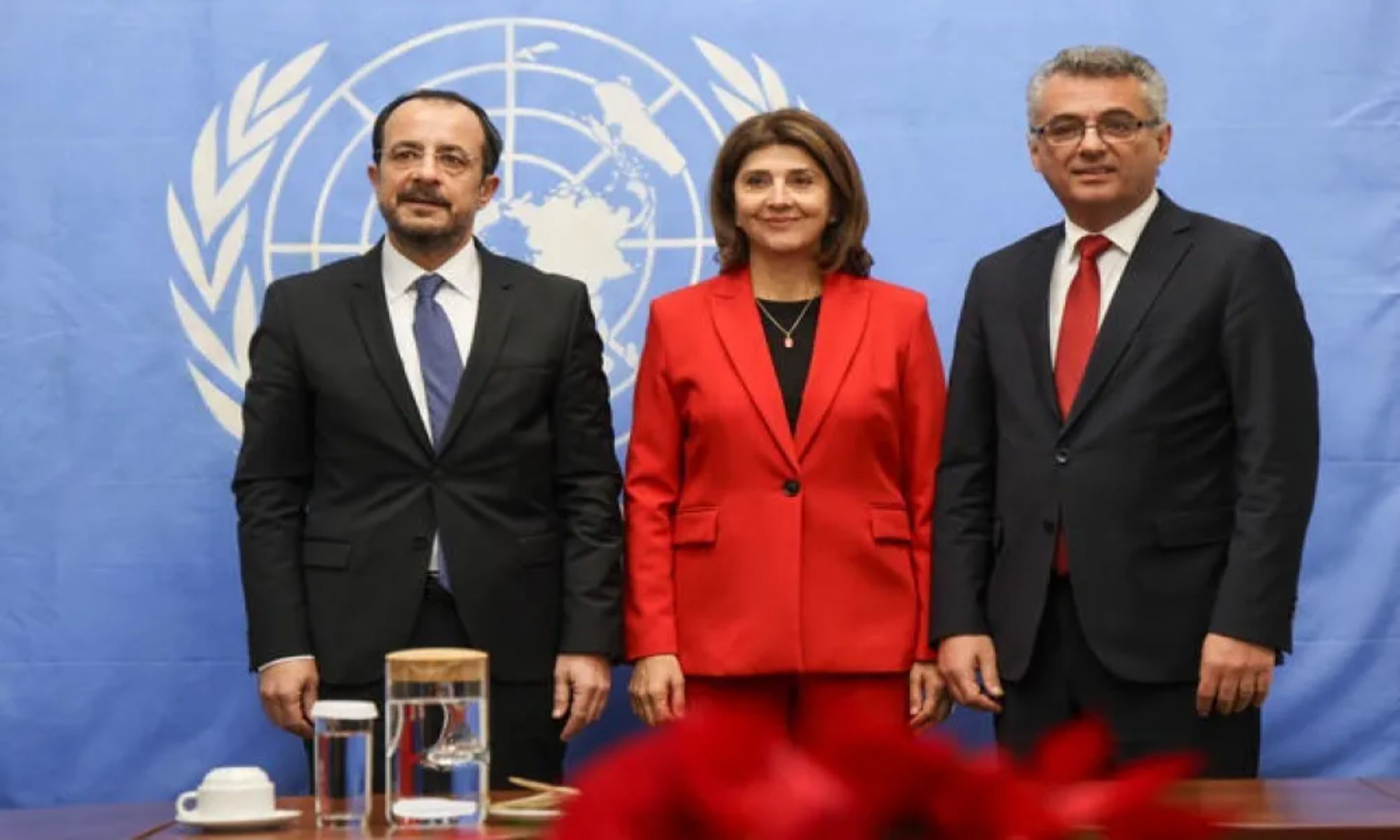
María Ángela Holguín, the UN Secretary-General’s Personal Envoy for Cyprus, said a result on Monday on the proposed confidence-building measures would be important if the Cyprus process was to continue beyond António Guterres’s term in office.
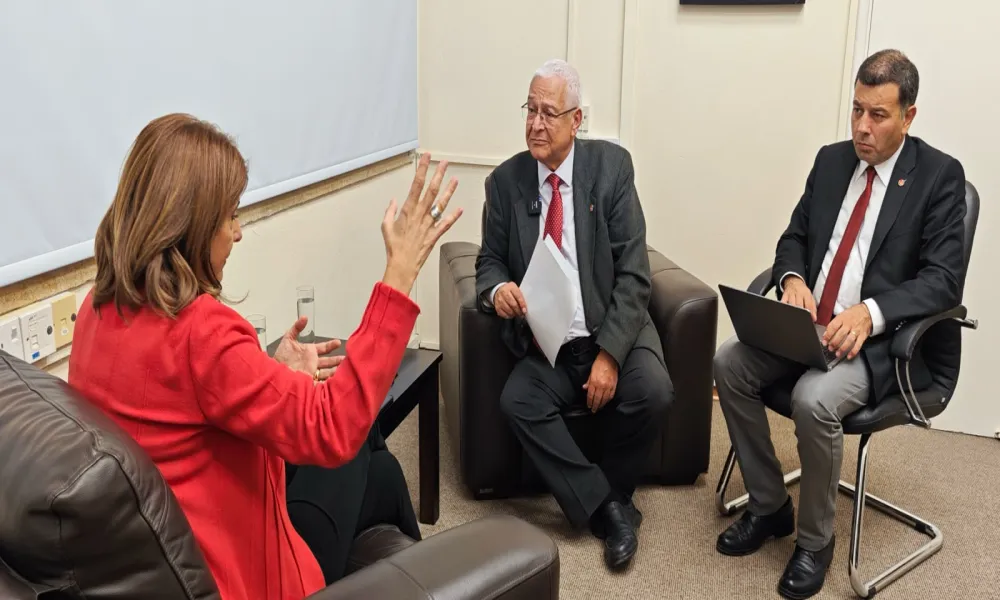
After a week of shuttle diplomacy between the two sides, Holguín spoke to ANKA at the UN Good Offices Mission at the former Nicosia International Airport in the buffer zone. The interview took place as Foreign Minister Hakan Fidan was meeting Turkish Cypriot leader Tufan Erhürman.
Holguín said the package called for four new crossing points and the clearance of 70,000 square metres of mined land on each side near UN checkpoint No. 10 in the Derinya area. “We’ll see what happens on Monday,” she said. “I hope we can take a step on confidence-building measures this time.”
“If nothing happens, my report to the Secretary-General will say, ‘Nothing happened.’ Goodbye, everyone. Goodbye to me, goodbye to Guterres,” Holguín said. If there was progress, she said, efforts could continue into next year and into the term of the next Secretary-General. “But if the process is still alive, we can keep pushing.”
“We’ll start with the same 70,000 square metres on each side”
Asked about the Turkish Cypriot side’s push for a decision to clear mines across the island, Holguín replied, “We have to start somewhere. They’ll start with exactly the same 70,000 square metres on each side.” She said the ultimate goal was “an island without mines” and added, “The perfect is the enemy of the good. We shouldn’t hold up demining because we want more.” The Greek Cypriot side cites the presence of a Turkish tank unit on the island in arguing that the removal of anti-tank mines should be discussed as part of negotiations on security.
On the proposal to include Kambos in place of Kokkina, Holguín said, “I hope taking out Kokkina and putting in Kambos will help. We’ll see.” The package on which the leaders are expected to announce agreement on Monday includes Mia Milia, Athienou - Pyroi - Aglantzia, Louroujina - Lymbia, and Kambos - Karavostasi.
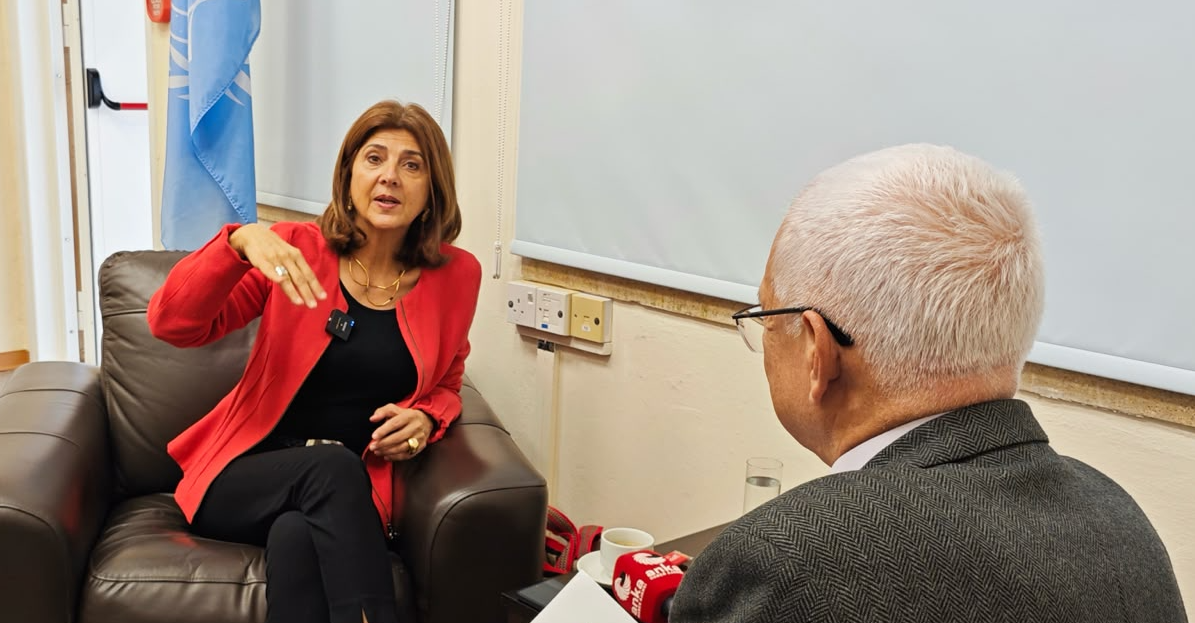
Photo by İrfan Gündüzler, Haber Kıbrıs
Holguín expected more common ground after nearly two years
Holguín said the two leaders had shown the political will to advance confidence-building measures, but had made less progress than she had expected on how to conduct renewed negotiations. “It may not be what we expected, but it’s a start,” she said. “After a year and a half, almost two years, we expected them to have much more in common on methodology, procedural steps and the framework for future negotiations.”
“Life goes step by step,” Holguín said. The sequence under consideration would begin with the two leaders meeting Guterres in a 2+1 format, followed by a 5+1 meeting that would also bring in Türkiye, Greece and the United Kingdom. She said the leaders should prepare their proposals on negotiating procedures before any three-way meeting. She identified the 5+1 meeting as the point at which formal negotiations would begin.
Holguín said she would speak to Guterres once the package on crossings and demining was finalised. She said she did not yet know whether he would prefer to hold a three-way meeting first or proceed directly to a 5+1. She gave no date for either format, saying the next step would depend on Guterres’s assessment and the timing on his schedule.
Explicit agreement on a rotating presidency before talks would be “very difficult”
Holguín said the sides had reached agreement on political equality on 11 December. “The issue is more about the rotating presidency,” she said, describing it as part of political equality. She added that asking the Greek Cypriot leader to confirm it explicitly before negotiations began would be “very difficult.”
Holguín said the details of political equality should be worked out at the negotiating table. “You have to flesh that out in negotiations, not before negotiations,” she said. At Crans-Montana, the rotating presidency was linked to troops and security, she said, and the Greek Cypriot side remained concerned that the same linkage would carry over into any new talks.
Holguín asks Erhürman for concrete safeguards against a return to the status quo
Holguín asked Turkish Cypriot leader Tufan Erhürman to turn his four points on how negotiations should be conducted into concrete proposals.
Erhürman is calling for negotiations to run within a fixed timeframe and for safeguards against an automatic return to the status quo if talks end without agreement through no fault of the Turkish Cypriot side.
Holguín asked Erhürman to specify what steps he would want taken in those circumstances. She said both leaders should consider what would happen if either side walked away from the table and do so before any 2+1 meeting with the Secretary-General. “I don’t know if they should do it separately or together. But they have to prepare these issues,” she said.
Holguín cited direct trade, direct flights and direct contacts as possible options. When the interviewer suggested that direct trade with the EU was the Turkish Cypriot side’s priority, she replied, “We need the European Union in this equation.” She described the UN’s role as that of a facilitator, saying it could put options before the leaders and that direct trade would also require the EU’s involvement.
UN administration of Varosha would require substantial funding
In the interview with ANKA, Holguín discussed the proposal to reopen Varosha to Greek Cypriot settlement and place it temporarily under UN administration. She saw the proposal from Greek Cypriot leader Nikos Christodoulides as an attempt to respond to Erhürman’s four points for restarting negotiations.
“There have to be irreversible steps,” Holguín said. “Putting Varosha under UN administration could be irreversible. But I don’t know whether the same can be said of Famagusta port and direct trade.” She agreed that a trading arrangement based on permission could later be revoked.
Holguín said administering Varosha would demand considerable resources. “The UN doesn’t have the means or the logistical capacity for that. This isn’t a small place. It’s a city,” she said. When the question of reconstruction came up, she said, “Even providing security for the city would require a substantial budget.” She described what the UN could do if the two sides reached agreement. “If you agree, we’ll go to the Security Council to ask for funding.”
Holguín challenges “nothing is agreed until everything is agreed”
Holguín called the principle that “nothing is agreed until everything is agreed,” which she also encountered in the Colombian peace process, “a bad thing.” She said some confidence-building measures should be put into effect as soon as the sides agreed on them, while negotiations continued.
“It’s only through implementation that people see something has changed, that the status quo has been overcome and that things are moving,” Holguín said. Seeing agreements make a difference in daily life, she said, would help both communities believe that the talks could produce results.
“The guarantors should support what the leaders agree”
On the role of Türkiye, Greece and the United Kingdom, Holguín said the guarantor countries should back the settlement the two leaders reach. “Whatever the leaders agree, the guarantors have to be there to support them,” she said. She described the 5+1 meeting as a way for the guarantors to lend their support to the leaders’ decisions. She singled out Türkiye’s importance, saying, “Türkiye has a very big role to play.”
Holguín also praised the bicommunal technical committees and the work young people are doing together. She described the committees as “a bridge between one community and the other.” A rapid response arrangement under development for fires and other natural disasters, she said, would allow the two sides to act together without having to make “15 phone calls” first.