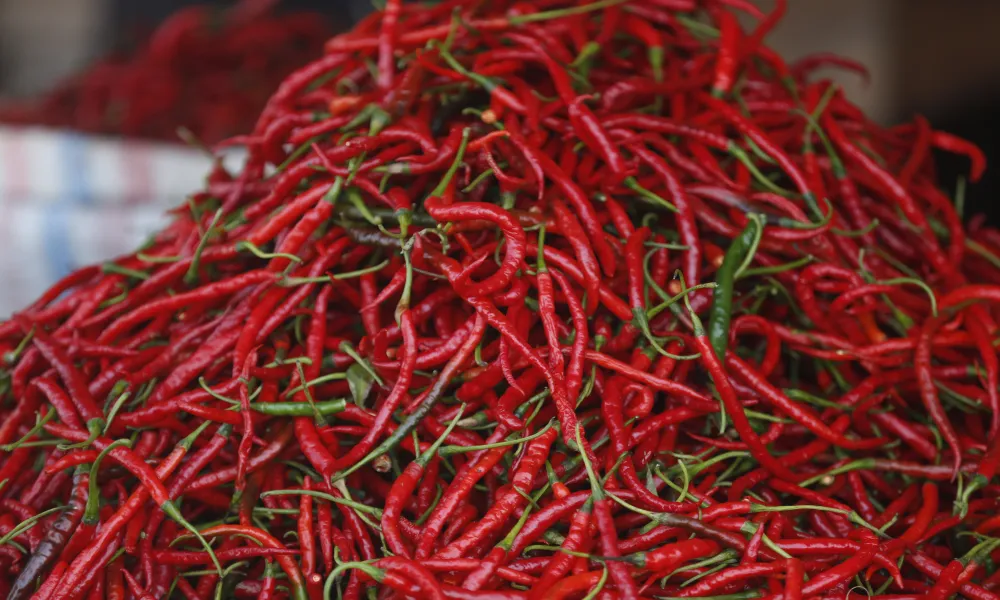

In 2015, a large study published in the British Medical Journal found an association between eating spicy food and increased life expectancy. Between 2004 and 2008, scientists tracked more than half a million adults in China, recording their health status over several years.
As expected, several thousand participants died during the course of the study. However, even after researchers accounted for factors such as smoking, physical activity and consumption of red meat, fruit and vegetables, those who ate spicy food six or seven days a week had a 14% lower relative risk of death compared with those who ate it less than once a week. Spicy food consumption was also linked to a lower risk of death from cancer, and from heart and lung disease.
Two years later, a similar study in the United States confirmed these findings: Americans who consumed hot red chilli peppers were around 13% less likely to die at any point during the study period compared with those who did not.
How capsaicin may work
Scientists believe capsaicin, the main active compound in chilli peppers, may offer these benefits because it affects nerve cell receptors that detect heat, whether from temperature or from spicy food. These receptors, known as TRPV1, are found throughout the body, including the skin, the gastrointestinal system and many immune cells.
Does this mean everyone should stock up on chilli paste to live longer? Not necessarily. Although the benefits of spicy food are supported by significant scientific research, it has not been proven that they directly cause this apparent increase in life expectancy. In some areas, the evidence is not entirely clear. For example, some, though not all, studies have found an increased risk of stomach cancer in people who frequently eat very spicy food.
Cardiovascular health
Many epidemiological studies have shown that eating spicy food is associated with a lower risk of heart disease and stroke. The exact mechanisms are not fully understood, but small clinical trials in humans suggest capsaicin may raise levels of HDL, so-called "good" cholesterol, low levels of which are a known risk factor for heart attack. It may also accelerate calorie burning.
In addition, the spicier the food, the less salt people tend to add. A 2017 Chinese study of around 600 adults found that those who preferred spicier food consumed, on average, about half a teaspoon less salt per day, which was associated with lower blood pressure. The same researchers carried out a second clinical trial, recording participants' brain activity while they tasted salt solutions, and found that capsaicin enhances the perception of saltiness. In other words, the same amount of soy sauce tastes saltier when combined with chilli.
Gut health
Irritable bowel syndrome and abdominal pain: A particularly interesting feature of TRPV1 receptors is their key role in transmitting pain. These receptors are found in higher concentrations in the colon of people with irritable bowel syndrome. This is why, paradoxical as it may sound, capsaicin creams are used to treat pain. Capsaicin temporarily overstimulates the nerves that carry pain signals, then reduces their ability to send signals to the brain.
Small clinical studies have shown that capsaicin may also help with chronic abdominal pain. In some people, it may initially worsen discomfort, but after several weeks of regular consumption, these receptors become desensitised and symptoms often improve.
Stomach acid and ulcers: Contrary to popular belief, capsaicin does not damage healthy stomach lining. Instead, it reduces the production of stomach acid. It also increases blood flow to the stomach, which has been shown to help protect against gastric and duodenal ulcers.
So why does spicy food often cause heartburn? The sensation is not necessarily due to increased acid. Capsaicin activates TRPV1 receptors in the oesophagus, producing the characteristic burning sensation in the chest that is usually attributed to acid reflux.
Haemorrhoids: Despite the well-known Hungarian saying that "paprika burns you twice," a 2006 randomised clinical trial found that capsaicin does not worsen haemorrhoid symptoms. If this is the reason some people avoid spicy food, the available scientific evidence is reassuring.
Cancer: When it comes to gastrointestinal cancers, the data remain conflicting. Most studies suggest capsaicin may have a protective effect against cancer, while some suggest it may favour tumour growth. This is an area that requires further research. For now, however, the overall picture is fairly encouraging, suggesting spicy food may have a protective effect.
Source: The Washington Post