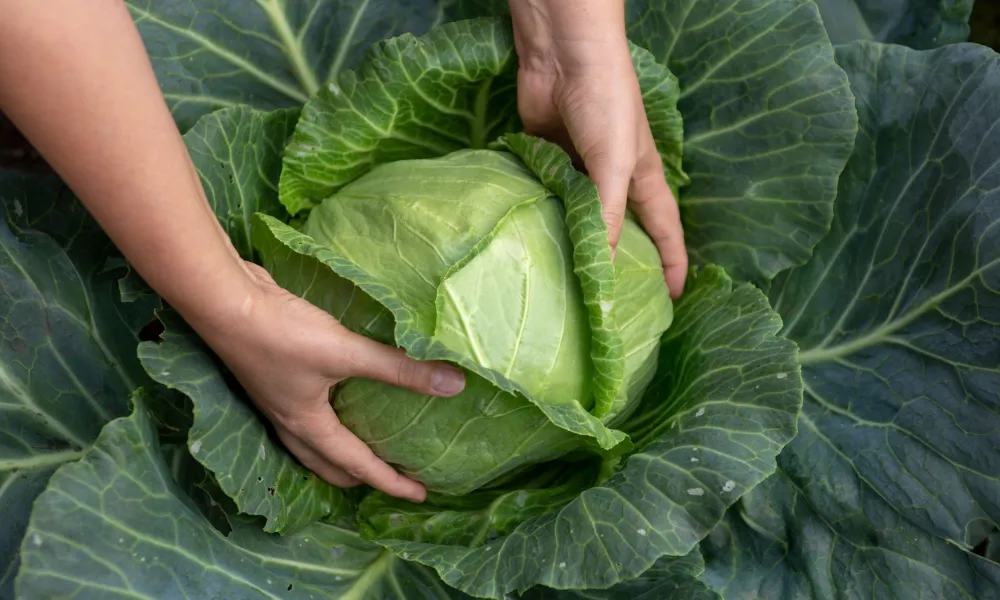

Cabbage is a staple ingredient in many kitchens, particularly during the autumn and winter months. Whether used in salads, soups, stuffed cabbage rolls or cooked dishes, its tightly packed layers often raise a practical question: what is the best way to wash it?
Because cabbage consists of leaves wrapped closely around one another, many people wonder whether every leaf needs to be washed individually or whether rinsing the whole head is enough.
Start by removing the outer leaves
Like all fresh vegetables, cabbage should be washed before it is eaten or cooked.
The outer leaves are most exposed during harvesting, transport and storage and may contain dirt, dust or other residues. Any damaged, wilted or stained outer leaves should be removed first.
The method used afterwards depends on how the cabbage will be prepared.
Washing individual leaves
This is the most thorough method and is particularly useful when whole leaves are needed, such as for stuffed cabbage rolls.
After removing the outer leaves, separate the leaves you intend to use and rinse them individually under running water. Pay particular attention to folds and creases where dirt may collect.
Once washed, allow the leaves to drain or dry them with a clean kitchen towel.
The easier method for salads
For shredded cabbage, a quicker approach is usually sufficient.
After removing the outer leaves, rinse the outside of the cabbage thoroughly under running water. Cut it in half or into quarters and remove the hard central core.
The cabbage can then be finely sliced with a knife or mandoline slicer.
Once chopped, place it in a large colander and rinse again with plenty of cold water, gently turning the cabbage by hand so water reaches all of the cut pieces.
It should then be drained thoroughly before serving.
Why wash before cutting?
Food experts recommend washing cabbage before shredding or slicing it.
Cutting an unwashed vegetable can transfer dirt or contaminants from the outer surface onto the freshly exposed interior.
For that reason, it is best to remove the outer leaves, rinse the cabbage and only then begin cutting.
Soaking in water
If the leaves contain visible dirt that is difficult to remove, they can be separated and soaked briefly in a bowl of cold, clean water.
Afterwards, they should still be given a final rinse under running water.
The same method can be used for shredded cabbage, provided it is drained well after washing.
Proper storage matters too
Once prepared, cabbage should be stored appropriately to maintain freshness and texture.
Keeping it refrigerated and protected from excessive moisture can help preserve its quality, while washing it properly before use ensures it is ready for salads, cooked meals and other dishes.
Source: Cantina