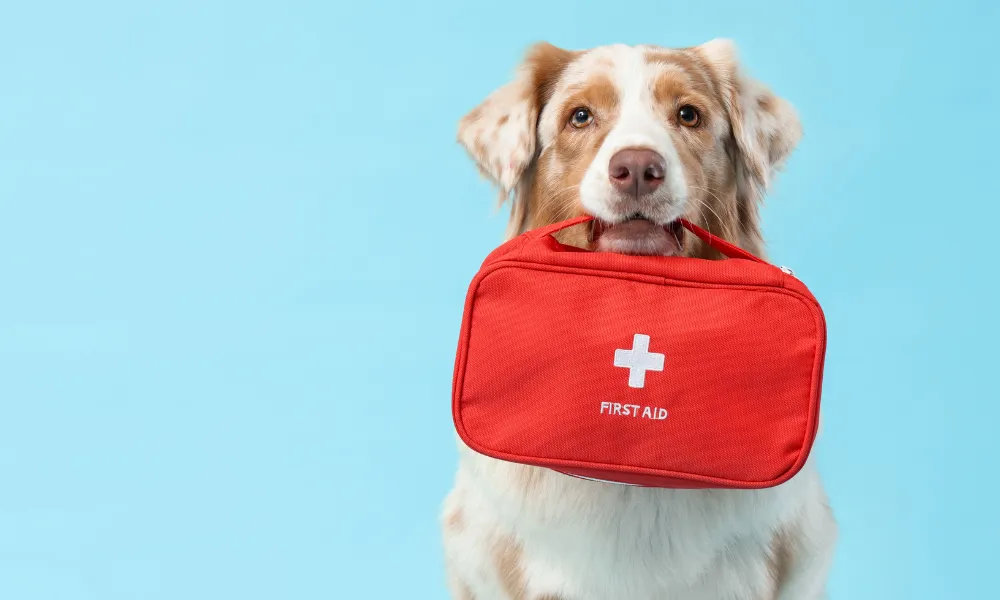

Emergencies can leave pet owners little time to react. A properly stocked kit can provide short-term support, help control bleeding and make transport safer, but it is not a substitute for veterinary treatment.
Start with emergency information
The first item should be a card containing the telephone numbers and addresses of the pet's regular veterinary practice and its out-of-hours emergency provider. The same details should also be saved on the owner's mobile phone.
The card should include the animal's name, weight, microchip number, medical conditions, allergies and current medication. A recent copy of relevant medical records can also be useful when an unfamiliar clinic is providing treatment.
This checklist is intended mainly for dogs and cats. Owners of rabbits, birds, reptiles and other animals should ask their veterinarian whether species-specific supplies are required.
What the kit should contain
A basic kit should include:
- Non-adhesive absorbent dressings for covering wounds
- Sterile gauze swabs and roll bandages
- Self-adhesive bandage tape for securing dressings
- Sealed sterile saline or a wound wash recommended by a veterinarian
- Blunt-ended scissors
- Disposable gloves
- Tweezers and a tick-removal tool
- Clean towels
- A foil emergency blanket for keeping a cold animal warm
- A larger blanket that can assist with careful transport
- A spare lead and collar for dogs
- A secure carrier for cats and smaller animals
Dressings and bandages should be suitable for the animal's size. Households with more than one pet may need several sizes rather than a single standard set.
Use dressings and bandages carefully
If a wound is bleeding heavily, a clean dressing can be held firmly against it while veterinary help is contacted. The dressing should not be repeatedly lifted to check the wound because this may disturb a forming clot. If an object is embedded in the wound, owners should not pull it out or press directly on it.
A poorly applied bandage or splint can cause further harm. Owners should not improvise a splint or tightly wrap an injured limb unless a veterinarian has provided instructions.
For a small graze, sterile saline or clean lukewarm water may be used to flush away dirt. Antiseptics, creams and other products should not be applied unless recommended by a veterinarian.
Handle an injured animal cautiously
Pain and fear can cause even a normally calm animal to bite or scratch. Owners should approach slowly, avoid sudden movements and stop if handling the pet places either of them at risk.
A clean towel can help with the careful handling of a cat or small animal, while a blanket may support a larger pet during transport. Movement should be kept to a minimum when a fracture or spinal injury is suspected.
Some canine kits include a muzzle. It should only be used by someone who knows how to fit it safely and must never be placed on an animal that is vomiting, struggling to breathe or has a facial injury.
Keep human medicines out
A first-aid kit should not become a general medicine cabinet. Human painkillers such as ibuprofen, naproxen and paracetamol can seriously harm pets, while paracetamol can be fatal to cats.
Medicine prescribed to one animal should not be given to another. Regular prescriptions should be stored and carried according to the veterinarian's and manufacturer's instructions, with clear dosage information.
Act immediately after suspected poisoning
Owners should contact a veterinarian immediately if they believe a pet has swallowed, inhaled or come into contact with a potentially toxic substance. They should not wait for symptoms to appear, as the effects of some poisons may be delayed.
Pets should not be made to vomit unless a veterinarian gives explicit instructions. Salt water and other home remedies can cause additional harm. Any packaging, plant material or product information should be taken to the clinic, or photographed when this can be done safely.
When the kit is not enough
Immediate veterinary advice is required if a pet:
- Has difficulty breathing
- Collapses or becomes unresponsive
- Has severe or uncontrolled bleeding
- Is suspected of being poisoned
- Shows signs of heatstroke
- Suffers a serious burn or eye injury
- Cannot pass urine
- Has a prolonged or repeated seizure
- Develops a severe allergic reaction
- Is involved in a road traffic accident
An animal involved in a road traffic accident should be examined even if there are no visible injuries, as serious internal damage may not be immediately apparent.
A foil blanket is intended to help keep a cold animal warm and must not be used on an overheated pet. Suspected heatstroke requires immediate cooling and urgent veterinary advice.
Check the contents regularly
The kit should be kept in a clearly labelled, water-resistant container that can be reached quickly but remains inaccessible to children and animals. A smaller version can be carried on walks and journeys.
Owners should regularly check expiry dates, replace used or damaged supplies and confirm that emergency contact details remain correct. Familiarity with the contents, together with veterinary first-aid training, can reduce the risk of unsafe improvisation during an emergency.