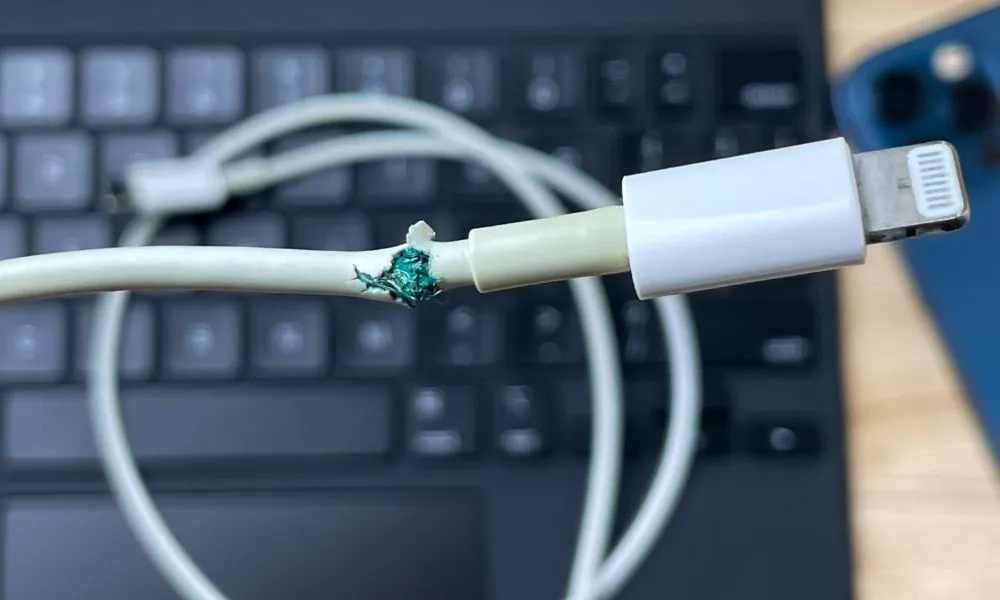
Charging cables are among the most overlooked pieces of technology in daily life, until the moment they stop working and leave phones and tablets without power. While many people assume the problem lies with poor design or careless storage, engineers say the real cause is how cables are handled during everyday use.
According to a recent report by BBC, extensive testing shows that wrapping charging cables “the wrong way” does not damage them. The findings come from laboratory research led by Michael Pecht, founder of the Center of Advanced Life Cycle Engineering at the University of Maryland, where technology companies send devices to understand why they fail.
Pecht’s team has spent years subjecting USB cables to repeated plugging, bending, stretching and other forms of stress, before examining failures using X‑ray imaging. One long‑held belief has not held up under scrutiny. Incorrect wrapping, he says, has never been shown to cause cable failure.
“We’ve done work for some of the biggest computer companies,” Pecht told the BBC. “We’ve never seen failures caused by wrapping cables up wrong.”
Where cables actually break
The most vulnerable point is where the cable meets the plug. Kyle Wiens, co‑founder of repair and sustainability platform ifixit, says that almost all failures occur at this junction. The reason lies in repeated bending at the same point, which gradually weakens the thin metal wires inside the cable.
Engineers liken the process to bending a paper clip repeatedly until it snaps. Each bend causes microscopic damage to the metal, and over time this damage accumulates. Pulling a cable out of a socket by the wire rather than the plug increases stress at this point, as does using a phone while charging at a sharp angle.
Short cables can also shorten their own lifespan. Stretching a cable to reach a distant socket puts constant tension on the connector. Placing a phone on top of the cable while it is plugged in, such as in a car cup holder, adds further pressure during movement.
A detailed explanation of these failure mechanisms is also outlined in a syndicated analysis published by QOSHE which highlights how small daily stresses gradually lead to internal breaks.
What makes cables last longer
Experts agree that improving cable lifespan does not require special storage techniques. Instead, users are advised to unplug cables by holding the connector, avoid sharp bending near the plug, and ensure cables are long enough for the task they are used for.
Quality is another key factor. Wiens recommends investing in sturdier cables, particularly braided designs that use woven fabric rather than plastic insulation. These provide better protection for the internal wiring and are increasingly adopted by major manufacturers.
Charging cables may be simple and unglamorous tools, but treating them properly reduces waste, saves money and avoids the frustration of sudden failure. The evidence suggests that cables do not break in drawers or bags, but in hands, one bend at a time.
Source: BBC