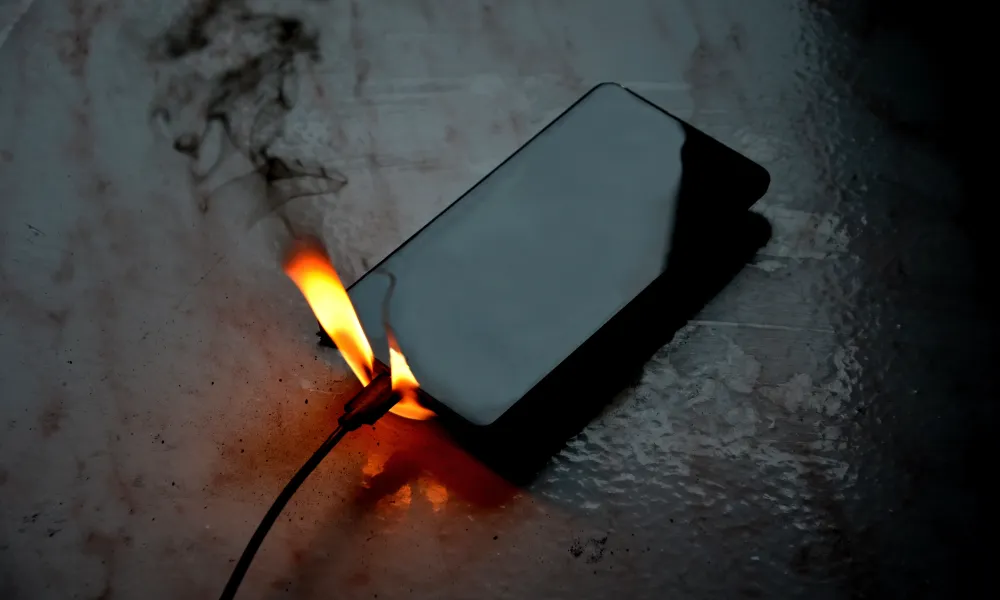

A recent fire in a child’s bedroom in Deryneia has prompted fresh safety guidance from the Department of Electrical and Mechanical Services. Investigators found that an extension lead had been used to charge a mobile phone, although inquiries into the circumstances of the fire and any devices involved are continuing.
The Department has outlined several precautions that can reduce the risk of electrical faults and household fires.
Using extension leads safely
Extension leads should be used only when absolutely necessary and not as a permanent means of powering electrical devices.
When purchased, they should carry the CE marking and comply with the BS 1363 standard. The manufacturer’s details and the product’s technical specifications should also be clearly displayed.
Damaged leads, including those with cuts or other visible defects, must not be used. Two or more extension leads should never be connected to each other.
Extension leads should also not be routed through doors or windows or placed near flammable materials.
Choosing the right mobile phone charger
Consumers are advised to use the charger recommended by the device manufacturer whenever possible and to ensure that it carries the CE marking.
Chargers should clearly display information about their voltage, current and power rating, as well as details of the manufacturer or importer.
Five rules for safer charging
The Department also recommends following five basic precautions:
- Check for damage: Do not use damaged chargers or cables.
- Do not leave devices charging unattended.
- Keep chargers away from flammable materials: Phones should not be charged near paper, fabrics, carpets or other materials that could catch fire.
- Protect the cables: Cables should not be stretched or folded in ways that could damage them.
- Use suitable connections: Chargers should be used with appropriate and safe adapters and plugs.
The Department stressed that the correct use of extension leads and chargers is an important part of preventing fires in the home.